TL;DR: Digital Nomads Istria (DNI), a local association founded in 2021, connects remote workers in Istria with local entrepreneurs, craftspeople and associations, and runs in-person meetups almost every week. Most of the remote workers who contact it stay from a few months to about a year. Remote Work Europe is publishing this guest piece by Roberta Peruško, who runs the Work From Istria community, because it answers a question most coverage of Croatia skips: what it takes for newcomers to become part of a place rather than a bubble beside it.
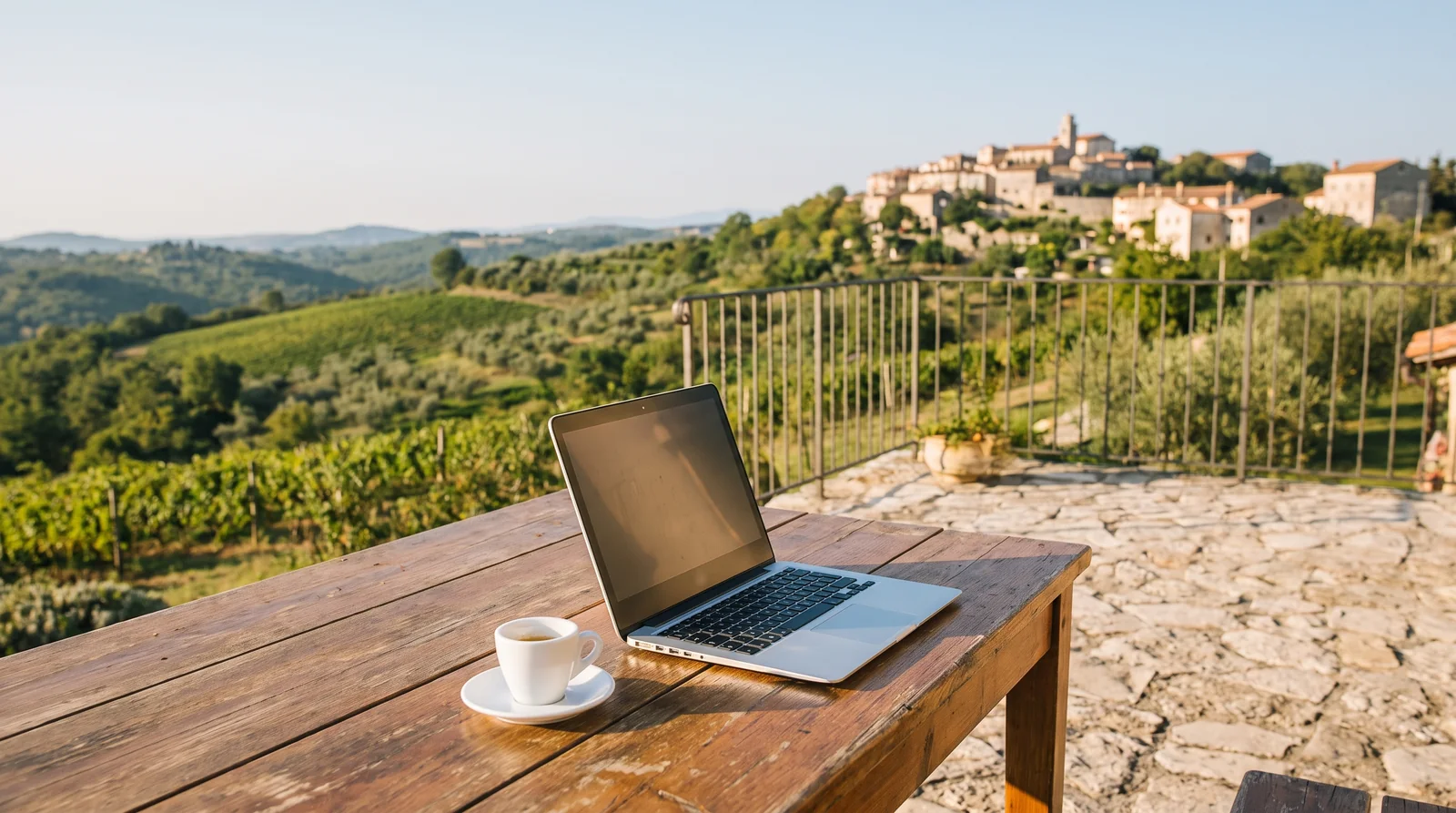
Soaking up the sun by the azure Adriatic while your laptop keeps sending notifications, sipping a Cedevita and saying “Hvala” to a smiling bartender? Or strolling down medieval streets that remind you so much of Italy that you wonder how a place can resemble it so closely, until you learn that much of Istria was part of Italy until the end of the Second World War, and find yourself diving head first into its history? Then you are probably a remote worker in Istria. And if you would like to do all of the above but don’t know where, this is the place.
Remote workers are more than people with a laptop by the sea, though. Digital Nomads Istria (DNI), a local association, wants to connect them with local entrepreneurs, professionals and communities through knowledge exchange, business collaboration and shared activities.
Working from anywhere is no longer reserved for employees of big tech companies. Designers, digital marketers, project managers, language teachers and many other professionals can increasingly choose where to live without changing their job or employer. Istria, a peninsula in the northern Adriatic in western Croatia, is emerging as an interesting destination: it is well connected to the rest of Europe, offers natural beauty and a safe environment, and has a quality of life that attracts people from around the world. Remote Work Europe has already looked at what Istria offers remote workers, and what it lacks, through Roberto Bolković’s research.
But what happens when someone decides to spend a few months in Istria? How do they connect with the local community, and can their knowledge be useful to the people who already live here?
That is the question DNI works on. The association is a family project, launched in 2021 by Vesna Kovačević Fras with her sons Boris and Ivan and Ivan’s wife Katarina. Boris is the president of the association, and from the start the goal has been to connect the international remote community with Istria and its residents.
Earlier this year, Roberta Peruško, founder of the agency Istrience Collective, became a DNI member.
“I met Vesna at a social event and we soon realised we had similar goals. Together we launched the website digitalnomadsistria.com. In the association, I focus on connecting the remote and local communities and organising events. I also started Work From Istria, a WhatsApp group that brings together remote workers, expats and locals,” says Peruško.
How remote workers in Istria connect with local businesses
Digital nomads are often presented as the ideal mix of tourism and work: meetings and a laptop in the morning, the beach in the afternoon. But people who spend several months in the same place can become much more than visitors. They can build business connections, pass on knowledge and start projects.
Through its website and activities, DNI aims to make it easier for remote workers to connect with local entrepreneurs, craftspeople, associations and institutions, alongside practical information about life in Istria.
The exchange runs both ways. Remote workers bring experience from different industries, skills in digital marketing, programming, design, project management and language teaching, as well as international contacts. Local entrepreneurs can gain new clients, business partners and access to knowledge that is not normally within easy reach.
“It is important to us that the exchange is equal, with remote workers genuinely included in local life,” Peruško explains.
Most remote workers who get in touch come from the European Union and the United Kingdom, but enquiries also arrive from Ukraine, Türkiye, Canada and other countries. In the association’s experience, they stay in Istria from a few months to about a year. This is anecdotal, not an official statistical average.
Finding a remote work community in Istria, in person
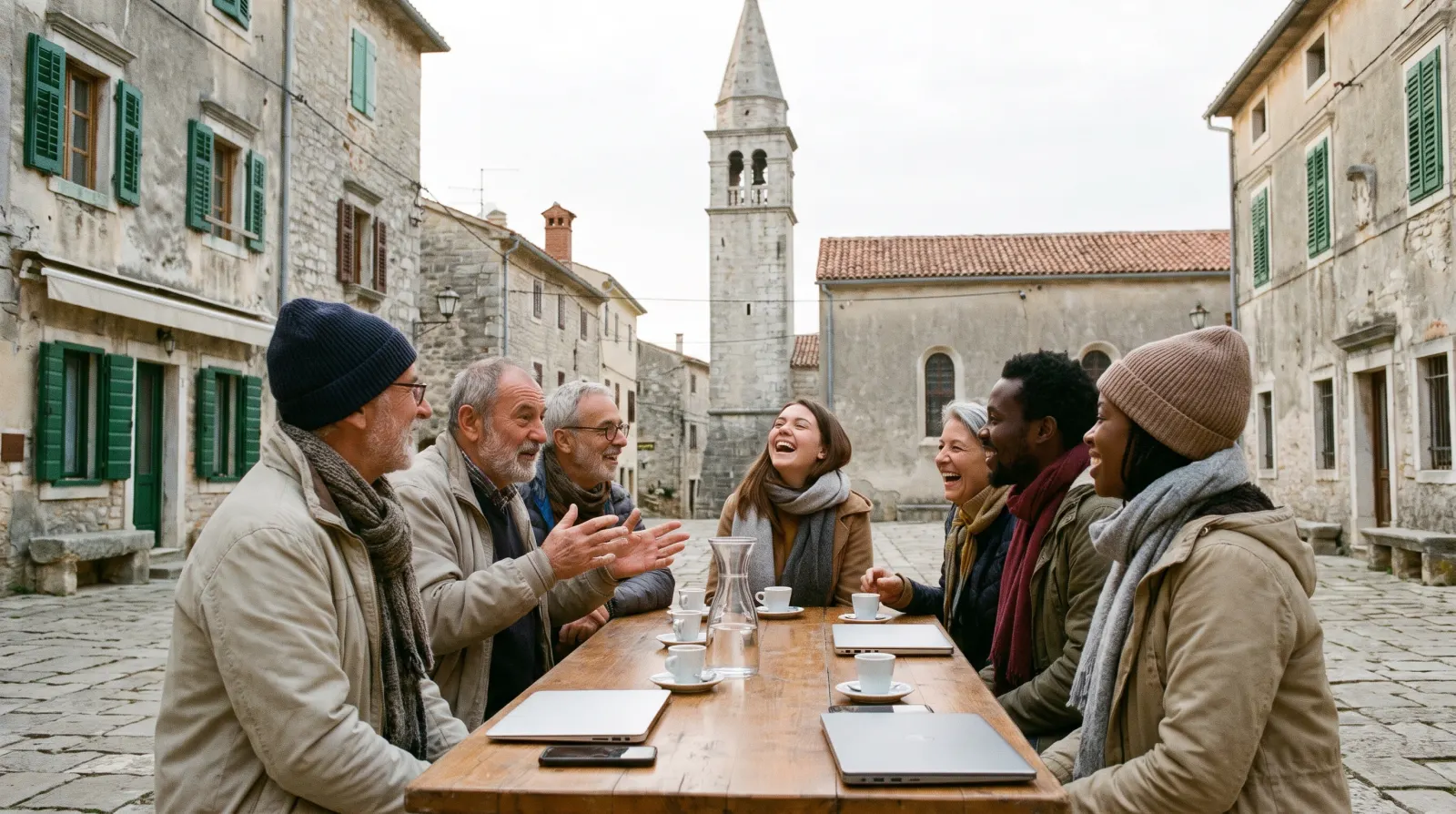
Since May, gatherings, trips and events have been organised almost every week, depending on the interests of the group. Members suggest activities themselves and help make them happen. Three foreign members who joined the community are now also admins of the group, and they organise events and propose activities alongside Peruško.
This fits a wider trend. After years of life in front of screens, more and more people are looking for new friends in person, through so-called social clubs: running clubs, book clubs and dinners for strangers. People gather around a shared activity, and acquaintances and friendships happen along the way.
The group works on a similar principle. WhatsApp is where members introduce themselves, share information and arrange new meetups, while the real connection happens in person, at the gatherings and trips.
“At a recent conference I heard a saying that nomads don’t travel between places, they travel between communities. That is exactly why we want to give them a sense of home and belonging,” says Peruško.
The members are very diverse. Besides remote workers and expats, the group includes locals who want to meet new people and practise foreign languages, and people who returned to Istria after years abroad and are rebuilding their circle of friends. Some members do not live in Istria but turn up at events every couple of months. Some came to Istria as remote workers and found partners here, while others simply like the Istrian way of life and stayed. There are also people working in real estate who are interested in long-term rentals and life in Istria.
What remote workers like about Istria, and what they don’t
“Members of the community, both those who stay briefly and those who have settled here permanently, most often highlight safety, being able to walk around alone in the evening, the clean sea, nature, relaxed people and good internet connectivity. They also appreciate the relatively simple everyday life, especially compared with other countries. There are downsides. In winter, much of what is on offer is closed, and public transport is a problem, especially outside the larger towns. Members also mention inconsistent information from different institutions,” says Peruško.
How to avoid a digital nomad bubble in Istria
Destinations that attract digital nomads often end up with a kind of social bubble. Foreign workers socialise with each other and go to the same cafés and coworking spaces, while the local population stays outside their daily lives. The association wants to avoid that.
“We learn from other destinations, and it has become clear that socialising only among remote workers is not enough. That is why we build the connection with the local community from the start, through places where remote workers and locals genuinely meet,” Peruško stresses.
One such place is the Rojc Community Centre in Pula, home to numerous arts, sports and community associations. DNI is currently in talks with one of them about a collaboration, so that the international community can get to know first-hand what locals are involved in.
“We have various ideas and plans, and the great thing is that group members are involved in everything: they suggest ideas and we make them happen together. We would also like to develop language exchange programmes, informal meetups where locals could practise foreign languages while international members learn Croatian and get to know local expressions and culture. We are also planning meetings with local entrepreneurs and craftspeople, in cooperation with the Croatian Chamber of Economy and the Croatian Chamber of Trades and Crafts. Contacts like these can lead to concrete collaborations, not just an exchange of business cards,” says Peruško.
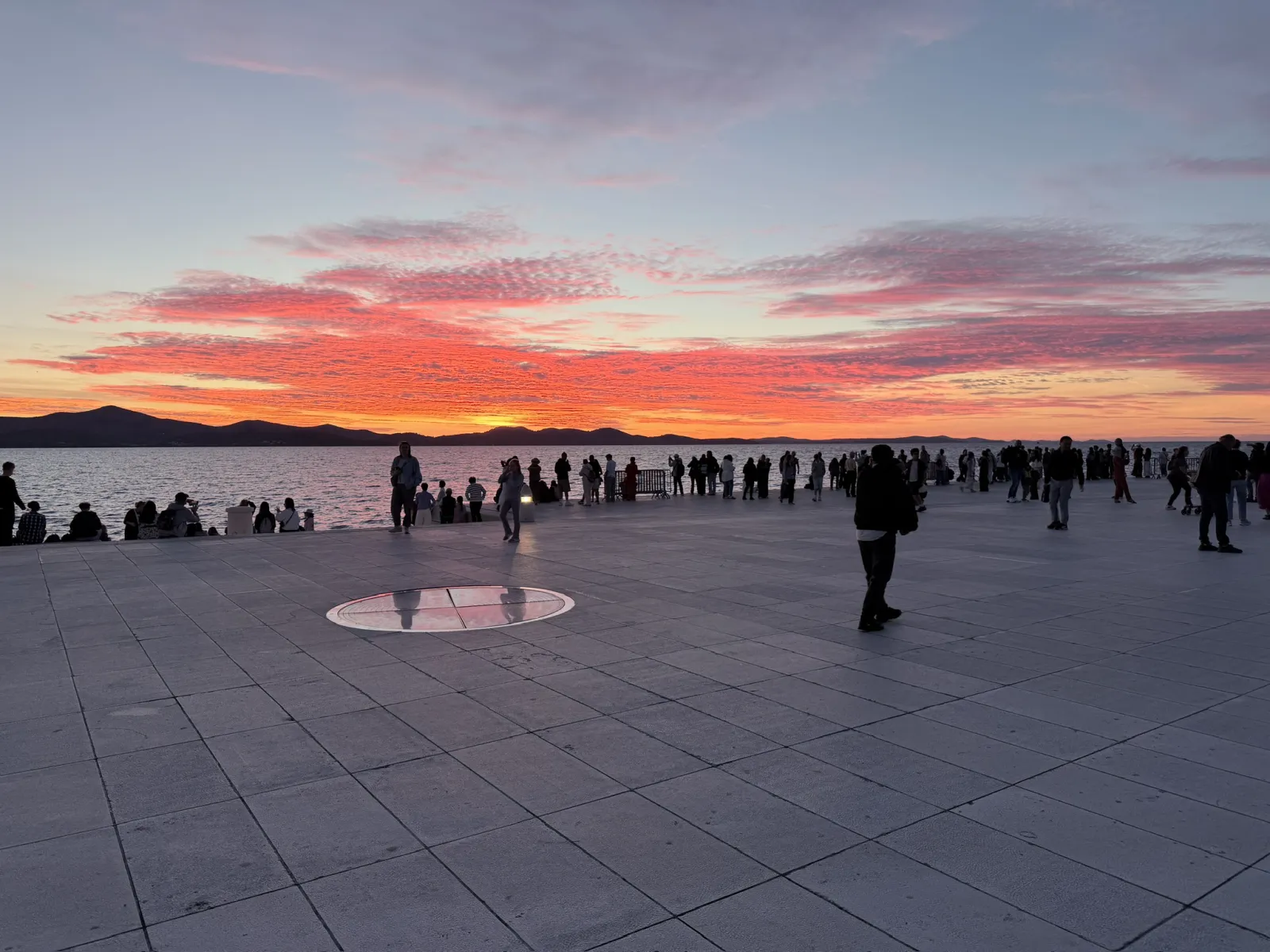
Connecting with other remote workers face to face was also a recurring theme at the Cross-Border Coworking Conference in Zadar in October.
Long-term rentals in Istria outside the summer season
One of the biggest practical challenges for remote workers is finding long-term accommodation. Istria’s tourist offer has been developed mainly for shorter stays during the season, so good accommodation for a few months, especially outside summer, is harder to find.
DNI therefore wants to collect and share information about landlords interested in long-term rentals. This can also benefit property owners who want to fill their capacity in autumn, winter and spring.
The association sees remote workers as an opportunity to extend the tourist season and to revive smaller towns and rural areas outside the summer months. A beautiful coast and a good internet connection are not enough for that: it takes infrastructure, accessible coworking spaces, reliable information and a community that helps newcomers get involved.
Negative effects also have to be taken into account. Experience from other destinations shows that the arrival of people with higher purchasing power contributes to the local economy, but can also put additional pressure on the housing market if development is not carefully planned. Similar concerns are raised elsewhere: many countries attract digital nomads with special visas, and fears about rising property prices and strain on local services have followed.
“Our goal is balanced development: for remote workers not only to stay here but to leave something behind, through knowledge, projects and business connections, without burdening the local population,” Peruško concludes.
For other parts of the country, see our guide to where to work remotely in Croatia.
Remote workers and digital nomads in Istria: what the terms mean
In this article, “remote workers” means everyone who works remotely from Istria, including EU and UK citizens and long-term residents. “Digital nomad” is used in its narrower legal sense in Croatia: a non-EU national who works remotely for a foreign employer, or for their own company registered abroad, and who can apply for a temporary stay permit for this purpose. Remote Work Europe explains the details in its guide to Croatia’s digital nomad permit, and EU citizens can read why they do not need one.
Croatia was among the first EU member states to regulate the stay of digital nomads from outside the EU by law. But a permit alone does not create a community. Voices from the nomad scene increasingly argue that the future lies in structured, deliberate community building. Madeira is often cited as an example of a well-run programme that acts as a bridge between the local community, nomads and expats. Interest is also growing in smaller, rural places, which makes the question especially relevant for Istria.
Frequently asked questions
What is Digital Nomads Istria?
Digital Nomads Istria (DNI) is a local association in Istria, Croatia, founded in 2021. It connects remote workers with local entrepreneurs, craftspeople, associations and institutions, organises in-person events, and publishes practical information about life in Istria at digitalnomadsistria.com.
How can I meet other remote workers in Istria?
Work From Istria, a WhatsApp community started by Roberta Peruško, brings together remote workers, expats and locals. Members introduce themselves there and arrange meetups, trips and events, which have taken place almost every week since May 2026.
How long do remote workers usually stay in Istria?
In the association’s experience, from a few months to about a year. This is based on the people who contact DNI, not on official statistics.
Is it hard to find long-term accommodation in Istria?
It can be, especially outside summer, because most accommodation is built for short tourist stays. DNI plans to collect information about landlords interested in long-term rentals.
Do I need a digital nomad permit to work remotely from Istria?
Only if you are a non-EU national working for a foreign employer or your own company registered abroad. EU citizens do not need one. Check the official requirements with the Croatian Ministry of the Interior before applying.
Roberta Peruško is the founder of the agency Istrience Collective, a member of Digital Nomads Istria, and the founder of the Work From Istria community. You can find the community at digitalnomadsistria.com, on Meetup, and on Instagram as @workfromistria.