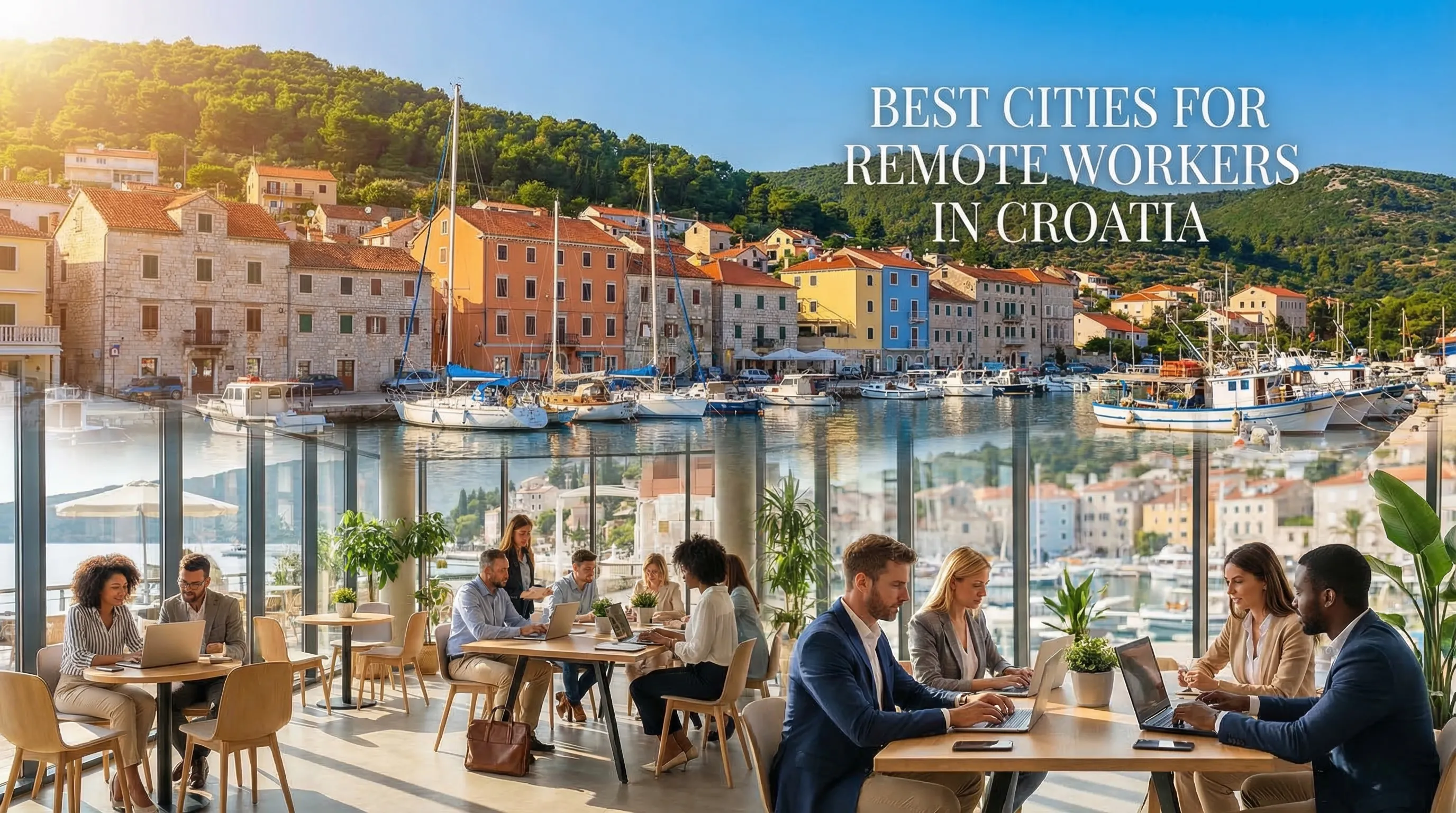
TL;DR: Istria has almost everything a remote worker needs – fast internet, an hour’s drive to anywhere on the peninsula, an airport, good healthcare and a Croatian digital nomad permit that makes staying legal straightforward. What it does not have is a coworking scene, any coliving, or a strategy for attracting the people it says it wants. Remote Work Europe is publishing this piece by a researcher in Pula, along with the survey behind it, because nobody has yet asked digital nomads in Istria what they actually think.
This is a story about digital nomads and the “Tuscany of Croatia.”
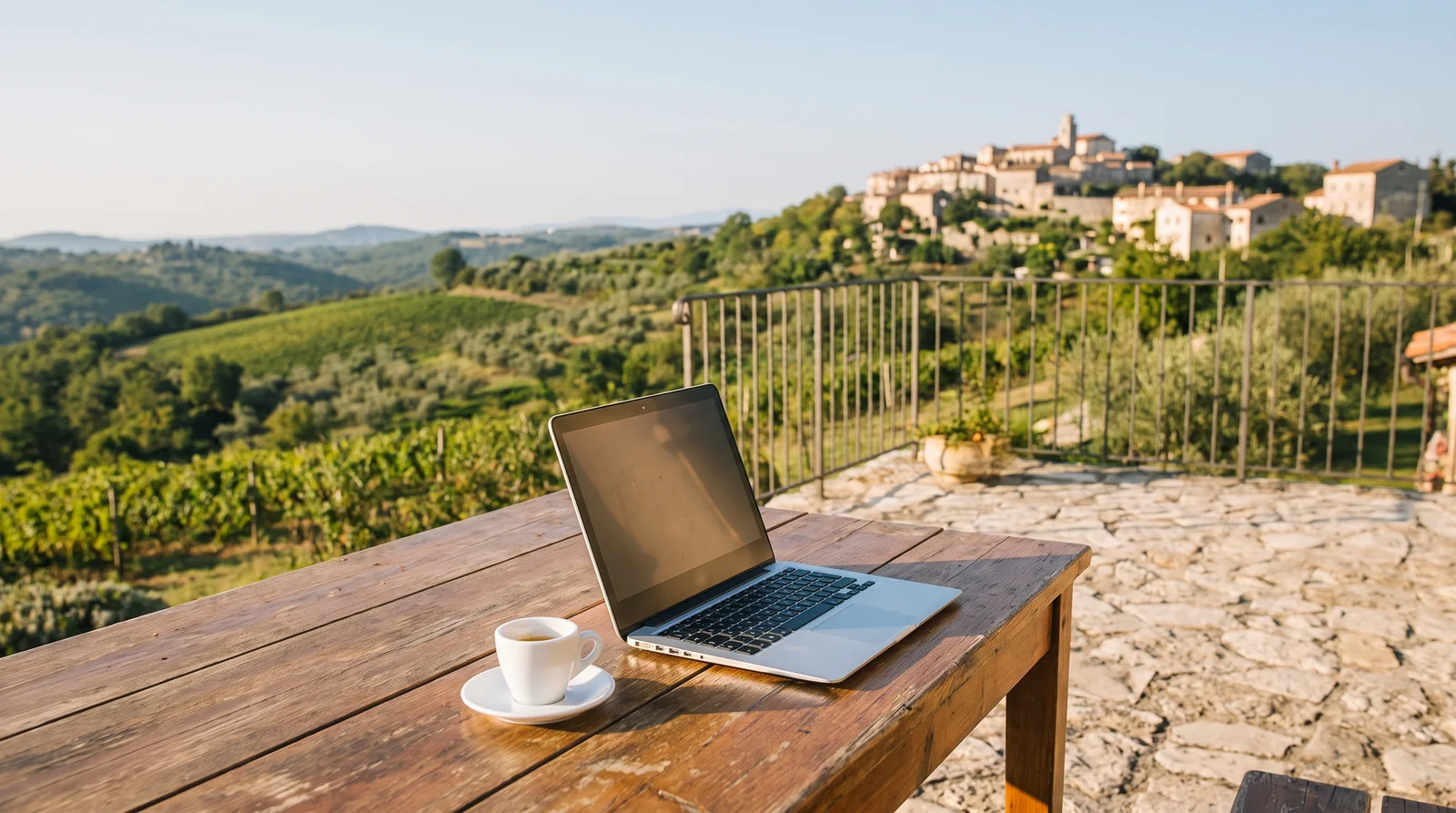
Istria is one of Croatia’s most developed tourism regions, sitting on the western edge of a country better known for the necktie, Nikola Tesla and a World Cup final. Almost none of that is Istrian. What is Istrian is the thing that brings people here and then keeps them: a coastline on one side, and twenty minutes inland, a landscape that has nothing to do with the sea at all – rolling hills, small historic towns, vineyards, olive groves and long views over all of it.
One detail matters more than it sounds. You can reach almost any destination on the peninsula in under an hour. For somebody choosing where to live rather than where to holiday, that changes the calculation entirely.
The land border with Slovenia and the proximity to Italy give Istria an unusual position on the European map. This is a small Mediterranean region where different cultures, languages and traditions meet, and that mixture is one of its real assets rather than a line in a brochure.
What Istria already has for remote workers
Istria is a developed economy, oriented heavily towards tourism, and the infrastructure built for visitors turns out to serve residents rather well.
The list of things that matter when you are choosing somewhere to live and work is fairly consistent, and Istria scores on most of it: good internet coverage, transport connectivity, personal safety, access to healthcare, quality hospitality, a wide range of supporting services, and enough to do that you are not bored by November.
There is also the legal layer, which people underestimate until they need it. Croatia has a digital nomad permit, and Croatia is politically stable. That combination gives somebody the security to plan a stay rather than improvise one. Remote Work Europe covers the permit in detail – including the six-month cooling-off period on renewal, which catches people out, and the fact that EU citizens do not need it at all.
So there are genuine prerequisites here for Istria to become a recognised international destination for digital nomads and remote workers, alongside Split, Dubrovnik and Zagreb.
Despite all of that, Istria still lacks a clear long-term strategy for developing itself as one.
What central Istria offers that the coast does not
Istria does not have a comprehensive plan for attracting digital nomads. Tourism organisations at regional, city and local level are largely occupied with organising and promoting events, particularly over the summer.
One exception is worth knowing about. A small tourism board in central Istria recognised the potential and set out to introduce remote workers to the interior – a rural area of hills, vineyards, olive groves, good food and quiet.
They have run events bringing together digital nomads from different parts of the world and showing them the inland peninsula. The advantages are real and specific: a slower pace, prices noticeably below the coast, coworking facilities, reliable internet, and the sea still only twenty minutes away. Accommodation is good, including private accommodation, holiday homes and other formats suited to longer stays.
The obvious weakness is local public transport, which is limited. If you do not drive, this is the thing to investigate before you commit to a village.
The project has been noticed outside Croatia. It connects remote workers to Istrian cultural and natural heritage, local food and the life of the community, and that kind of connection is what makes remote work contribute to sustainable tourism rather than simply extending the season. The Central Istria Tourist Board entered the project at the ECTN Awards 2024 under the title Digital nomads in Central Istria, and took third prize in the transnational thematic tourism products category.
Where Istria falls short for digital nomads
Taking the technical factors in turn, internet coverage and stability across Istria are very good. That is the foundation, and it is solid.
What is missing is workspace. There are a handful of coworking spaces, the largest in Pula, and not many more. Hotels generally have no areas adapted for remote work. There are no coliving spaces and no digital nomad village, although the conditions for building one plainly exist – abandoned small rural settlements are an obvious opportunity to revitalise an area by giving it a new use.
Accommodation and hospitality are of a high standard, but seasonality is a real challenge. Peak-season prices push up the cost of living and can decide the question for somebody weighing Istria against alternatives. Longer stays and deeper integration into the local community make the sums work better, which is an argument for the interior over the coast.
Remote Work Europe’s own city-by-city guide to Croatia reaches much the same conclusion from the outside: Istria is not a coworking destination, inland connectivity is variable, and it suits people who want a good desk and absolute quiet rather than a desk surrounded by other people.
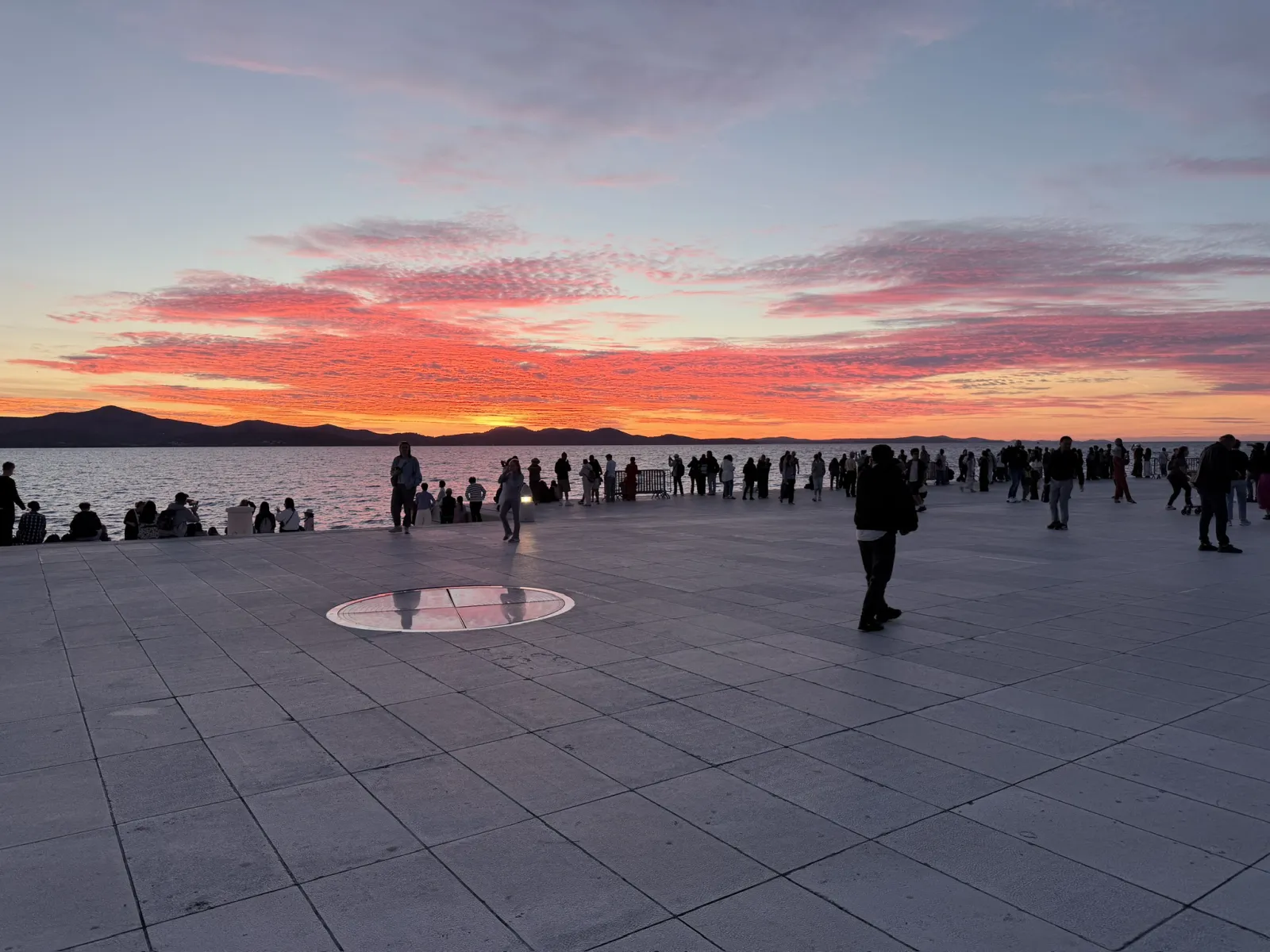
There is no shortage of things to do – diving, tennis, adrenaline sports, cultural and artistic events. Pula has established itself for major concerts, and smaller towns run workshops where visitors meet local customs, traditions and food. Pula’s Roman amphitheatre, where those concerts happen, is one of the best-preserved in the world and the only one to retain its complete circle of outer wall and all three Roman architectural orders.
Personal safety and healthcare both stand up to the scrutiny a longer stay demands. So do the practical business services – accounting, legal, computer equipment, repairs, the unglamorous things you need when somewhere stops being a holiday.
How well connected is Istria to the rest of Europe?
Very. The proximity to Slovenia and Italy does most of the work. Road transport matters most, but Istria is also reachable by air, rail and sea.
What Istria still lacks
There are many positive factors here that ought to be developed systematically and promoted properly. What is missing is private-sector initiative and stronger cooperation between the public and private sectors.
The clearest evidence is how little organised activity exists for this group. So far only two meetups and one digital nomad group have been recorded in the largest city in Istria. For a peninsula with this much going for it, that is a small number.
The future will also be shaped by things outside Istria’s control – competition from other destinations, global trends in remote work, and the political situation in the region. But the factors Istria does control are mostly in good order.
Why this survey exists, and what it is for
There is still very little research showing how digital nomads actually perceive Istria: which services they use, what they struggle with, and what would need to change.
That gap is what I am trying to close. As part of my final thesis within a university specialist programme, I am investigating the needs and satisfaction of digital nomads with the services available to them in Istria.
For Istria to develop as a destination for remote workers, it needs feedback from the people who have already been here – and from those living and working here now.
Two minutes, and it is anonymous
A short survey on satisfaction with the basic services digital nomads and remote workers use in Istria. It closes on 20 October 2026.
Your answers help build a clearer picture of what this group needs, and contribute to better conditions for living and working here.
A note from Remote Work Europe. We publish very little unpublished research, because there is very little of it about European remote work. Roberto approached us directly, and we are running this because the question he is asking – what do remote workers in a place actually think of it – is one almost nobody asks before writing the strategy. If you have spent time in Istria, the survey is worth your two minutes.
If you are weighing Croatia more broadly, our Croatia country guide covers the permit, tax and cost picture, and Connected carries daily remote job leads open to people living in Europe.