Vilnius, Kaunas or Klaipėda? Where to base yourself for remote work in Lithuania
For most of the last decade, Lithuania has been one of the European countries the English-language remote-work conversation paid the least attention to, and one of the countries that conversation is now increasingly turning to. The shift is partly the fintech-hub story, partly the Estonia-comparison story (Lithuania is the bigger and less-famous Baltic neighbour), and partly a genuine cost-and-quality-of-life arbitrage that western-European remote workers are starting to notice in numbers.
Remote Work Europe sits across multiple European jurisdictions, which makes comparison pieces like this one possible without flattening the differences.
The question that comes up once people get past “should I consider Lithuania at all” is: which Lithuanian city? Three options are realistic for remote-work life – Vilnius, Kaunas, and Klaipėda. They are unusually different from each other in ways the country’s modest population (just under 3 million) might not lead you to expect.
What follows is a practical breakdown. None of these cities is wrong; the right answer depends on which kind of Lithuanian life you are actually planning.
Vilnius: the obvious choice, and the deserving one
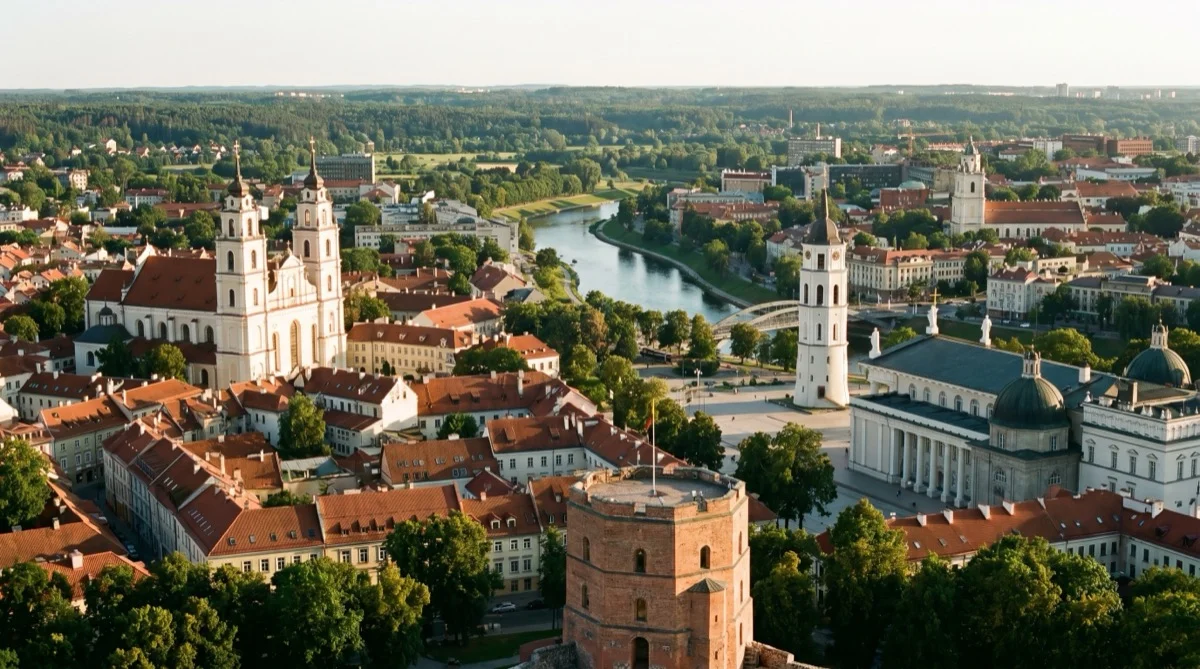
Vilnius is the capital, the largest city (around 580,000 people), the fintech epicentre, and the place where most of Lithuania’s international and English-speaking professional life happens. If you are remote-working from Lithuania and your reason is “I want a European base with European convenience at lower European cost,” Vilnius is where you will land.
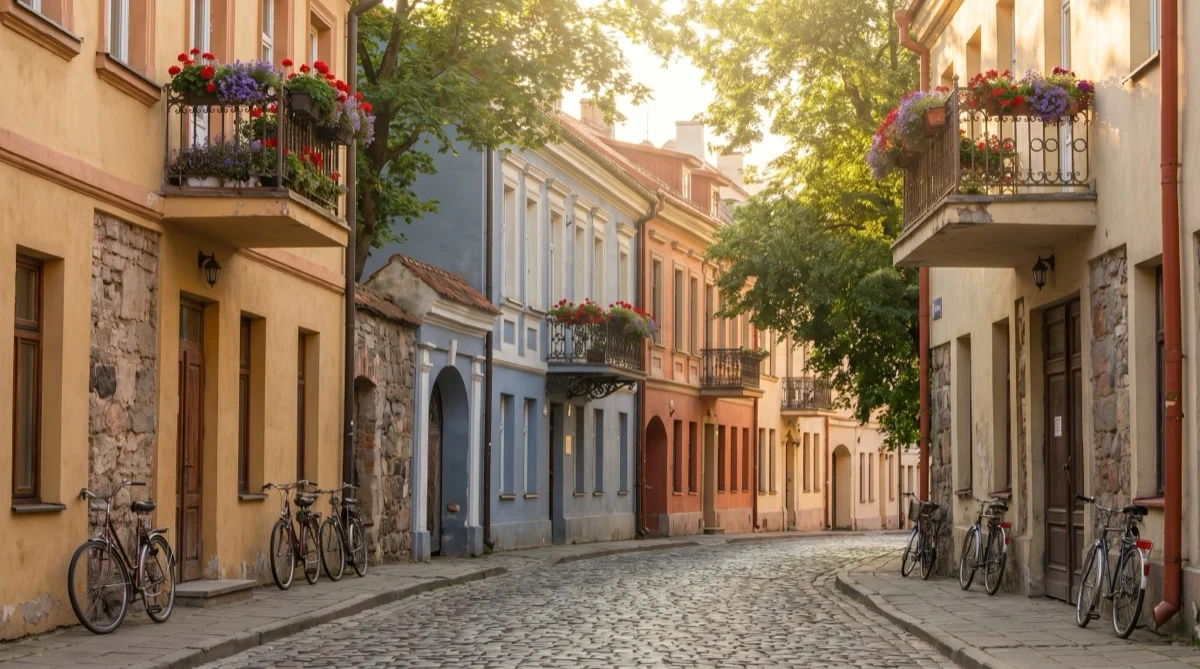
The case for Vilnius is straightforward. The city has invested heavily in becoming an English-friendly European capital and the investment has worked – fintech licences per capita, foreign-direct-investment per capita, and English-speaking ecosystem density all sit well above what the city’s size would predict. The Old Town is genuinely beautiful, UNESCO-listed since 1994, and lived-in rather than tourist-frozen. Užupis – the self-declared “republic” across the Vilnia river – has been the city’s bohemian quarter for thirty years and gives Vilnius a creative energy that most second-tier European capitals do not have.
Practically: rents are well below Vilnius’s western-European peers (a comparable one-bedroom is roughly 60% of Berlin’s prices and 40% of Vienna’s). The cafe scene downtown can absorb a working population indefinitely without crowding. International rail and air connections are improving steadily; Rail Baltica, when it lands in the late 2020s, will change the picture again. The English-speaking professional community is large enough to give you an immediate social layer without the bubble-isolation that smaller capitals can produce.
The case against Vilnius is the one against any capital: it is the most expensive option in the country, the busiest, and the one most exposed to the inflows and outflows that come with being any country’s main city. If you are looking for the kind of small-city remote-work life that Tallinn or Krakow offered ten years ago, Vilnius in 2026 is no longer that.
For most remote workers considering Lithuania, Vilnius is the right answer. The other two cities below are right for specific kinds of people.
Kaunas: Lithuania’s second city, with more depth than the size suggests
Kaunas, about 100km west of Vilnius, has roughly half the population (around 290,000) and three or four times the historical layer.
This is partly because Kaunas was Lithuania’s provisional capital between 1919 and 1939 – the years when the new Lithuanian state was finding its institutional feet, building its modernist architecture, and inventing itself in the brief interwar window before Soviet occupation. The result is one of the densest concentrations of modernist architecture in central Europe. The “Modernism of Kaunas” UNESCO bid recognises this; the city centre is full of streamlined 1920s-30s buildings that most travellers do not expect from a country they cannot place on a map.
Kaunas also has Lithuania’s largest technical university (KTU – Kaunas University of Technology) and a younger, more student-driven feel than Vilnius. The Žaliakalnis funicular – an actual 1931 funicular still running on its original equipment – is the kind of detail that captures the city: not preserved as a museum, just still working because nobody saw a reason to replace it.
The remote-work case for Kaunas is value plus character. Rents are noticeably below Vilnius (typically 20-30% cheaper). The cost base in restaurants, services, and groceries is correspondingly lower. The English-speaking professional community is smaller than Vilnius but real – particularly around the university and the smaller fintech and tech firms that have set up second offices outside the capital.
The case against Kaunas is that it is not Vilnius. The international flight connections are thinner (Kaunas Airport runs but at lower frequency). The English-only social life is harder to build – you will pick up more Lithuanian, faster, whether you intended to or not. Direct international rail is limited until Rail Baltica delivers.
Kaunas is the right pick if you want the value play, the cultural-depth play, and you do not mind that you are not living in the country’s capital. The city has been under-rated for a long time. The remote-workers who do find their way to Kaunas tend to stay.
Klaipėda: the Baltic outlier most people don’t consider
Klaipėda is the city most worth talking about because it is the one fewest people consider. It is also the city most likely to fit a specific kind of remote worker who has not yet realised Lithuania has a Baltic coast.
The basics: Klaipėda sits on the Baltic Sea at the country’s western edge, roughly 300km from Vilnius. Population is around 150,000 – smaller than Vilnius and Kaunas, but still a real city with all the infrastructure of one. It is Lithuania’s only major port, the country’s connection to Scandinavian and German shipping, and the gateway to the Curonian Spit – the 98km sand-dune peninsula that runs south to the Russian Kaliningrad enclave and is a UNESCO World Heritage Site of its own.
The city has a different cultural texture from Vilnius and Kaunas. Klaipėda was Memel, the German-Lithuanian port, until 1923 (and again under German control 1939-1945). The Old Town and parts of the centre retain that Hanseatic-meets-Baltic-meets-Lithuanian layering – different from the heavily Catholic inland cities, more open to Scandinavian and German cultural traffic, with a sea-trade history rather than a court-and-cathedral history.
For remote workers, Klaipėda offers something neither Vilnius nor Kaunas can: the Baltic Sea on your doorstep. The Curonian Spit ferry runs daily from the city centre. Sailing, kite-surfing, and Baltic-coast life are real options. The Klaipėda Sea Festival every July (Jūros šventė) is the country’s biggest summer event. The climate is moderated by the sea – milder winters and cooler summers than the inland.
The English-speaking professional community in Klaipėda is the smallest of the three cities. The fintech ecosystem is barely present here – it concentrates in Vilnius. The job market is port-and-logistics-dominated, which is not most remote workers’ relevant economy.
The case for Klaipėda is specific. If your remote work is fully decoupled from local employment, if a coastal life matters to you, and if you would rather live in a culturally distinct corner of a small country than at its administrative centre, Klaipėda is genuinely without competition in Lithuania. I would not pick it for everyone; for the right person, the under-coverage is the appeal.
How to actually pick
If you want the capital, the fintech ecosystem, the English-friendly professional bubble, and the biggest international community, choose Vilnius. The cost gap to western Europe is significant; the convenience tax is modest.
If you want value, character, modernist architecture, and a smaller-city pace at second-city prices, choose Kaunas. The provincial-ness is real. So is the cultural depth.
If you want the sea, the Curonian Spit, and a culturally distinct corner of the country where most people who move to Lithuania do not consider going, choose Klaipėda. You will pick up more Lithuanian. You will also live somewhere very few western European remote workers do.
A practical note on connections between them: Vilnius-Kaunas is just over an hour by train or bus and the two cities operate as an extended urban-corridor more than most pairs of comparable cities elsewhere. Vilnius-Klaipėda is closer to four hours by direct train or bus – more of a commitment to actually move, less convenient if you want to visit the capital often.
Lithuania is a small country with three substantially different urban options. The right one is not the same for everyone, and the obvious answer (Vilnius) is not always the best one. The under-covered answers – Kaunas, Klaipėda – are worth the time to consider before committing.
A note on Connected
Connected is our members’ jobs board – genuinely remote roles open to people living in Europe, rebuilt every weekday from employers’ own recruitment systems, with our picks flagged. Baltic-friendly roles – including ones that work cleanly with a Vilnius, Kaunas or Klaipėda base – get flagged specifically.
The visa, tax, and registration mechanics for moving to Lithuania are covered in our Lithuania country guide and the linked pieces on the Lithuania Startup Visa and Individuali Veikla.