A Remote Work Europe podcast with Maya Middlemiss
Welcome to the Remote Work Europe podcast!
And the latest episode brought me the great pleasure of interviewing my podcasting friend and mentor, Pilar Orti. I am a cohost on Pilar’s own show the 21st Century Work Life pod, and we have been collaborating for well over a decade one way or another!
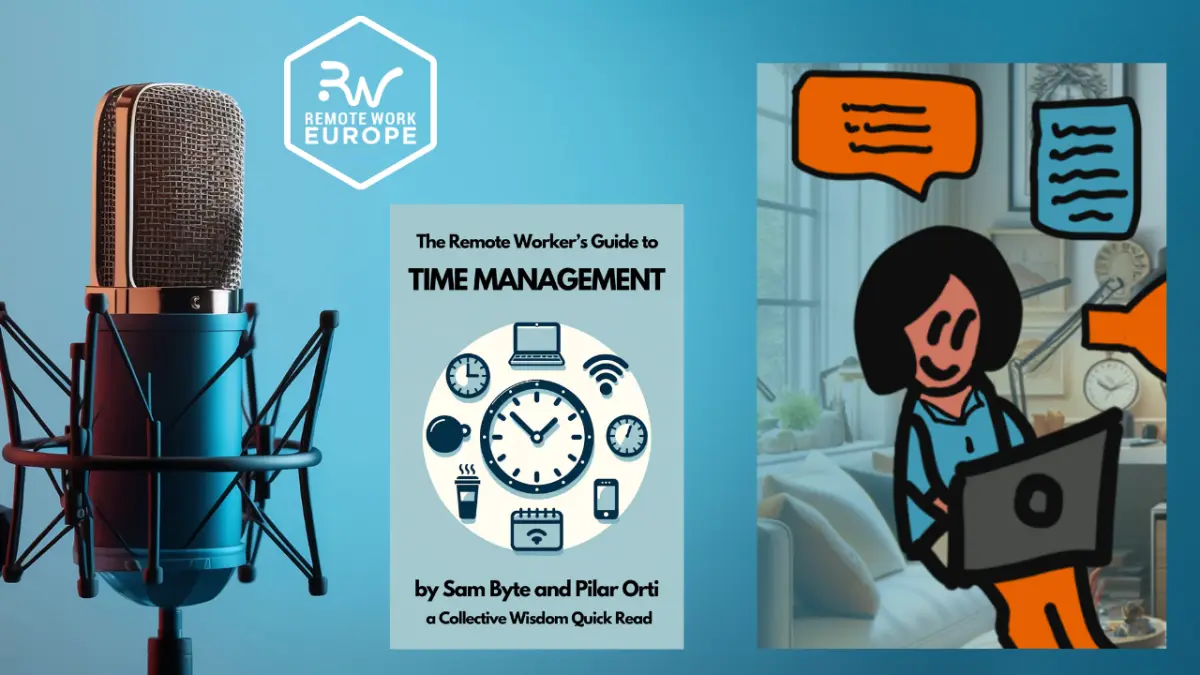
I wanted to bring Pilar onto our show, because she has a new book out: The Remote Worker’s Guide to Time Management.

When you work remotely, managing your time is all about managing your attention and self-discipline,
Understanding how and when you procrastinate,
Getting real about multitasking.
Building relationship capital,
and becoming self-aware.
We also talked about asynchronous collaboration and how teams are managing this, because being able to disconnect from alerts and real time interaction is the true super-power to managing your time, and to unlocking the real freedom of working remotely and flexibly:
At your favourite place
In your own time,
when YOU are most productive and happy!
About Pilar Orti
Pilar is the founder of Virtual Not Distant, a consultancy focused on helping organisations transition to effective remote and hybrid working practices. She has been working in this space long before the pandemic made remote work mainstream, and her experience shows in the depth and nuance of her advice.
Beyond consulting, Pilar is a prolific author and podcaster. The 21st Century Work Life podcast has been running for years, exploring every facet of distributed team dynamics – from building trust without a shared office to navigating the awkwardness of virtual meetings. Her writing on time management and remote productivity draws on real-world experimentation, not just theory.
Mastering async leadership
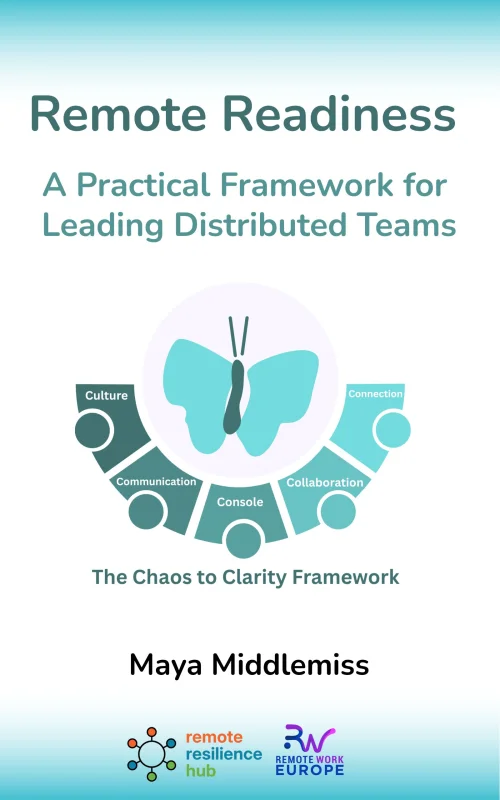
Remote Readiness for Leaders builds on these principles – showing you how to lead distributed teams through async-first communication, trust-based management, and attention-aware scheduling.
Get the book →Key Takeaways on Managing Remote Time
Some of the standout insights from our conversation:
-
Time management is really attention management. When you work remotely, nobody is watching the clock for you. The challenge is not filling hours but directing your focus to the work that matters most – and recognising when you are most capable of deep concentration versus lighter administrative tasks.
-
Multitasking is a myth. Pilar is direct about this. What we call multitasking is actually rapid context-switching, and it drains mental energy far faster than focused single-tasking. Remote workers who batch similar activities together get more done with less fatigue.
-
Async communication is a superpower. The ability to disconnect from real-time alerts and respond thoughtfully on your own schedule is one of the greatest advantages of remote work – but only if your team actively supports it. That means clear norms about response times, well-written messages, and a culture that respects deep work blocks.
-
Relationship capital matters. Working remotely does not mean working in isolation. Investing time in genuine connection with colleagues – even brief check-ins or casual audio messages – builds the trust that makes async collaboration actually function.
Pilar has developed a new course to help you master the skills to make async work, and unusually released this as an audio-only publication – because she walks her talk, and does not mean to tie participants to a screen to access this vital insight!
If you’re a job seeker then adding this essential remote-first skillset to your CV is a great idea.
And if you want to catch up with the Remote Work Europe podcast on all the popular podcast players, you’ll find links over on our podcast page.
(then you will be able to follow us or subscribe, to make sure you don’t miss any future episodes - and it will also be really easy to support the show by liking, rating, or (if you really want to help us 💜 writing a quick review)
Here’s to your productive remote work success!
Related reading: Effective communication protocols for remote teams, Remote-First Companies in Europe, Skills for remote work: Avoiding getting automated away.