Every week, someone shares a job listing described as “remote-first” that turns out to mean “you can work from home on Fridays, but we expect you in the London office by Tuesday.” The term has become so diluted that it’s practically meaningless on most careers pages. For anyone job-hunting from Madrid, Tallinn, or Dublin, this creates a real problem – you waste hours researching companies and tailoring applications, only to discover they meant remote within a 50-mile radius of their headquarters.
Remote Work Europe sees the daily pattern of European remote job postings through our Connected job board – the trends this piece describes show up there too.
This guide is different. We’ve researched 28 companies that genuinely hire across Europe – with verified employment models, real European team presence, and honest assessments of what distributed work looks like in practice. Some of these companies have never had an office. Others closed theirs years ago because nobody showed up. All of them have demonstrated, over years of operation, that they can build successful products and cultures without requiring everyone to sit in the same building.
Whether you’re a developer in Lisbon, a product manager in Berlin, or a customer success specialist in Zagreb, these are companies worth your attention – and your application.
What “remote-first” actually means
Before we get to the companies, let’s clear up the terminology. The job market is drowning in remote-adjacent labels, and most of them don’t mean what candidates hope they mean.
Remote-first means the company’s default operating mode is distributed. Decisions happen in writing. Meetings are recorded. Processes are documented. Nobody gets a career advantage from being physically near leadership. The office – if one exists at all – is optional, not the centre of gravity.
Remote-friendly means there’s an office, and you’re allowed to not be in it. But the culture, promotions, and spontaneous decisions still happen in the corridor. Remote workers are tolerated, not centred.
Hybrid means you’ll be in the office 2-3 days a week, and everyone will spend those days in meetings that could have been emails, then go home to do the actual work.
“Remote with asterisks” means the job posting says remote, but the fine print says US-only, or specific timezone, or “must be within commuting distance for monthly team days.”
Five things to look for in a genuinely remote-first company
-
Distributed leadership – Are the executives all in one city, or spread across timezones? If the C-suite is in San Francisco and everyone else is “remote,” the culture will be San Francisco.
-
Written communication norms – Handbook-first, async-first, documentation-first. However they describe it, the signal is the same: information flows through writing, not hallway conversations.
-
Timezone policy – A company that hires in 40 countries but expects everyone online during US Pacific hours isn’t remote-first. It’s a US company with international contractors.
-
Transparent compensation – Do they publish salary bands? Use a formula? Adjust for location? The approach tells you a lot about how seriously they take global equity.
-
Investment in connection – Retreats, meetups, and travel budgets. The best remote companies know that distributed teams need deliberate, funded opportunities to build relationships in person.
How these companies hire in Europe
Understanding employment models matters more than most candidates realise. The way a company hires you in Europe affects your tax situation, employment rights, social security contributions, and even your mortgage application.
Direct hire (local entity)
The company has a legal entity in your country and employs you directly. You get a local employment contract, statutory benefits, and normal employee protections. This is the gold standard – and it’s expensive for companies to set up, which is why many don’t offer it in every country.
Employer of Record (EOR)
The company uses a third party – like Oyster HR, Deel, or Remote.com (all featured in this guide) – to employ you on their behalf. You get a local contract and benefits, but your technical employer is the EOR, not the company you work for. Our guide to EORs in Europe explains the options in detail. It’s a solid arrangement, though it can occasionally create friction with banks or government agencies that don’t understand the setup.
Contractor
You invoice the company as a self-employed person. This gives you the most flexibility and the least protection. You handle your own taxes, social security, and benefits. In Spain, that means registering as autónomo – with all the obligations that entails. If you’re specifically after companies that take people on as freelancers rather than employees, see our companion guide to Companies That Hire Freelancers in Europe. For contractors receiving payments from international companies, a multi-currency account through Wise can save significant amounts on conversion fees.
The employment model also affects how salary is structured. Direct hires typically get gross salary plus benefits. EOR employees get something similar, though the company pays an additional fee to the EOR provider. Contractors negotiate a day rate or project fee and handle everything else themselves.
The companies
Here are 28 companies with proven track records of hiring and retaining talent across Europe. We’ve verified their European presence, employment models, and what working there actually looks like.
1. GitLab
The gold standard for remote work documentation
- What they do: AI-powered DevSecOps platform used by 100,000+ organisations
- Team size: 2,000+ across 65+ countries
- European hiring: Yes – direct hire in many EU countries
- Employment model: Direct hire
- Salary approach: Transparent calculator, location-based
- Key draw: The 2,000-page public handbook that defines how distributed work should be done
2. Zapier
The automation company that’s been remote since before it was cool
- What they do: Automation platform connecting 7,000+ apps
- Team size: 800+ across 40+ countries
- European hiring: Yes – handles compliance across regions
- Employment model: Direct / compliance-managed
- Salary approach: Competitive, with profit sharing
- Key draw: Quarterly profit sharing and $10,000 annual stipend for whatever you need
3. Hotjar
European-born behaviour analytics, now part of Contentsquare
- What they do: Heatmaps, session recordings, and behaviour analytics
- Team size: 200+ across 40+ countries
- European hiring: Yes – founded in Malta
- Employment model: Mixed (direct and EOR)
- Salary approach: Competitive, role-based
- Key draw: Malta-founded company with genuinely European DNA, not a US bolt-on
4. Doist
The async pioneers who built their own communication tool because Slack wasn’t good enough
- What they do: Todoist (task management) and Twist (async communication)
- Team size: ~100 across 35+ countries
- European hiring: Yes – no location restrictions
- Employment model: Direct / contractor (varies by country)
- Salary approach: Formula-based, transparent, no negotiation
- Key draw: 40 days PTO, 8-hour day maximum, and they actually mean it
5. Buffer
Radical salary transparency since 2013
- What they do: Social media management platform
- Team size: ~75 across 15 countries
- European hiring: Yes – limited to specific countries
- Employment model: Direct hire in supported countries
- Salary approach: Published publicly, formula-based, cost-of-living bands
- Key draw: 4-day work week at full pay, with every salary published online including the CEO’s
6. Oyster HR
The company that makes global hiring possible – and practices what it preaches
- What they do: Global employment platform (EOR, payroll, benefits)
- Team size: 648+ across 70+ countries
- European hiring: Yes – they ARE the employer of record
- Employment model: EOR (they use their own platform)
- Salary approach: Competitive with clear levelling
- Key draw: 40 days PTO, and if a company tells you “we can’t hire in your country,” Oyster probably can
7. Automattic
43% of the internet runs on their software, and they’ve never had a traditional office
- What they do: WordPress.com, WooCommerce, Tumblr, Jetpack, Pocket Casts
- Team size: ~1,900 across 90+ countries
- European hiring: Yes – genuinely global
- Employment model: Direct hire and contractor (varies by location)
- Salary approach: Global benchmarking
- Key draw: Paid trial projects let you experience the company before committing – and they pay $25/hr for it
8. Close
Bootstrapped, profitable, and remote since 2013 – the anti-Salesforce CRM
- What they do: CRM for small and mid-sized sales teams
- Team size: ~80 across 20+ countries
- European hiring: Yes – globally distributed
- Employment model: Contractor and direct (varies)
- Salary approach: Competitive, sustainable
- Key draw: Bootstrapped stability – no VC-driven layoff cycles – plus Steli Efti’s legendary sales content
9. Deel
From zero to $12 billion valuation by solving the biggest barrier to remote work: getting paid
- What they do: Global payroll, EOR, HR, and compliance platform
- Team size: 4,000+ across 100+ countries
- European hiring: Yes – they ARE the payroll platform
- Employment model: Direct / EOR (they use their own product)
- Salary approach: Competitive with equity
- Key draw: WeWork access for all employees, plus they’re their own best case study for global hiring
10. Sketch
Never had an office. Not once. Since 2010.
- What they do: Vector design tool for UI/UX professionals
- Team size: ~250 across dozens of countries
- European hiring: Yes – founded in The Hague, European timezone preference
- Employment model: Direct hire and contractor
- Salary approach: Competitive, craft-focused
- Key draw: A calm, sustainable company that competes with billion-dollar-backed Figma without burning out its team
11. Toggl
Estonian-born, RAFT philosophy, and they pay you during the hiring process
- What they do: Toggl Track (time tracking), Toggl Plan (project planning), Toggl Hire (recruitment)
- Team size: 130+ across 40+ countries
- European hiring: Yes – Tallinn-based, strong European presence
- Employment model: Direct hire and contractor
- Salary approach: Competitive, transparent process
- Key draw: Paid trial hiring and mandatory 2-week consecutive vacation – burnout prevention by policy
12. Canonical
Remote since 2004 – a full decade before most companies considered it
- What they do: Ubuntu Linux, enterprise open-source tools
- Team size: 1,900 across 75+ countries
- European hiring: Yes – London HQ, extensive EU presence
- Employment model: Direct hire
- Salary approach: Structured, role-based
- Key draw: Two decades of distributed work experience and twice-yearly in-person sprints around the world
13. Grafana Labs
Open-source observability, remote from Day 1, and 30 days leave plus shutdowns
- What they do: Grafana, Loki, Tempo, Mimir – open-source monitoring and observability
- Team size: 1,800+ across 50+ countries
- European hiring: Yes – global roles
- Employment model: Direct hire in key markets
- Salary approach: Competitive with equity
- Key draw: 30 days annual leave plus company-wide shutdown days – because nobody should return to a mountain of messages
14. Elastic
Amsterdam-founded, NYSE-listed, distributed since the founders worked from different countries
- What they do: Elasticsearch, Kibana, and the Elastic Stack – search, observability, and security
- Team size: 4,000+ across 40+ countries
- European hiring: Yes – Amsterdam-founded, strong EU presence
- Employment model: Direct hire
- Salary approach: Competitive with stock options (NYSE: ESTC)
- Key draw: Public company stability with distributed startup culture, plus European founding story
15. GitBook
37 people, 13 countries, EU-first hiring, and no product managers
- What they do: Documentation platform for technical teams
- Team size: 37 across 13 countries
- European hiring: Yes – EU-first, actively prioritises European candidates
- Employment model: Direct hire
- Salary approach: Competitive for stage, sustainable
- Key draw: European candidates get genuine priority, engineers own the product, and every person on the team matters
16. Remote.com
San Francisco-registered, Dutch-founded, and every employee is hired through their own product
- What they do: Global HR platform – EOR, payroll, benefits, compliance
- Team size: Around 2,000 across 70+ countries
- European hiring: Yes – hires across Europe through its own EOR entities
- Employment model: EOR (their own platform)
- Salary approach: Transparent framework with clear levelling
- Key draw: They dogfood their own product – every employee experiences their platform from the inside (headcount has been flat lately, with an efficiency-over-growth focus)
17. Help Scout
Remote since 2011, no office, and a paid sabbatical every four years
- What they do: Customer service software – email, chat, knowledge base
- Team size: ~140 across 115+ cities
- European hiring: Yes – multiple European countries
- Employment model: Direct hire in supported countries
- Salary approach: Competitive, with stock options for all employees
- Key draw: A paid month-long sabbatical every four years, on top of regular vacation – genuine long-term investment in people
18. Wikimedia Foundation
The non-profit behind Wikipedia, hiring across Europe for mission-driven work
- What they do: Wikipedia, Wikidata, Wikimedia Commons – free knowledge for the planet
- Team size: Staff and contractors across 40+ countries
- European hiring: Yes – hires in several European countries (France, Germany, Netherlands, Poland, Spain, Switzerland, UK)
- Employment model: Direct hire in key markets; other locations via third-party EOR (existing work authorisation required)
- Salary approach: Competitive for non-profit, reasonable by European standards
- Key draw: Your work reaches billions of people, no shareholder pressure, and the stability of donation-funded operation
19. Mozilla
The mission-led maker of Firefox – remote-first, but in active transition
- What they do: Firefox, Thunderbird, and MDN Web Docs – tools for a web that isn’t run by a handful of large companies
- Team size: Large, mission-led organisation – no fixed headcount published; reshaped by 2024 restructuring (Feb 2024 cut ~5% of Corporation staff; Nov 2024 cut ~30% of the Foundation’s workforce)
- European hiring: Yes – multiple European countries plus North America; the exact list shifts, so check live listings
- Employment model: Mix of direct employment in countries where Mozilla has an entity; arrangements vary by location
- Salary approach: Competitive and structured, but no fully open salary formula published
- Key draw: The open-web mission – rewarding if you believe in the work, but expect active restructuring and shifting priorities, not settled stability
20. DuckDuckGo
The privacy-first search engine, fully distributed since 2008
- What they do: Privacy-first search engine and browser that doesn’t track you, plus email protection
- Team size: 335+ across more than 15 countries
- European hiring: Yes – hires globally with a meaningful European presence; most roles remote with no fixed location
- Employment model: Mix of employment and contractor arrangements depending on country
- Salary approach: Location-independent within a global region – same level and region means same pay, no negotiation
- Key draw: No core hours, 95%+ team retention since 2012, and a genuine privacy mission – but a long, demanding, paid ~6-stage hiring process
21. PostHog
Open-source product analytics, fully remote with a public handbook and a hard timezone rule
- What they do: Open-source product analytics platform – plus session replay, feature flags, experimentation, and surveys
- Team size: ~110 across 25+ countries
- European hiring: Yes – well covered, but no Employer of Record in several high-cost countries (France, Italy, Sweden, Switzerland, Iceland, Belgium, Luxembourg, Denmark) – check your country first
- Employment model: Direct employment via an EOR where supported; contractor arrangements elsewhere
- Salary approach: Published, formula-based (San Francisco benchmark × level, step, and location factor), no negotiation, with a public calculator
- Key draw: Radical transparency and small-team autonomy – but a hard GMT+2 to GMT-8 timezone rule (almost all of Europe fits comfortably)
22. Cal.com
Open-source scheduling, remote and async since day one
- What they do: Open-source scheduling infrastructure – a self-hostable, embeddable Calendly alternative
- Team size: ~40–45 people
- European hiring: Yes – hires globally with no fixed location for most roles; US-incorporated (San Francisco), not an EU-first employer, despite European founders
- Employment model: Mix of direct employment and contractor, depending on where you’re based – confirm for your country
- Salary approach: Competitive, but no published salary bands – treat compensation as a direct conversation during hiring
- Key draw: Deep ownership and direct founder contact in a lean team – demanding for self-starters, with rare openings and limited progression
23. TestGorilla
Amsterdam-based skills-based hiring platform, fully remote and it hires through its own product
- What they do: Skills-based pre-employment assessment platform, with a library of more than 400 assessments
- Team size: ~330 across many countries
- European hiring: Yes – broad hiring with a strong European weighting from the Amsterdam base
- Employment model: Mix of direct employment and contractor or employer-of-record arrangements depending on country
- Salary approach: Competitive, but no published salary bands – treat compensation as a direct conversation during hiring
- Key draw: A meaningful skills-over-CVs mission and an established remote setup – but a venture-backed, target-driven SaaS scale-up with hiring volume cooled from its hypergrowth phase
24. Supabase
Open-source Firebase alternative, born-remote and now heavily funded
- What they do: Open-source, Postgres-backed backend-as-a-service – auth, database, real-time, storage, edge functions, vector embeddings
- Team size: Several hundred people across 60+ countries
- European hiring: Yes – hires globally with no fixed location for most roles; one of the most geographically distributed teams in developer tools
- Employment model: Mix of direct employment and contractor, depending on where you live – confirm for your country
- Salary approach: Competitive, but no published salary bands – treat compensation as a direct conversation during hiring
- Key draw: Work in the open on widely used tooling – but a hypergrowth business (US$500M Series F at a reported US$10.5bn valuation) mid-pivot to AI infrastructure, and engineering-heavy
25. Sanity
Norwegian-founded content platform – remote-friendly, not strictly remote-first
- What they do: Headless content platform – structured content infrastructure for teams that have outgrown a traditional CMS
- Team size: Roughly 250 to 300 people
- European hiring: Yes – strong European base (Norway, the UK, Germany, wider Europe). Note: hybrid, not strictly remote-first – offices in Oslo, San Francisco and London, and some roles are explicitly hybrid and tied to a city
- Employment model: Mix of direct employment where Sanity has entities (Norway, the UK, the US) and other arrangements elsewhere – varies by country
- Salary approach: Competitive and benchmarked, but no public salary formula – discussed during hiring
- Key draw: A European-rooted scale-up with real remote flexibility and craft-focused Nordic working norms – but check each listing, as some roles carry a hybrid or timezone requirement
26. Ghost
Non-profit publishing foundation, fully remote since 2013 and deliberately capped at ~50 people
- What they do: Open-source publishing platform for newsletters, blogs, and membership publications
- Team size: Mid-thirties, deliberately capped at around 50 people
- European hiring: Yes – hires internationally rather than from a fixed country list, with no office anywhere, wherever it can legally support employment
- Employment model: A distributed team employed or contracted across many countries; the exact arrangement depends on where you are
- Salary approach: Competitive and benchmarked, but no public salary formula – discussed during hiring
- Key draw: Four-day week, generous time off, no investor pressure, and a constitution meaning it can never be bought or sold – but roles open very rarely and progression is limited by design
27. Tailscale
Remote-first mesh-VPN company, Toronto-rooted and scaling fast
- What they do: Mesh VPN built on WireGuard – secure private networks across cloud, office, and home without the usual configuration pain
- Team size: ~290 people, scaling towards 400 after a 2025 Series C
- European hiring: Effectively UK-only – the team is located in Canada, the United States, and the United Kingdom; wider-Europe roles are occasional and case-by-case. Expect meaningful North-America timezone overlap even on fully remote roles
- Employment model: Direct employment in countries where Tailscale has entities (Canada, the US, the UK); confirm the model for roles elsewhere
- Salary approach: Competitive and benchmarked against strong technology-market rates, but no public salary formula – discussed during hiring
- Key draw: Hard infrastructure problems, one of the best engineering blogs in the industry, and a high-autonomy writing culture – but a demanding bar, fast growth, and a North-America-weighted team
28. Basecamp / 37signals
The original remote-first company – distributed since 1999, but global rather than Europe-facing, which makes it a deliberate outlier on this list
- What they do: Project management and team communication software – Basecamp, plus HEY (email) and ONCE (buy-once, self-hosted software). The company behind Ruby on Rails
- Team size: Roughly 80 people, held small on purpose
- European hiring: Global and rare rather than European-focused – no fixed country list and no office anywhere, so a European can apply, but roles open infrequently and some carry timezone or location preferences. Confirm per role
- Employment model: A small, globally distributed team; the exact arrangement depends on where you are based – confirm it for any specific role
- Salary approach: Distinctive – 37signals pays top-of-market rates benchmarked to San Francisco with no adjustment for location, which can make it unusually well-paid outside the big hubs; exact figures set during hiring
- Key draw: The longest continuous remote-first track record of any company here, a 32-hour summer week, real autonomy and no investor pressure – but a small, rarely-hiring team and a genuinely polarising 2021 culture story you should read up on first
What to look for beyond the careers page
A careers page can say anything. Here’s how to verify whether a company actually operates as remote-first before you invest time in an application.
Check the team distribution on LinkedIn
Search for the company on LinkedIn and look at where employees are located. If 80% of the team is in one city and the “remote” employees are scattered, that’s a remote-friendly company with good PR – not a remote-first one. Look especially at where leadership sits. A distributed engineering team with an all-San-Francisco C-suite tells you exactly where the power centre is.
Read the Glassdoor reviews carefully
Filter reviews by remote employees specifically. Look for patterns: do remote workers mention feeling excluded from decisions? Is there a “two-tier” culture where office employees get more visibility? One negative review is noise, but five reviews saying the same thing is a signal.
Look for public documentation
The best remote-first companies publish their handbooks, communication norms, or cultural principles. GitLab’s 2,000-page handbook is the famous example, but Buffer, Doist, Close, and Help Scout all publish extensively about how they work. Companies that are genuinely proud of their distributed culture want to show it off.
Check the job listing details
Vague listings are a red flag. A genuinely remote-first company will specify: which countries they hire in, what timezone overlap (if any) they expect, the employment model, and whether salary is location-adjusted. If the listing just says “remote” with no further detail, you’re likely to discover limitations later in the process.
Ask the right questions in interviews
“How do you make decisions when the team is spread across timezones?” is a better question than “do you support remote work?” The first question reveals process. The second gets you a rehearsed answer.
Making your move
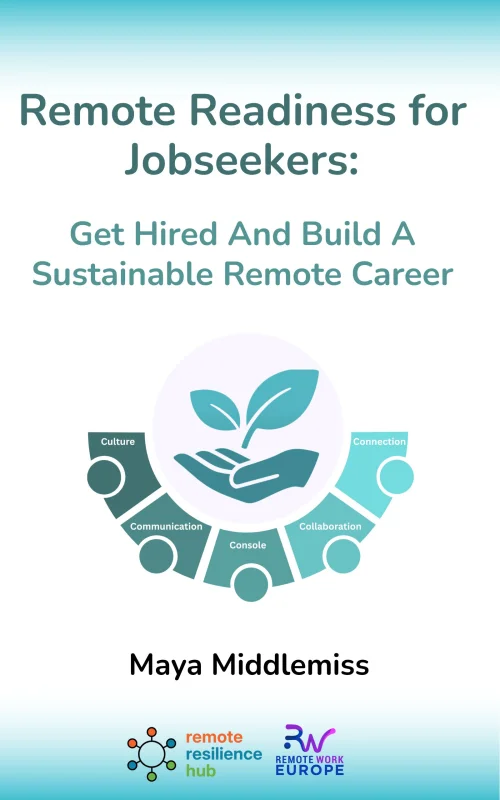
The companies in this guide represent some of the best remote-first employers hiring in Europe right now. But knowing they exist is just the starting point. The 5Cs framework in Remote Readiness for Jobseekers helps you demonstrate the specific skills these companies are looking for – communication, collaboration, character, competence, and commitment to remote work.
Not every remote-first employer worth working for is European. US companies that hire into Europe pay against US benchmarks, and many recruit through headhunters rather than posting publicly at all – so no amount of careers-page reading will surface them. If that is the half of the market you want access to, our talent pool for European professionals seeking US remote roles exists for exactly that, and it is free to join.
We track openings at these companies and dozens more in Connected, where Diana hand-picks verified remote roles daily. No scams, no “remote but actually hybrid” listings – just genuine opportunities for people building careers across Europe.
The remote job market is evolving fast. Companies that were experimenting with distributed work five years ago are now refining it. The ones listed here have proven they can make it work – and they’re looking for people who can too.
Last updated: July 2026. Company details are verified at time of publication but may change. Always check the company’s careers page for current openings and hiring countries.