TL;DR: Machine translation has genuinely eaten the low end of the language services market. But specialist medical, legal, financial, and life-sciences translation still requires certified human translators. Simultaneous remote interpreting is a growth category, especially in healthcare, legal proceedings, and corporate meetings. Post-editing machine translation is a real remote job category in its own right. And the combination of niche subject expertise plus interpreting qualification plus a second European language can command serious rates. If you have a linguistic background and you want to work remotely from Europe, the opportunities are absolutely there. They are just not where they were five years ago.
A reader question a while back set me thinking. She had a translation background, several years of freelance work behind her, and a nagging worry that ChatGPT and DeepL had made her whole career obsolete. She wanted to know whether she should retrain or whether there was still a route.
It is a fair question, and it applies to a much bigger group than just translators. Interpreters, linguists, language teachers, and anyone whose work has been built around fluency in more than one language is looking at the same set of AI capabilities and trying to work out what to do about it.
The honest answer is that this is a bifurcating market. There’s a phrase for the linguist to conjure with. But the practical upshot is that the bottom has fallen out. The top is fine. And the middle is where the interesting work is happening.
What AI actually took
Free machine translation (Google Translate, DeepL, GPT-4 and successors) has genuinely commoditised low-stakes translation. Marketing copy for a small business website, informal email correspondence, tourist-facing signage, basic user documentation, the “gist” translation people used to pay a freelancer €50-100 for on Fiverr or Upwork: those jobs are gone, in any volume that would sustain a career. Some clients still pay for them out of habit; most do not. The mid-tier translation agencies that made their money on bulk lower-quality work have consolidated or pivoted.
That is real. There is no point pretending otherwise. If your model of the market was “I speak two languages and I translate general content for whoever pays,” that model is dead. The pace at which machine translation has gone from just about okay to genuinely nuanced and localised has been truly impressive and the trajectory is only steeper. Within a year we will have real-time interpreting via our airpods that will be indistinguishable from science fiction, and a lifetime away from my first Google Translate V1 letter home from school, which assured me the salutation began “Dear breasts and potatoes” (For real - the OCR software on my scanner wasn’t capable of processing accents in Spanish words…)
What AI did not take, and probably won’t
The distinction that matters is between text where the stakes of getting it wrong are low, and text where the stakes are high. Machine translation is good at the first category and dangerous in the second, because it produces confident-sounding output whether or not it has actually understood the source.
Medical translation and interpreting is the clearest example. If a hospital in Valencia is treating a UK patient who has had a stroke, and the discharge summary needs to be translated for their GP back home, the cost of a subtle error in medication instructions or symptom description is very high indeed. Regulated healthcare systems will not (and should not) accept unverified machine output for that kind of work. Certified medical translators are needed, and demand is growing rather than shrinking as cross-border healthcare volumes rise across the EU. The Cross-Border Healthcare Directive framework has been in force since 2013 and creates ongoing demand for medical documentation translation. Certified medical interpreters for telehealth appointments are increasingly working remotely, taking calls from anywhere.
Legal translation is similar. Immigration proceedings, cross-border commercial disputes, asylum cases, contract translation for regulated industries, and translation of official documents (birth certificates, marriage certificates, academic qualifications) all require sworn or certified translators depending on the jurisdiction. In Spain, traductores jurados are appointed by the Ministry of Foreign Affairs and hold a monopoly on translation of documents for official use. Similar structures exist in other EU member states. Machine translation is not a substitute for a signature and a stamp from a jurisdictionally-authorised human.
Financial services translation is another regulated corner. Prospectus translation for public offerings, translation of listed-company annual reports, translation of regulatory correspondence for banks and insurers: these are areas where the auditors, regulators, and investors will absolutely notice if the translation is off. Certified translators with financial expertise are in demand.
Life sciences translation covers everything from clinical trial documentation to patient information leaflets to pharmacovigilance reports. The regulatory penalties for translation errors are severe. Certification and specialisation are the moat.
Patent translation is a niche but well-paid corner. Patent examiners at the European Patent Office read translations for a living and know what they are looking at.
The growth category: simultaneous remote interpreting
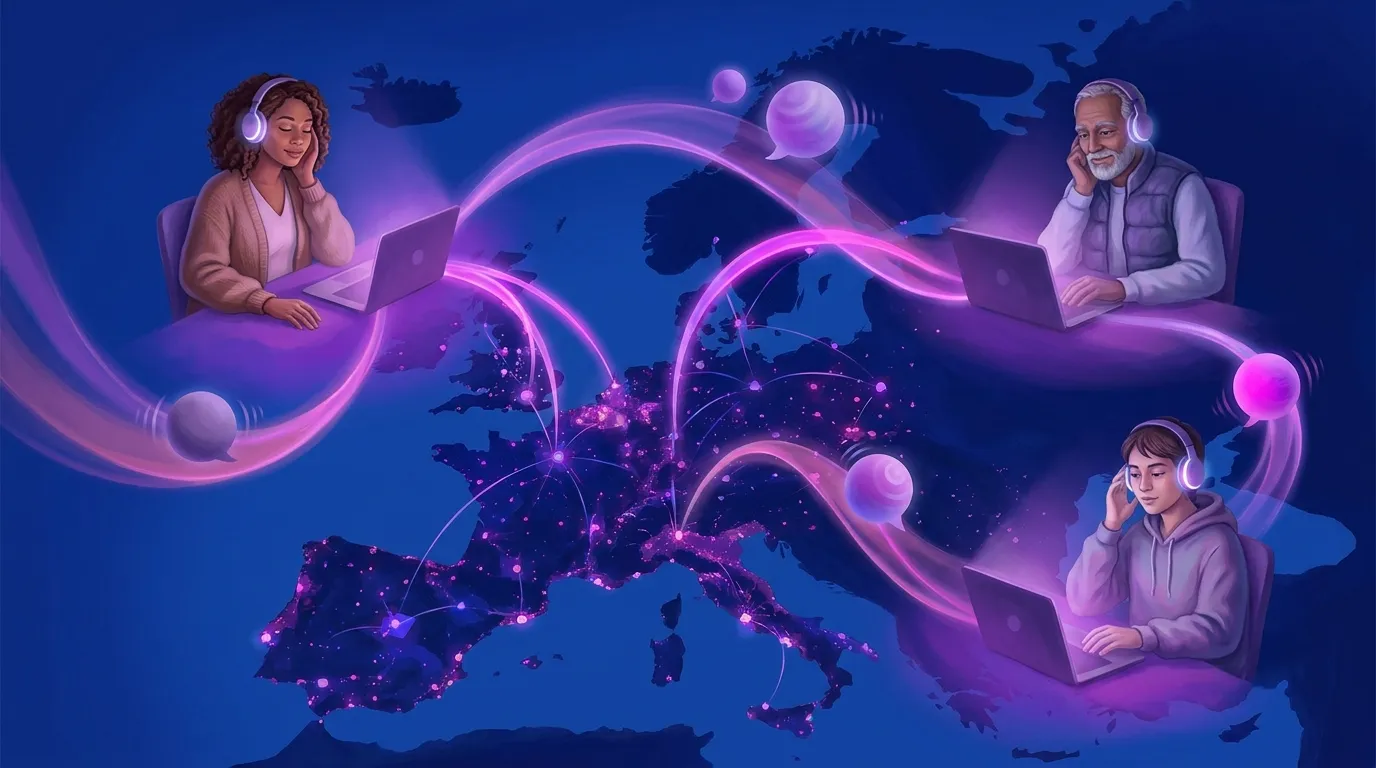
The pandemic normalised video meetings across every category of business. It also normalised the presence of a professional interpreter joining those meetings from wherever they happen to be. Zoom, Microsoft Teams, and the various dedicated interpreting platforms (Interprefy, KUDO, Boostlingo) all support simultaneous interpreting in a way that makes remote conference interpreting a real career option.
Where this shows up:
- International conferences that used to fly interpreters in now hire them remotely.
- EU institutional meetings at the Commission and Parliament have accepted remote simultaneous interpreting in specific contexts. The rules on which meetings qualify are technical, but the trend is unmistakable.
- Corporate board meetings and executive committees for multinationals are booking remote interpreters for specific language pairs.
- Court proceedings in some jurisdictions (particularly for immigration hearings and video-link testimony) use remote interpreters.
- Medical consultations in cross-border healthcare and telehealth increasingly bring in a remote interpreter for the patient-provider interaction. This is a specific category in itself.
- Union negotiations across border-crossing multinational workforces.
The rate structures for professional simultaneous interpreting are still robust: hourly and daily rates for qualified interpreters in demand language pairs (English-German, English-French, English-Spanish, and increasingly English-Ukrainian and English-Arabic) remain in genuine professional territory. The market is not shrinking; it is going remote.
Post-editing machine translation is a real job
One of the categories that has grown, quietly, is machine translation post-editing (MTPE). The workflow: machine translation produces a draft, a human editor corrects errors, adjusts style, fixes terminology, and produces a publishable output. The economics are cheaper than pure human translation, but the throughput is higher, and the quality assurance is real.
For linguists, MTPE is a job category in its own right. Rates are lower per word than direct translation, but volumes are higher, and the work is genuinely remote. Specialist MTPE for regulated content (medical, legal, technical) commands premium rates because the machine drafts require careful correction against terminology databases.
So, as a writer facing similar issues in my own craft, my message to you as a qualified interpreter is: Yes, you’re training the machines to get better at replacing you but as niche work that will generate income for the next few years at least, this is worth holding your nose and getting into.
The specialist-plus-language combination
The pattern across all the growth areas is the same. A second European language plus something else. Interpreting qualification plus medical training. Sworn translator status plus financial expertise. Life sciences translation plus regulatory experience. Court interpreter certification plus immigration law knowledge. Retired pilot training and certifying aviation English, mandated by global Air Traffic Control requirements.
If you have a linguistic background and you are looking at the market wondering where you fit, the honest advice is: pick a specialism. Language alone is no longer a sufficient market position. Language plus something that requires domain expertise is a durable one, and often a highly-paid one.
Where to actually find the work
The European Commission Directorate-General for Interpretation publishes accredited-interpreter opportunities and testing schedules. Not remote in every case, but a real career route.
For court interpreting, national judicial authorities publish rosters. In Spain, the Ministry of Justice and the Ministry of Foreign Affairs both maintain lists.
For medical interpreting, Language Line Solutions, Migration Yes Ltd, and various regional healthcare interpreter cooperatives across Europe are active recruiters.
For regulated translation work, direct approach to the in-house translation departments of major law firms, big pharma, and financial institutions has always been more reliable than translation agencies. It is the same pattern as with all specialist freelance work: the clients who value quality do not go through auction platforms.
The route through, if you are starting from a general translation career
If you were working general translation five or ten years ago and the work has been drying up, the honest advice is this. Do not compete with machine translation on price. Pick a specialism where the cost of an error is high enough that human verification is genuinely valued. Get qualified in it. Build a portfolio in that specialism. Approach clients who need that specific competence directly.
It is more work than the general-translation career was ten years ago, but the work exists, the rates are real, and it is fundamentally not going to be commoditised in the same way that basic translation was.
The full picture of remote work opportunities in the language services industry in 2026 is not the collapse that headline pieces sometimes describe. It is a K-shaped split. The bottom half of the market is gone. The top half is fine. The middle is where the interesting work is being done now, and that middle is where linguistically-trained remote workers should be aiming.
Looking for other non-tech directions? This piece is one of a set on remote-work careers that don’t require a coding background. If you’re weighing several options, the complete hub for non-tech remote careers in Europe groups all of them together – including customer service, sales and revenue, business ops, healthcare admin, marketing and content, and the cross-cuts for parents, entry-level entrants, and accessibility.