TL;DR
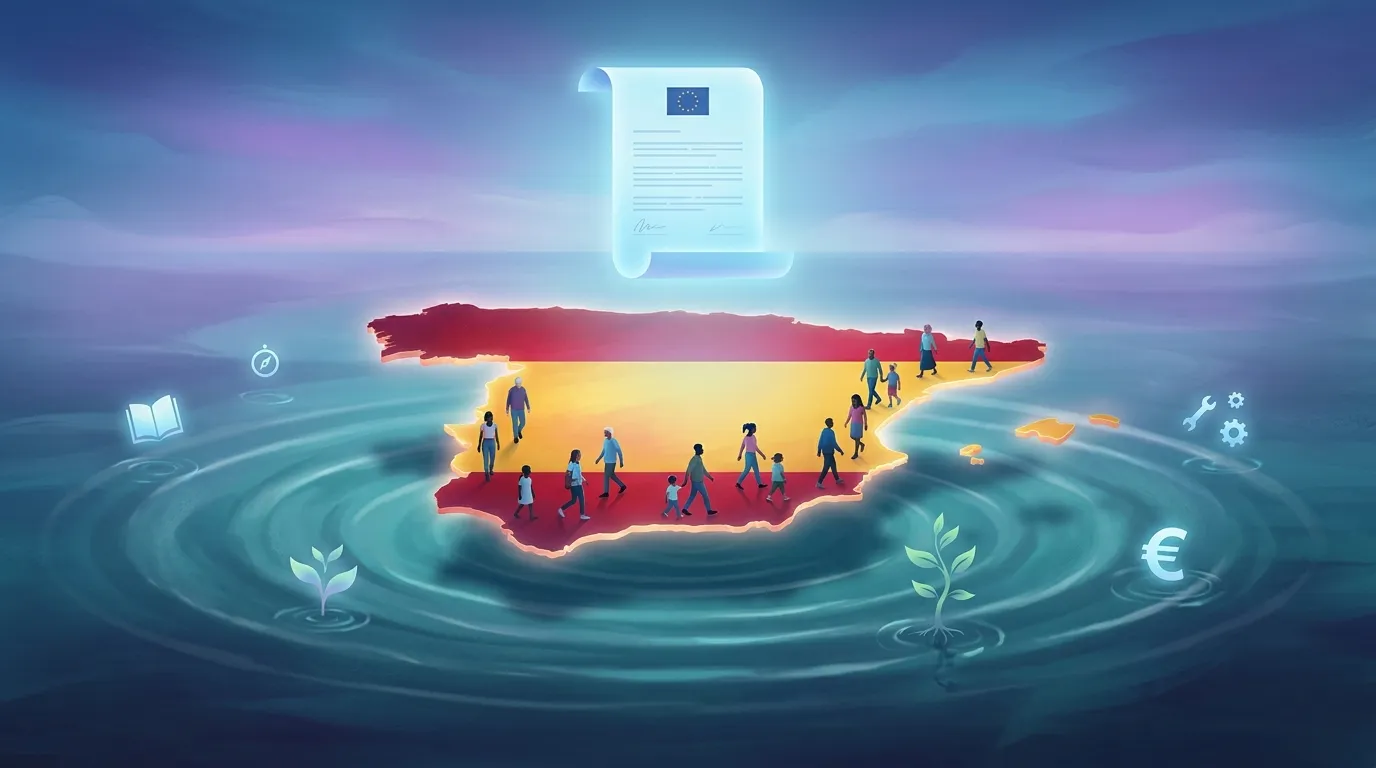
- Spain’s DNV (Ley 28/2022, articles 71 to 74, in force since 22 December 2022) and Italy’s DNV (decree of 29 February 2024, applications open from 4 April 2024) both allow family reunification, both put children on the host country’s public school and public health systems by virtue of residence, and both lead toward permanent residence on broadly similar timelines.
- The on-paper visas are close cousins. The lived experience for a family with school-age children is meaningfully different, and the difference is regional inside each country more than it is national between them.
- Spain leans toward easier entry-level family processing, a more developed public bilingual school network in several autonomous communities, and a relatively standardised acogida (welcome) framework for non-Spanish-speaking children. Income thresholds for families are lower in absolute terms.
- Italy leans toward a higher income threshold, a “highly qualified worker” eligibility test the principal applicant has to clear, and a school landscape where northern regions have substantially more developed reception programmes for non-Italian-speaking children than southern ones.
- Both countries’ English-medium public schooling is rare. Bilingual or CLIL-strand public schools exist in pockets. English-medium international schools exist in the big cities at private-school prices. There is no shortcut around this.
What both DNVs offer families on paper
Spain’s DNV sits in the Ley de Startups (Ley 28/2022), articles 71 to 74. The principal applicant is granted an initial residence permit valid for up to one year if applied for from the country of origin, or three years if applied for from inside Spain, and is renewable for further three-year periods. After five years of legal residence the holder can apply for permanent residence, and after ten years for Spanish nationality (two years for nationals of Iberoamerican countries, the Philippines, Equatorial Guinea, Portugal, Andorra, or those of Sephardic origin). Family reunification is provided for from the outset: spouse or registered partner, minor children, and dependent adult children or ascendants under specific conditions.
Remote Work Europe writes comparisons from inside the markets being compared rather than from desk research alone.
Italy’s DNV was created by the 2022 enabling law and operationalised by the implementing decree of 29 February 2024, with applications open from 4 April 2024. It targets “highly qualified workers”, defined as holders of a recognised master’s-level qualification or, alternatively, those with at least three years of equivalent professional experience. The principal visa is issued for up to one year, renewable, and family members may join under standard Italian family-reunification rules. The path to long-term EU residence in Italy opens after five years of legal residence, and Italian citizenship is generally accessible after ten years for non-EU nationals.
The income thresholds differ. Spain requires approximately 200% of the monthly minimum interprofessional wage (SMI) for the principal applicant, with additional percentages layered on for each accompanying family member. The exact figure shifts with each SMI adjustment, so any number we print today will date quickly. Italy requires income of at least three times the minimum exemption, which puts the principal applicant’s threshold in the region of €28,000 per year, plus additions for family members. The Italian threshold is, in straightforward terms, higher.
Both visas require private health insurance at application stage, even though both lead to public-system registration once residence is processed locally.
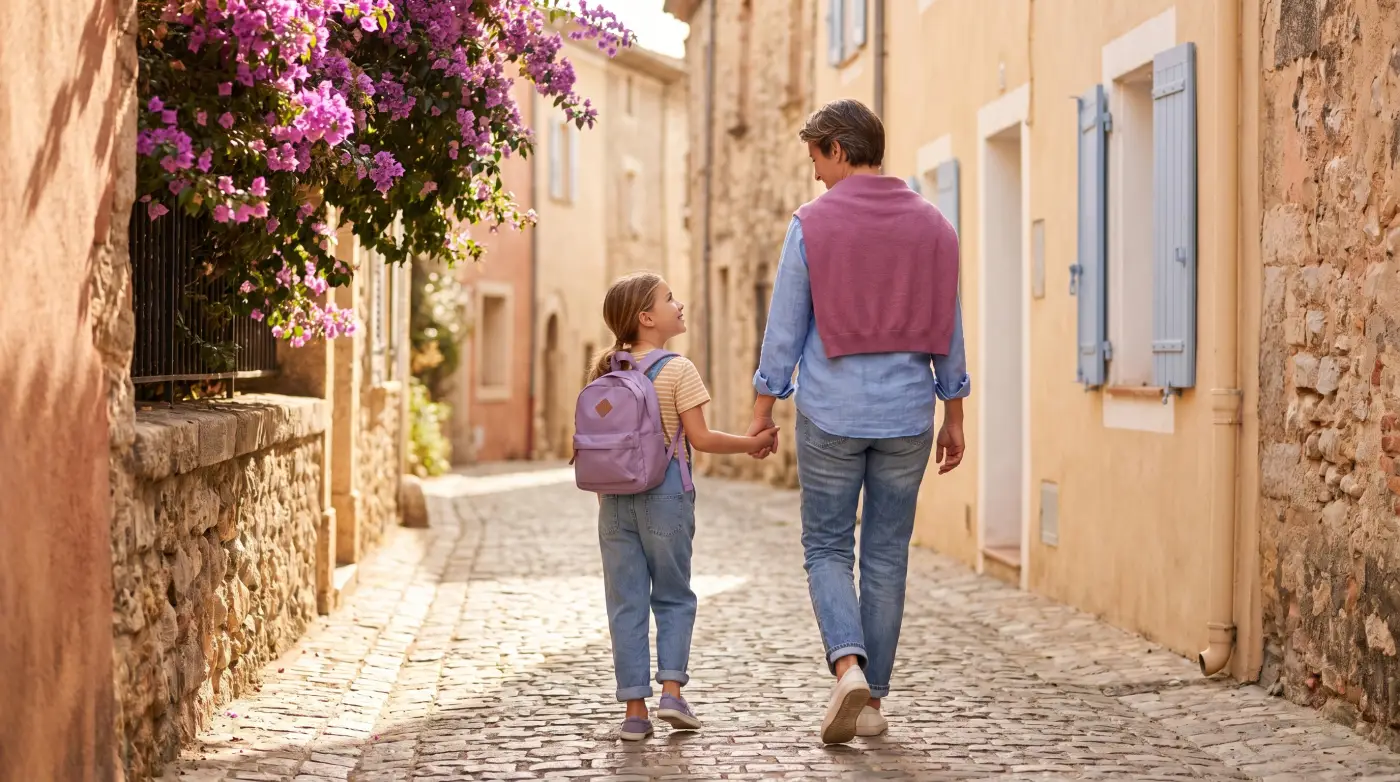
One similarity worth naming explicitly before the comparison gets sharper: family culture itself. Spain and Italy diverge on plenty – business culture, regional politics, climate band by band, the specific shape of each welfare state. But on the everyday lived experience of being a family with young children, the two converge. Both are Mediterranean cultures where children are treated as the heart of community life, where the whole village – or quartiere, or barrio – tends to look out for them, and where that pattern holds even in big cities. For British and northern European families weighing Spain against Italy, that shared baseline removes one variable: you are not choosing between a family-first culture and a family-second one. You are choosing between two family-first cultures with different practical scaffolding underneath.
The actual difference: schools
This is where the comparison stops being a paperwork exercise and starts being a family decision.
Both countries’ public schools are free for children of legally resident foreign families. Spain’s colegios públicos and Italy’s scuole statali both enrol children with valid residence documentation, in age-appropriate classes, regardless of the child’s command of Spanish or Italian. Both systems are obliged to provide some level of linguistic support for newly arrived non-native-speaking pupils. The quality and shape of that support is where the systems diverge sharply.
In Spain, support for newly arrived non-Spanish-speaking children is organised at the level of the autonomous community. Most regions run some version of an aula de acogida (welcome classroom) programme or equivalent pedagogía terapéutica (PT) provision, in which children receive intensive language support alongside mainstream classroom attendance. Catalonia, the Valencian Community, Madrid, Andalusia, and the Basque Country all have established frameworks, though delivery varies by individual school. In addition, Spain has a strong public bilingual movement. Many autonomous communities run partial-immersion English programmes in public schools, often under the BEDA framework (a British Council partnership) or under regional bilingual education plans that deliver some subjects through English using CLIL methodology. These are not English-medium schools, but they substantially reduce the language gap for children of English-speaking families.
In Italy, support for non-Italian-speaking pupils is also a legal obligation, organised at regional and provincial level through Uffici Scolastici Regionali. The provision is well established in northern regions with longer histories of immigration: Lombardy, Emilia-Romagna, Veneto, Piedmont, and the autonomous province of Trento all have developed protocols, dedicated facilitators, and L2 (Italian as a second language) hours built into the school timetable. In southern regions and in smaller communities the provision is thinner on the ground, and the experience can depend heavily on the individual school’s resourcing. Public bilingual programmes in Italian state schools exist but are notably fewer in number than the Spanish public bilingual network. English-medium and English-strand options in Italy cluster in the private sector, particularly in Rome, Milan, Florence, and Bologna.
Across both countries, fully English-medium international schools, whether British curriculum, American curriculum, or International Baccalaureate, exist in every major city. Fees typically sit in the €8,000 to €20,000 per child per year range, with the higher end concentrated in Rome, Milan, Madrid, and Barcelona. For families using the DNV income threshold as a budget anchor rather than a comfortable buffer, the international-school route is rarely viable without a separate budget line.
The practical takeaway for school-age children: a family choosing Spain has a wider public bilingual safety net to land on, and a more standardised welcome framework for the child’s first months. A family choosing Italy gets a stronger public-school reception infrastructure in the north than in the south, and will, on average, need to think harder about either the international school budget or a longer mainstream-school adaptation period.
The actual difference: healthcare for children
Both countries register legally resident family members on the national public health system once residence is documented locally. In Spain, this is the Sistema Nacional de Salud (SNS); in Italy, the Servizio Sanitario Nazionale (SSN). Once a child is registered in either system, paediatric primary care, specialist referrals, hospital care, and routine vaccinations are covered on the same basis as for citizens.
There is a Spanish-DNV-specific nuance worth flagging. The DNV is associated with a special tax regime for the principal applicant (the so-called Beckham law adapted for displaced workers), which treats the holder as a non-resident for income-tax purposes for up to six years. This special tax status does not exempt the DNV holder from paying into Spanish social security through autónom@ contributions or via an EOR cotización, and it is that social security registration that triggers SNS access for the family. In other words, the tax regime and the healthcare access run on separate tracks. Verify the current treatment with a Spanish gestor before banking on a specific outcome, especially if structuring the family setup mid-tax-year.
The Italian DNV similarly leads to SSN registration once the residence permit (permesso di soggiorno) is issued and the family is resident in a comune. Local registration with the ASL (Azienda Sanitaria Locale) is the step that activates paediatric care for children, including assignment of a pediatra di libera scelta for under-14s, which is one of the genuinely useful features of the Italian system.
In both countries, the gap between arrival and full public-system registration is bridged by the private health insurance required for the visa application. Families should plan on that insurance remaining live for at least the first three to six months after arrival, not because it takes that long on paper, but because the paperwork chain (residence card, padrón or comune registration, social security or ASL, health card) realistically does take that long in most municipalities.
The actual difference: cost of living and family budget realities
Spain’s national-average cost of living sits below Italy’s, and the family-budget gap widens further once schooling, transport, and housing in family-friendly neighbourhoods are factored in. Madrid and Barcelona compress that gap; Rome and Milan widen it; smaller cities in both countries push it open further.
For housing, Spanish family-friendly neighbourhoods in Valencia, Bilbao, Málaga, and Zaragoza remain meaningfully more affordable than the equivalent zones in Rome, Milan, Florence, or Bologna. Italian housing in central northern cities has tightened considerably over the past three years, and family-sized rentals are scarce in the central neighbourhoods most parents are willing to walk a school run from. Both countries are working through housing affordability crises; neither is fully resolved.
For childcare and extracurriculars, both countries have strong municipal sport, music, and arts provision at low cost, though access often depends on the padrón or anagrafe registration that comes with formal residence. Private extracurricular markets are substantial in both, especially around language tuition, swimming, and music.
For the DNV income threshold itself, the higher Italian floor (~€28,000 principal plus family additions) means that the visa is, in practice, screening for a household with more than a baseline budget. The Spanish floor is lower in absolute terms but is calibrated to a national minimum wage that still allows for a wide spread of real-world family budgets.
City-level honest takes
Spain.
Madrid. Strong public bilingual school network, the densest concentration of English-strand state schools in the country, and good paediatric care. The trade-off is housing cost, particularly in central and inner-ring family neighbourhoods. Best fit for families whose children are at primary or early secondary stage and who can sustain higher rent.
Barcelona. Comparable to Madrid on school provision, plus a Catalan-medium dimension that is non-negotiable in the public system. Children in Catalan public schools will learn through Catalan, with Spanish as a subject. Families comfortable with their children becoming Catalan-Spanish bilingual will find Barcelona excellent; families set on Castilian-only schooling should reconsider the city or use the private/international route.
Valencia. Increasingly the family-DNV destination of choice. Bilingual programmes are well established, the city has a substantial English-speaking expat community, and housing costs sit below Madrid and Barcelona. A Valencian-language dimension exists in the public system, structurally similar to Catalan in Barcelona, and worth understanding before committing.
Bilbao and the Basque Country. Excellent public services and education quality, lower density of English-speaking community than the Mediterranean cities, and a Basque-language dimension in the public system. Works well for families who actively want a smaller, less-international city experience and are prepared for the linguistic complexity.
Italy.
Rome. The largest international-school market, the broadest range of English-medium private options, and the most developed embassy / multinational expat infrastructure. Public-school reception provision is real but uneven, with northern regions outpacing it. Best fit for families with the budget for the international route or who are particularly committed to Italian acquisition.
Milan. Strongest northern-region reception infrastructure for non-Italian-speaking pupils, multiple bilingual and international school options, and the most developed paediatric specialist network in the country. Highest cost of living. Best fit for families with employer support or higher income.
Bologna. Often the quiet recommendation from Italian-resident families: strong public-school provision, established reception protocols, walkable family-scale city, lower cost than Milan or Rome. Smaller English-medium private market, but viable for families willing to engage with Italian-medium public schooling.
Florence. Genuinely lovely for a family but tourism-pressured, with central housing supply heavily diverted to short-let. Good international-school provision; manageable but mid-tier public-school reception. Works best for families with a budget cushion.
The regional pattern in Italy is more important to a family than the city choice itself. North-central Italy (Lombardy, Emilia-Romagna, Veneto, Piedmont, Tuscany) is where the public school system is best resourced to integrate a non-Italian-speaking child. South of Rome the family-DNV experience becomes substantially more dependent on the individual school.
Practical next steps
Before committing to either country, parents should:
- Confirm the current income threshold in writing with the consulate handling the application. Both thresholds adjust, and consulates apply the figure current at the date of submission.
- Ask the consulate explicitly about family-member income additions, dependent-adult coverage, and the documentation chain for accompanying children (apostilled birth certificates, marriage certificates, custody documentation if applicable, all translated by sworn translators).
- Identify two or three candidate cities or municipalities rather than one. Public-school catchment areas matter, and a family with school-age children typically needs to align housing search with school availability for the right year groups.
- Contact the destination city’s municipal education office (in Spain, the consejería or oficina municipal de escolarización; in Italy, the comune’s ufficio scuola or the relevant Ufficio Scolastico Regionale) before relocating, to understand local enrolment windows, document requirements, and whether mid-year admission is realistic for the child’s year group.
- Plan the private health insurance to run for at least six months beyond arrival, irrespective of how quickly the public-system registration is supposed to happen in theory.
- For Spain specifically, take advice from a Spanish gestor on the interaction of the special DNV tax regime with social security registration, before deciding whether to register as autónom@ or via an EOR. This decision affects healthcare access timing for the whole family.
- For Italy specifically, verify the “highly qualified worker” criterion early. Master’s-level qualifications need to be apostilled and, where required, recognised through dichiarazione di valore or Cimea attestation. The recognition process is slower than the visa process and is the most common reason for Italian DNV applications stalling.
Where this is going
Both regimes are still young. Spain’s framework is three and a half years old; Italy’s operational DNV is barely past its first birthday. Both are likely to evolve. The family-rights provisions, in particular, are an area where current guidance is thinner than the solo-applicant guidance, and where future amendments are most likely to land. Families considering a move in 2026 or 2027 should expect to recheck thresholds, documentation requirements, and family-reunification specifics at the point of application rather than relying on guidance published even a year earlier.
The structural point worth holding on to: both visas put a family on a credible path to long-term European residence in a country with a functional public school system and a functional public health system. The choice between them is less about which visa is “better” and more about which country, region, and city fits the children at the ages they are now, the family budget as it actually is, and the language environment the parents are willing to commit to for the next five years. The DNV framework is the door. The country, region, and school are the room.