Please note: This article provides general information only and does not constitute legal, tax, or immigration advice. Rules vary by country and individual circumstances. Always consult a qualified professional before making decisions based on the information in this guide.
TL;DR: The EU’s Entry/Exit System went fully live on 10 April 2026, replacing passport stamps with biometric tracking (facial scan + fingerprints) at all Schengen borders. The system automatically calculates your remaining 90/180 days with no room for ambiguity. Digital nomad visa holders are exempt in their issuing country but still tracked for travel to other Schengen states. Biometric data is stored for 3 years (5 years if you overstay).
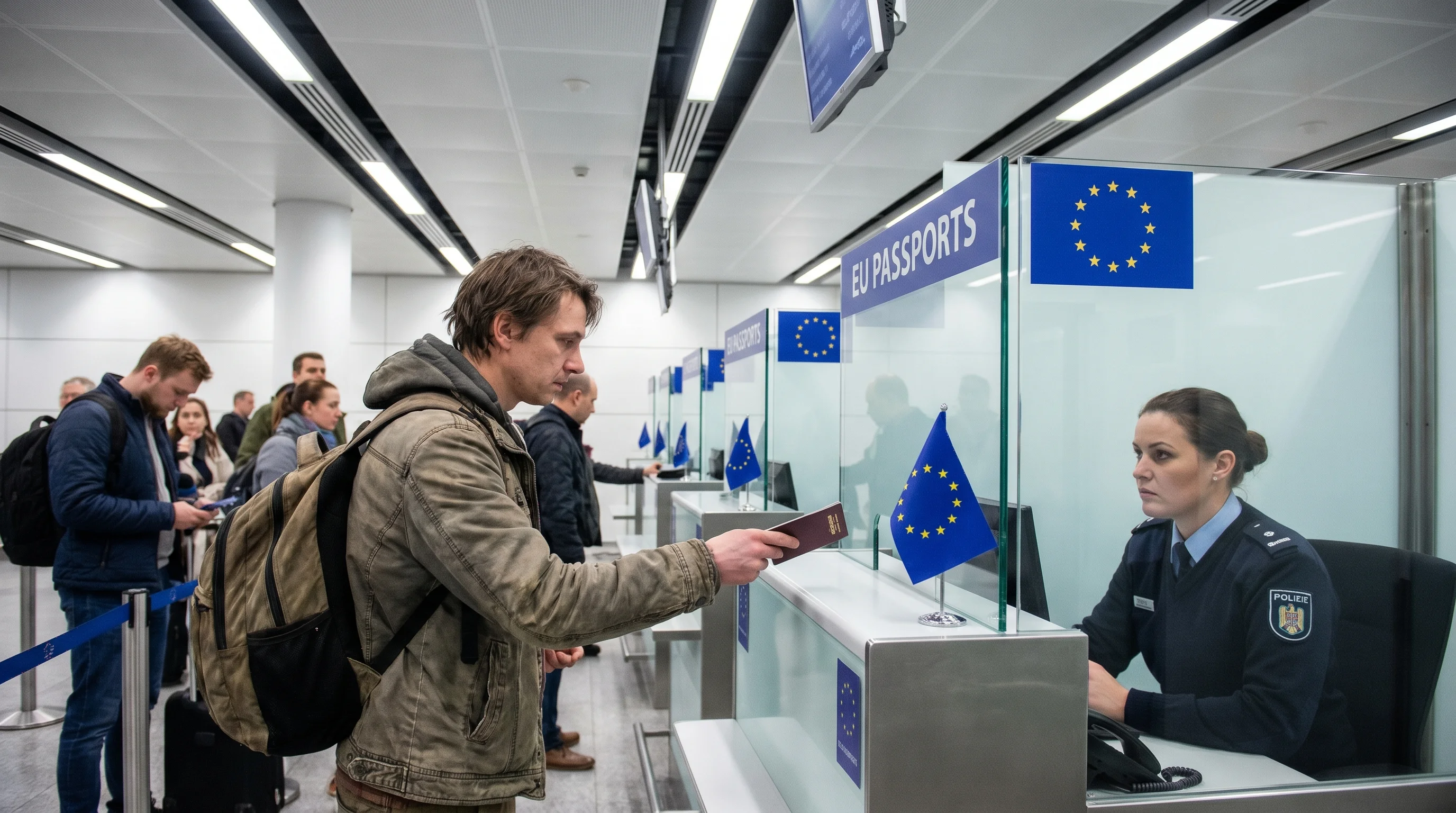
After years of delays, false starts, and a rocky phased rollout that began in October 2025, the EU’s Entry/Exit System is now fully operational. As of 10 April 2026, biometric border checks have replaced manual passport stamps at all external Schengen border crossing points.
For most tourists, this is a minor inconvenience – a face scan and fingerprint capture instead of a stamp in your passport. For remote workers who have been navigating the Schengen area’s 90/180-day rule, it changes everything.
The days of ambiguous passport stamps, informal border resets, and plausible deniability about how long you’ve actually been in the Schengen zone are over. The system knows exactly when you entered, exactly when you left, and exactly how many days you have remaining.
Here’s what that means in practice.
What is the Entry/Exit System?
The EES is an automated IT system that records the entry and exit of non-EU nationals crossing the external borders of the Schengen area. It covers 29 European countries – all Schengen member states and associated nations.
When you pass through border control, the system captures:
- Your facial image (a photo taken at the border)
- Your fingerprints (four fingers, for travellers aged 12 and over)
- Your passport or travel document details
- The date, time, and location of your entry and exit
This data is stored centrally and accessible to border officers across the entire Schengen area. It replaces the old system of manual passport stamps, which were inconsistent, sometimes illegible, and easily miscounted.
Children under 12 are exempt from fingerprint capture but still require a facial scan. The biometric data is retained for three years after your last recorded exit from the Schengen area, or for five years if you overstay.
The 90/180-day rule: no more grey areas
The 90/180-day Schengen rule has always been the central constraint for non-EU nationals visiting Europe without a long-stay visa. The rule is straightforward in theory: you can spend up to 90 days within any rolling 180-day period in the Schengen area.
In practice, it was anything but straightforward. Passport stamps were the only record, and they had well-known limitations:
- Stamps were sometimes missing, smudged, or placed over other stamps
- Entry and exit stamps could be hard to distinguish
- Different border officers interpreted the rolling 180-day window differently
- Travellers who crossed internal Schengen borders (which have no routine passport control) had no stamps at all for those movements
- Calculating your remaining days required manually counting stamps and doing date arithmetic
The EES eliminates all of this ambiguity. The system automatically calculates your remaining days and alerts border officers when you’re approaching or have exceeded the 90-day limit. There is no interpretation involved, no room for clerical error, and no benefit of the doubt.
What this means for the “border reset” strategy
Let’s address the elephant in the room. Many remote workers and long-term travellers have historically used informal strategies to extend their time in the Schengen area – hopping to a non-Schengen country (Croatia before it joined, or Morocco, Turkey, the UK) for a few days before re-entering, hoping that the break would somehow reset their counter.
This strategy was always legally dubious. The 90/180-day rule uses a rolling window, not a fixed period. A brief trip outside Schengen doesn’t reset anything – it just adds a few days of absence to your rolling calculation.
But with paper stamps, enforcement was inconsistent. Some border officers counted carefully; others barely glanced at your passport. The practical reality was that overstays of a few days – or even weeks – often went undetected.
Under the EES, this is no longer possible. The system tracks every entry and exit electronically. When you arrive at a Schengen border, the officer’s screen shows your exact remaining days. If you’ve exceeded 90 days in the past 180, you will be flagged. There is no workaround, no charm offensive, and no “I didn’t realise” defence.
The consequences of an overstay detection can include:
- Denial of entry at the border
- Fines (varying by country, but often EUR 500-3,000+)
- An entry ban of up to five years in the Schengen Information System
- Complications with future visa applications for any Schengen country
Who is affected?
The EES applies to all third-country nationals (non-EU/EEA citizens) who are subject to the 90/180-day short-stay rule. This includes:
- US, UK, Canadian, Australian citizens and other visa-waiver nationals entering for tourism or business visits
- Holders of Schengen short-stay visas (Type C visas)
- Anyone entering the Schengen area without a long-stay visa or residence permit
Who is NOT affected
Importantly, the following groups are exempt from EES registration:
- EU/EEA citizens and Swiss nationals – You use the EU passport gates as before.
- Holders of long-stay visas (Type D) – If you have a national long-stay visa issued by a Schengen country, you are not subject to EES checks. This includes most digital nomad visas.
- Holders of residence permits – If you have a valid residence permit from any Schengen country, you’re exempt. Your residence permit demonstrates your right to be in the country.
- Diplomats and certain international organisation staff
- Cross-border workers with specific permits
This exemption for long-stay visa and residence permit holders is crucial for remote workers who have done things properly. If you hold a Spanish digital nomad visa, a German freelance residence permit, a Portuguese D7 visa, or any other national long-stay authorisation, the EES does not apply to you. You continue to pass through borders using your residence card or long-stay visa.
Practical implications for remote workers
If you have a digital nomad visa or residence permit
Good news: the EES doesn’t directly affect you. Your long-stay visa or residence card exempts you from the 90/180-day tracking.
However, there are some secondary effects to be aware of:
- Border processing times may increase initially. The EES has already caused delays at major airports and land borders during its phased rollout. Even if you’re in the exempt lane, overall congestion can affect your travel experience.
- Keep your residence card accessible. You need to clearly demonstrate your exempt status. Don’t bury your residence permit at the bottom of your bag.
- Carry supporting documentation. While not technically required, having your visa approval letter or employment contract on hand can smooth any queries about your status.
- If you need to document arrival dates, the lack of a passport stamp may complicate things. Check local advice. You might need to visit a local police station or similar procedure to confirm the date you entered the country
If you’re on a tourist entry or visa-waiver
This is where the EES fundamentally changes the game. If you’ve been working remotely while travelling through the Schengen area on tourist entries – whether legally or in a grey area – the EES removes any margin for error.
Your days are now counted precisely. There is no wiggle room. If you plan to be in the Schengen area for anywhere close to 90 days, you need to track your days carefully and leave with a buffer.
Overstay detection is automatic. You don’t need to encounter a particularly diligent border officer. The system flags overstays regardless of which country you exit through.
Historical data is retained. If you overstayed in the past and it went unnoticed, future entries may still be smooth – the EES doesn’t retroactively analyse pre-system travel. But from 10 April 2026 onwards, every day is on the record. And remember: even if immigration enforcement doesn’t flag you, the tax implications of working in a European country and social security obligations are separate and increasingly enforced risks.
If you split time between Schengen and non-Schengen countries
Remote workers who base themselves in non-Schengen European countries (like the UK, Albania, Montenegro, or Turkey) and make regular trips into the Schengen area need to be especially careful. Each entry and exit is now precisely logged, and the rolling 180-day window means that frequent short trips can eat through your 90 days faster than you might expect.
Example: If you live in Albania and visit Italy for two weeks every month, you’ll use up your 90 days in roughly six months. Previously, some of these entries and exits might not have been perfectly captured. Under EES, they all are.
Remember that for Schengen purposes, travel days or partial days count as whole days.
The technology behind EES
The system is operated by eu-LISA, the EU’s agency for large-scale IT systems in the area of freedom, security, and justice. The same agency manages the Schengen Information System (SIS), the Visa Information System (VIS), and the forthcoming ETIAS (European Travel Information and Authorisation System).
The EES uses a combination of:
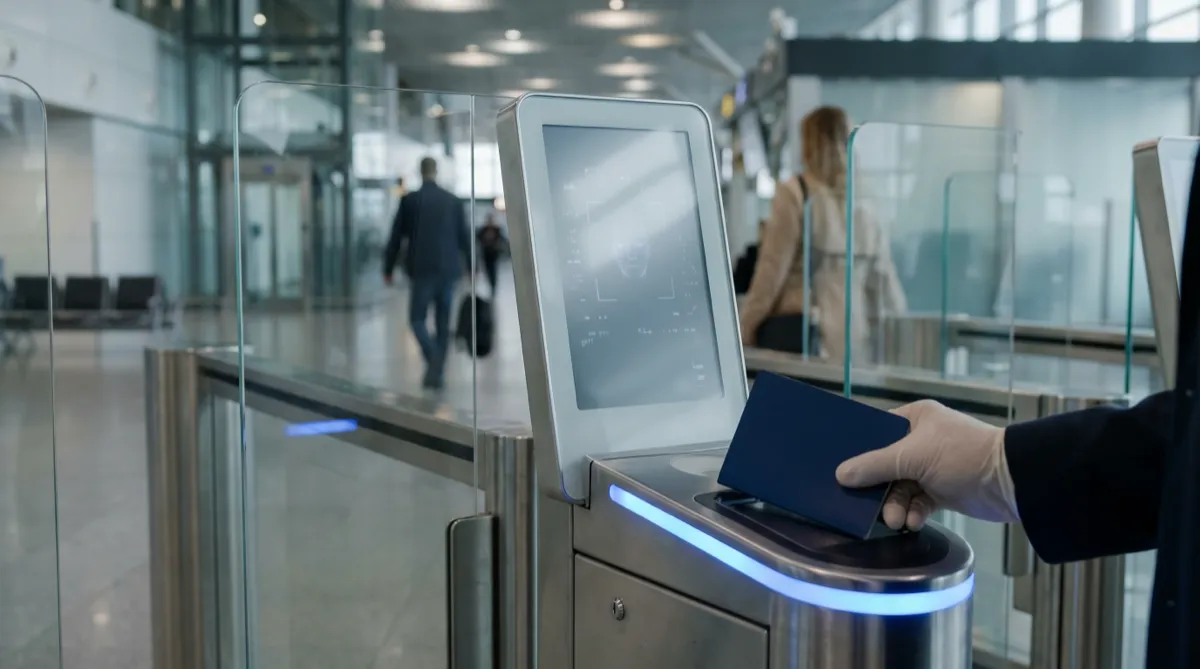
- Self-service kiosks at major airports and some land borders, where travellers scan their passport and provide biometrics
- Officer-assisted registration at smaller crossing points
- Automated gates for registered travellers at participating airports
During the phased rollout since October 2025, the system experienced significant teething problems – including system crashes at major airports, extended processing times during peak periods, and inconsistent implementation across different border crossing points. The European Commission has allowed member states a flexibility period of up to 90 days (with a possible 60-day extension) after full implementation to manage the transition.
As of mid-April 2026, most major airports have stabilised, but land borders – particularly between the Schengen area and the Western Balkans – are still experiencing longer wait times.
ETIAS: what comes next
The EES is the first half of the EU’s Smart Borders package. The second half is ETIAS – the European Travel Information and Authorisation System – which will require visa-exempt travellers (like US and UK citizens) to obtain a pre-travel authorisation before entering the Schengen area.
ETIAS is expected to launch later in 2026 or early 2027. It will cost EUR 7, be valid for three years, and function similarly to the US ESTA or Australia’s ETA. It’s a pre-screening tool, not a visa, but it adds another layer of tracking and documentation to Schengen travel.
For remote workers, ETIAS will mean one more step in the travel preparation process, but it won’t change the fundamental 90/180-day calculation. What it will do is create an additional data point that ties your travel plans to your actual movements – making any discrepancy between stated intentions and actual behaviour more visible.
What you should do now
Get legal if you’re not already
The EES makes one thing unambiguous: the era of working remotely in Europe on tourist entries while hoping nobody notices is over. If you plan to spend more than 90 days in the Schengen area in any 180-day period, you need a long-stay visa or residence permit. Period.
The good news is that there are now more options than ever. Over 20 European countries offer some form of digital nomad visa or remote work permit. If Spain is your target, Richelle de Wit can guide you through the DNV application. Our Schengen guide covers the options in detail.
Track your days meticulously
If you’re relying on visa-waiver entries, use a Schengen calculator to track your rolling 90/180 days. Several free tools exist online, and you should check your count before every trip into the Schengen area.
Consider your base strategically
If you want to be based in Europe long-term without a Schengen country residence permit, consider non-Schengen options as your primary base – the UK, Albania, Montenegro, Turkey, or Georgia – and use your 90 Schengen days strategically for travel.
Get your documents in order
Make sure your passport has at least two blank pages and is valid for at least three months beyond your planned departure from the Schengen area. The EES doesn’t change these requirements, but biometric checks mean passport irregularities (like a damaged chip) can cause delays.
Frequently asked questions
Do I need to do anything to register for EES? No pre-registration is needed. Your biometric data is captured automatically at the border on your first entry after the system went live.
What if I have a residence permit but enter through a different Schengen country? Your residence permit exempts you from EES regardless of which Schengen country you enter through. However, carry your residence card with you – you’ll need to show it.
Does EES apply at airports within the Schengen area? No. EES only applies at external Schengen borders. Flights between Schengen countries (e.g., Paris to Berlin) are treated as domestic flights with no border checks.
What happens if the system is down when I arrive? Member states have contingency procedures, including reverting to manual passport stamps temporarily. However, your data will be entered retrospectively when the system comes back online.
Can I check my remaining days? A traveller self-service portal is planned but not yet operational. In the meantime, you’ll need to track your days manually or ask a border officer at your next entry point.
Does EES affect my right to transit through a Schengen airport? International transit (remaining in the airport’s transit zone without entering the country) is generally not subject to EES registration, but rules vary by nationality and airport.
Will my biometric data be shared with non-EU countries? Not under the current framework. EES data is accessible only to Schengen member state border authorities and, in limited circumstances, law enforcement agencies within the EU.
The bigger picture
The EES represents a fundamental shift in how the Schengen area manages its borders. For remote workers, the message is clear: informal arrangements and legal grey areas are shrinking fast. The combination of biometric tracking (EES), pre-travel authorisation (ETIAS), and digital visa systems is creating a comprehensive picture of who is in the Schengen area, how long they’ve been there, and whether they have the right to be.
This isn’t necessarily bad news. For remote workers who have proper visas and residence permits, it changes very little. For those who have been operating in the gaps between enforcement and regulation, it’s time to get legal.
The options exist. The digital nomad visa landscape in Europe is richer and more varied than it has ever been. The EES just makes it much more important that you actually use them.