Can I work remotely on a tourist visa in Europe? The honest answer
This is the question we get asked more than almost anything else. It usually arrives in some variation of: “I’m planning to spend three months in Portugal/Spain/Italy, working remotely for my US/UK/Australian employer. Can I just enter on a tourist visa?”
TL;DR: Working remotely on a tourist visa in Europe is technically illegal in most countries. The EU’s Entry/Exit System now tracks your days precisely. Digital nomad visas exist in 15+ countries – use them instead. Brief, incidental work during a genuine holiday is low-risk; full-time remote work on a tourist entry is not.
The honest answer is: legally, no. Practically, it’s complicated. And as of April 2026, the consequences of getting it wrong have increased substantially.
We know this isn’t what many people want to hear. The internet is full of breezy advice from travel bloggers who’ll tell you “everyone does it” and “nobody checks.” Some of that was arguably true five years ago. It’s much less true today, and the trajectory is entirely towards more enforcement, not less.
So let’s have the conversation properly. What does the law actually say? Where are the grey areas? What has changed with the new Entry/Exit System? And – most importantly – what should you actually do?
The legal position: what “work” means on a tourist visa
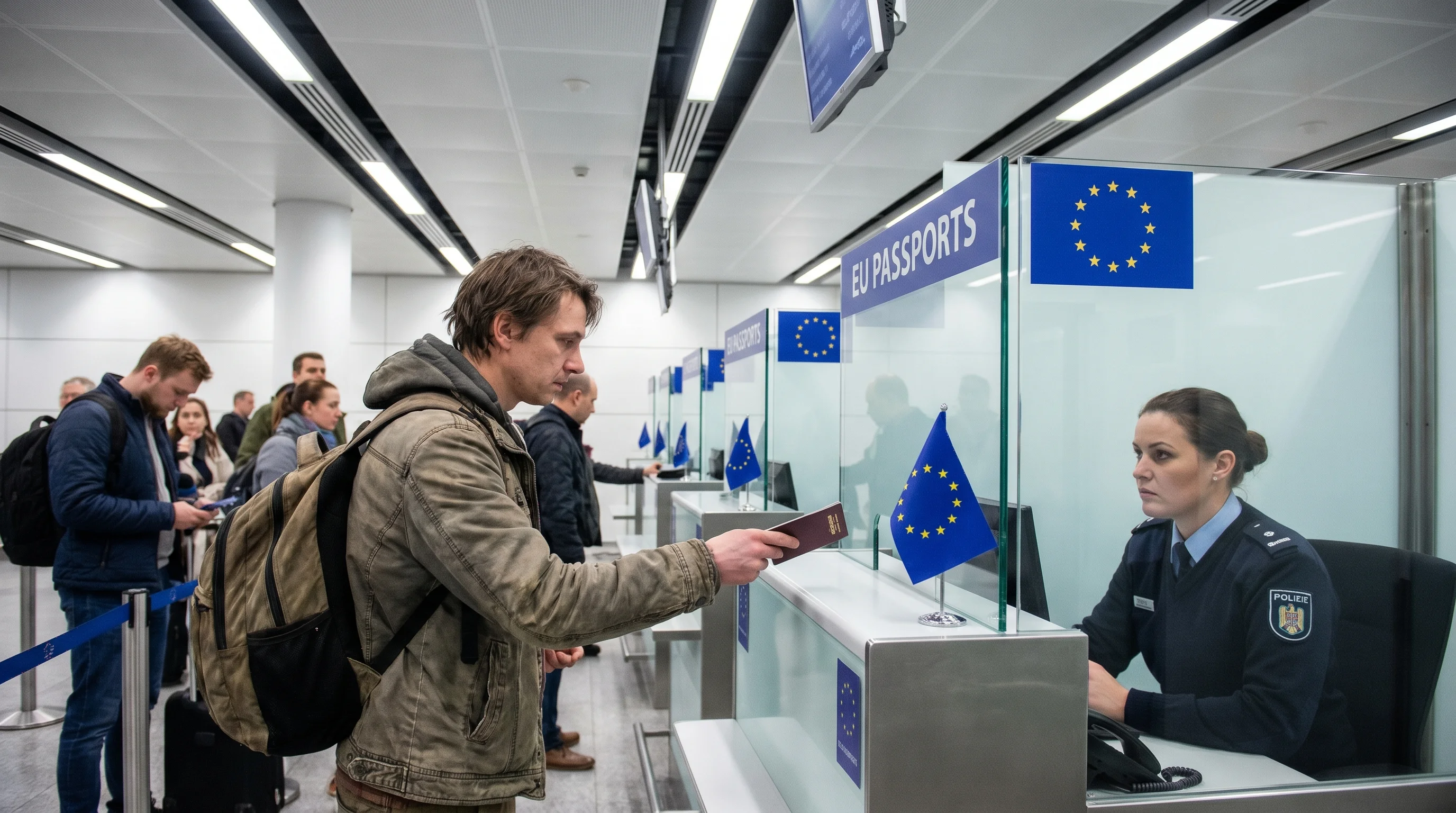
A Schengen short-stay visa (or visa-waiver entry) permits you to enter the Schengen area for tourism, business visits, or transit – for up to 90 days in any 180-day rolling period. The key phrase here is “business visits,” because it creates a distinction that matters.
What’s permitted on a tourist/business entry
- Attending conferences, meetings, and trade fairs
- Negotiating contracts (but not executing them)
- Visiting business partners or clients
- Conducting market research
- Short-term training (in some countries)
What’s NOT permitted
- “Performing” work – This includes any activity that would normally require a work permit
- Providing services – Even if your client or employer is outside the Schengen area
- Self-employment – Running a business, even a fully remote one
- Employment – Working for any employer, regardless of where they’re based
The critical principle is this: immigration law in most European countries defines “work” based on where the activity is performed, not where the employer or client is located and not where the income is paid. If you’re sitting in a cafe in Lisbon writing code for a San Francisco startup, you are performing work in Portugal – regardless of who pays you or where your contract is governed.
Countries like France, Germany, Spain, Italy, and the Netherlands explicitly prohibit any work activity on a tourist entry. The fact that your employer is foreign doesn’t create an exception. France underlined this in December 2025 by formally clarifying that remote work is banned on visitor visas — prefectures have since been actively refusing renewals where applicants disclose any remote work activity, even for foreign employers.
The grey area: where reality meets regulation
If the law is this clear, why does confusion persist? Because there’s a meaningful gap between the strict legal position and how it’s been historically enforced – and because the definition of “work” doesn’t map neatly onto the reality of modern digital life.
The “checking email” defence
A common argument goes: if I’m on holiday and check my work email from the hotel, am I working illegally? What if I join a video call? What if I fix a critical bug that takes 30 minutes?
There’s no formal legal distinction between “checking emails” and “doing your full-time job” in most European immigration frameworks. The law doesn’t carve out exceptions for brief, incidental work activities during a genuine tourist stay.
In practice, common sense suggests that nobody is going to be investigated for answering a few emails on holiday. The issue isn’t about occasional, incidental responses to urgent matters. It’s about people who enter as tourists but whose primary purpose is to work – spending 8 hours a day on their laptop, attending daily standups, billing clients for full-time hours, all while technically on a tourist entry.
The legal risk scales with the extent, regularity, and visibility of the work activity. A tourist who sends a few emails is practically indistinguishable from one who doesn’t. A remote worker with a coworking membership, a local SIM card, and a 90-day stay pattern is a different matter.
The “my employer is foreign” defence
Another common misconception: because your employer is in another country, you’re not “working in” the country you’re visiting. This argument doesn’t hold up legally. European immigration law is territorial – it cares about where you physically are when you perform work, not the nationality or location of your employer.
The corollary is that it doesn’t matter where you’re paid, which currency you receive, or which country’s employment law governs your contract. If you’re physically in Spain doing the work, you’re working in Spain.
The “nobody checks” defence
This was the strongest practical argument – and it’s the one that the EES has substantially weakened.
Historically, enforcement was minimal because:
- Immigration officers at borders had limited information about your activities
- There was no systematic tracking of how long you’d been in the country
- Tax authorities had limited visibility into short-term visitors
- The resources required to investigate individual remote workers weren’t justified
Some of these factors remain. Immigration officers still don’t routinely ask what you plan to do with your laptop. Tax audits of short-term visitors are still uncommon. But the information infrastructure has shifted dramatically.
How the EES changes the calculus
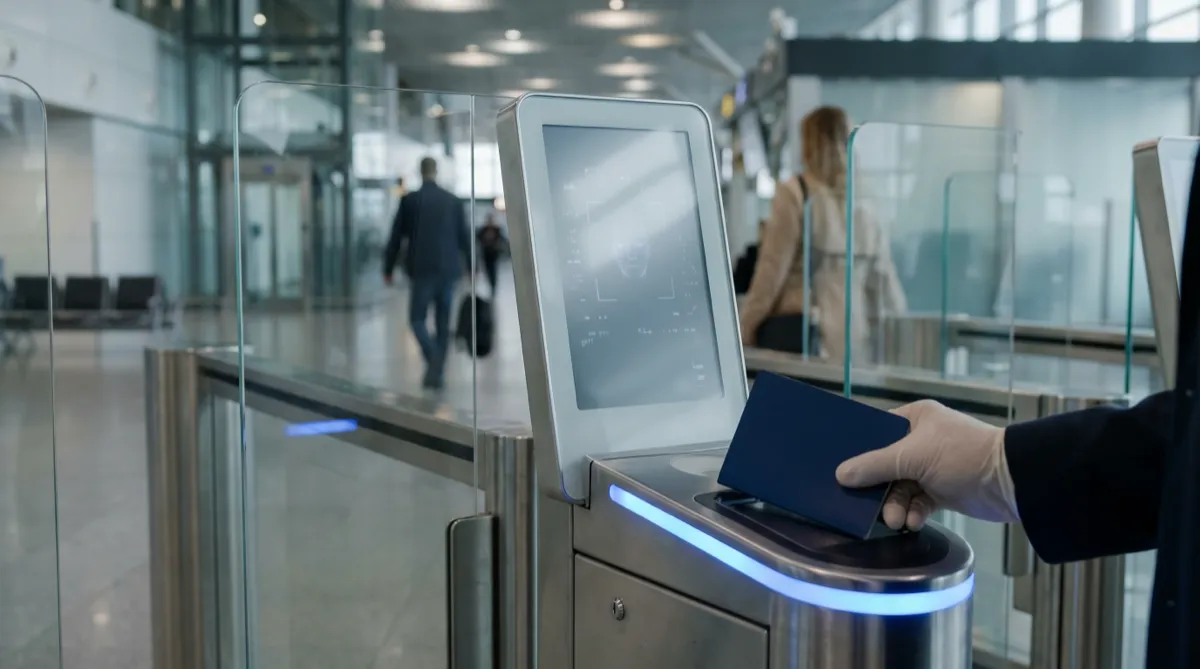
The EU’s Entry/Exit System, which went live on 10 April 2026, doesn’t directly detect remote work. It’s a border tracking system, not a workplace enforcement tool. But it changes the enforcement landscape in several important ways:
Pattern detection
The EES creates a detailed record of your travel patterns across the entire Schengen area. If you enter the Schengen zone for 89 days, leave for 91 days, then return for another 89 days – repeatedly – the pattern is visible. While this isn’t evidence of work, it’s evidence of a lifestyle that doesn’t match tourism, and it can trigger additional scrutiny at the border.
Overstay prevention
Previously, overstaying the 90/180-day limit was risky but often undetected. Under the EES, overstays are automatically flagged. This matters because many remote workers who “just” entered as tourists were also people who sometimes stayed slightly too long, relying on the imprecision of passport stamps. That safety valve is gone.
Data sharing
EES data is available to border officers across all Schengen countries and, in certain circumstances, to law enforcement. This means your entry patterns aren’t just visible to the specific country you’re visiting – they’re visible everywhere.
Combined with ETIAS
When ETIAS launches (expected later in 2026 or early 2027), visa-waiver travellers will need to declare the purpose of their visit as part of the pre-travel authorisation. If you declare “tourism” and your actual activity is full-time remote work, you’ve created a documented inconsistency that could surface in future applications.
The tax dimension
Even if immigration enforcement doesn’t catch you, the tax implications of working on a tourist visa are a separate risk. Our guide to the five European countries that catch remote workers out most on tax covers the specific traps in detail.
Most European countries consider you a tax resident if you spend more than 183 days per year in the country. But some have stricter rules – and in any case, the country where you perform work generally has the right to tax income earned within its borders, regardless of your residency status.
If you work remotely in Spain for 80 days, Spain has a legitimate claim to tax the income you earned during those 80 days. In practice, this has rarely been enforced against short-term visitors. But the tax treaties that govern these situations are clear, and the trend is towards greater information sharing between tax authorities.
Some countries are also beginning to look at economic substance tests – examining where you actually perform your work, who your clients are, where your digital activity originates from – as part of broader efforts to ensure that remote work income is properly attributed.
What actually happens if you’re caught
The consequences depend on the country, the circumstances, and whether the issue is detected at the border, during your stay, or afterwards.
At the border:
- Additional questioning about your travel purpose
- Request to see evidence of accommodation, return flights, and financial means
- In extreme cases, denial of entry
During your stay:
- Investigation by labour inspectors (rare but possible, particularly if reported)
- Fines for working without authorisation
- Deportation and an entry ban to the Schengen area
After your stay:
- Tax assessments for unreported income earned in the country
- Problems with future visa or residence permit applications
- Complications if you later apply for a digital nomad visa or residence permit in the same country
The last point is particularly relevant. If you decide to “go legit” and apply for a Spanish digital nomad visa after having spent several previous years entering Spain as a tourist while working remotely, your travel history (now precisely documented by the EES) could raise questions during the application process.
What to do instead: the legal alternatives
The good news is that Europe now offers more legal pathways for remote workers than ever before. Here’s an overview of the main options by country.
Countries with dedicated digital nomad visas
| Country | Visa name | Min. income (approx.) | Duration | Key feature |
|---|---|---|---|---|
| Spain | Visado para Teletrabajo | EUR 2,849/month | Up to 5 years | Beckham Law access (incl. DNV holders) – apply with Richelle |
| Portugal | D8 Digital Nomad Visa | EUR 3,680/month | 1 year (renewable) | Path to residency |
| Italy | Digital Nomad Visa | EUR 2,333/month | 1 year (renewable) | New in 2024 |
| Croatia | Digital Nomad Permit | EUR 2,539/month | 1 year | No local income tax |
| Greece | Digital Nomad Visa | EUR 3,500/month | 1 year (renewable) | 50% tax reduction (7 years) |
| Estonia | Digital Nomad Visa | EUR 4,500/month | Up to 1 year | Pioneered the DNV concept |
| Germany | Remote Work Visa (coming) | TBC | TBC | Announced in 2026 Visa Handbook |
| Malta | Nomad Residence Permit | EUR 3,500/month | 1 year (renewable) | English-speaking |
| Cyprus | Digital Nomad Visa | EUR 2,300/month | 1 year (renewable) | Non-dom tax benefits |
Other residence routes
If you don’t meet digital nomad visa income thresholds, or if your target country doesn’t offer a DNV, other options include:
- Freelance visas (Germany, Netherlands, Czech Republic)
- Self-employment permits (various countries)
- D7 Passive Income Visa (Portugal – for those with passive income)
- Non-Lucrative Visa (Spain – for those who won’t work locally, though remote work creates a grey area)
- Employer-sponsored work permits (if your employer has or establishes a local entity)
- Employer of Record (EOR) arrangements (where an EOR employs you locally on behalf of your foreign employer)
The short-stay strategy (done properly)
If you genuinely want to spend a short period in Europe – a few weeks, not months – and your primary purpose is tourism with some incidental work, the practical risk is low. But there’s a difference between “I’m taking a two-week holiday in Italy and will occasionally check email” and “I’m spending 85 days in Portugal working full-time from a coworking space.”
If you do use tourist entries for short stays:
- Be honest about your primary purpose. If it’s tourism with incidental work, fine. If it’s work with incidental tourism, get the right visa.
- Stay well within the 90-day limit. Don’t push boundaries.
- Don’t establish local economic ties – coworking memberships, local clients, local bank accounts – that suggest you’re working rather than visiting.
- Keep records of your days and travel in case questions arise.
- Consider the tax implications and declare income appropriately.
The countries that have explicitly addressed this
A handful of European countries have attempted to create formal frameworks for short-term remote work by visitors:
Estonia: The digital nomad visa was partly designed to address this grey area, and Estonia has been relatively welcoming of short-term remote work by visitors.
Croatia: Before joining the Schengen area, Croatia allowed remote work on tourist entries up to 90 days without a work permit. Post-Schengen accession, this has become more complex.
Portugal: Has historically been more tolerant of remote work by visitors, though the legal position remains ambiguous.
Georgia: Not an EU/Schengen country, but its Remotely from Georgia programme explicitly allows visa-free remote work for up to one year – an example of how this could work if European countries chose to formalise it.
Most EU countries, however, have not carved out explicit exceptions for remote work on tourist entries. The legal position remains that work is work, regardless of where your employer is based.
Frequently asked questions
Can I just work remotely for a few weeks while on holiday in Europe? The strict legal answer is no – any work activity requires a work permit. The practical reality is that brief, incidental work during a genuine tourist stay is virtually unenforceable and unlikely to cause problems. The risk increases with the duration and intensity of the work.
What if I’m a freelancer, not an employee? The legal position is the same or stricter. Self-employment is explicitly prohibited on tourist entries in most European countries. Freelancers also face additional complications around local tax registration and social security.
Does it matter that my employer is outside Europe? No. European immigration law cares about where you perform the work, not where your employer is located.
What about “business visits” – isn’t that allowed on a tourist visa? Business visits (attending meetings, conferences, negotiations) are permitted. Performing productive work – even for a foreign employer – is not. The distinction is between activities that facilitate business and activities that constitute work.
Can I use a VPN to make it look like I’m working from my home country? A VPN changes your apparent IP location; it doesn’t change your physical location. Immigration and tax obligations are based on where you physically are, not where your internet traffic appears to originate. Using a VPN to mask your location is not a legal solution.
What if I get a digital nomad visa but my income is below the threshold? Most DNVs have firm income requirements. If you don’t meet them, you won’t receive the visa. Some countries have lower thresholds than others – Italy’s EUR 2,333/month and Cyprus’s EUR 2,300/month are among the most accessible.
Is the risk really increasing? Yes. The combination of the EES (precise tracking of entries and exits), ETIAS (pre-travel purpose declarations), and increased international tax information sharing means that the gap between legal requirements and practical enforcement is narrowing. It’s not happening overnight, but the direction is clear.
What happens if I’m denied entry? If a border officer determines that your actual purpose doesn’t match your stated purpose (e.g., you claim tourism but have evidence of full-time work), you can be refused entry. Under the EES, this refusal is recorded and visible to all Schengen border posts.
Where things are heading
The tension between territorial immigration law and borderless digital work is one of the defining regulatory challenges of our era. The law says work is located where the worker is. Technology has made the worker’s location irrelevant to the work itself. These two facts are in direct conflict, and the resolution is still playing out.
The trend, though, is towards formalisation rather than enforcement of the status quo. Countries are creating digital nomad visas not because they suddenly decided remote workers were a problem, but because they recognised that the existing framework didn’t serve anyone well – not the workers, not the host countries, not the tax authorities.
In five or ten years, the idea that you need a specific visa to work on a laptop in a cafe will probably seem as quaint as the idea that you need a different visa for each European country you visit. Some form of cross-border remote work authorisation – perhaps at the EU level – is a plausible medium-term outcome.
But we’re not there yet. And in the meantime, the legal and practical risks of working on a tourist visa are real and growing.
The bottom line
Can you work remotely on a tourist visa in Europe? Legally, no. Practically, the enforcement varies – but it’s tightening. The EES has eliminated the ambiguity around how long you’ve been in the Schengen area, and the broader trend is towards more scrutiny, not less.
The good news is that you have options. Digital nomad visas exist in over a dozen European countries, with more on the way. Income thresholds vary widely, and new programmes continue to launch – Germany’s forthcoming remote work visa is the latest sign that Europe is building proper pathways. The application processes, while still bureaucratic, are more established and better documented than they were even two years ago.
If Europe is where you want to work, do it properly. The peace of mind alone – no more counting Schengen days, no more anxiety at borders, no more vague legal risk hanging over every coworking session – is worth the paperwork.
And if you’re not ready for a visa commitment, be honest about what you’re doing. A genuine two-week holiday with some email is one thing. Three months of full-time work on a tourist entry is another. The law – and increasingly, the enforcement infrastructure – draws a clear line between the two.