TL;DR: Germany and Spain both attract huge numbers of freelancers, but the experience is wildly different. Germany hits harder on health insurance (EUR 879/month vs EUR 205–600) and has no digital nomad visa, but the system is predictable once you’re in. Spain offers the popular DNV with the Beckham Law tax break, lower social security costs, and better weather – but administrative chaos can test your patience. Your choice comes down to what you value most: structure or sunshine.
Two Countries, Two Philosophies
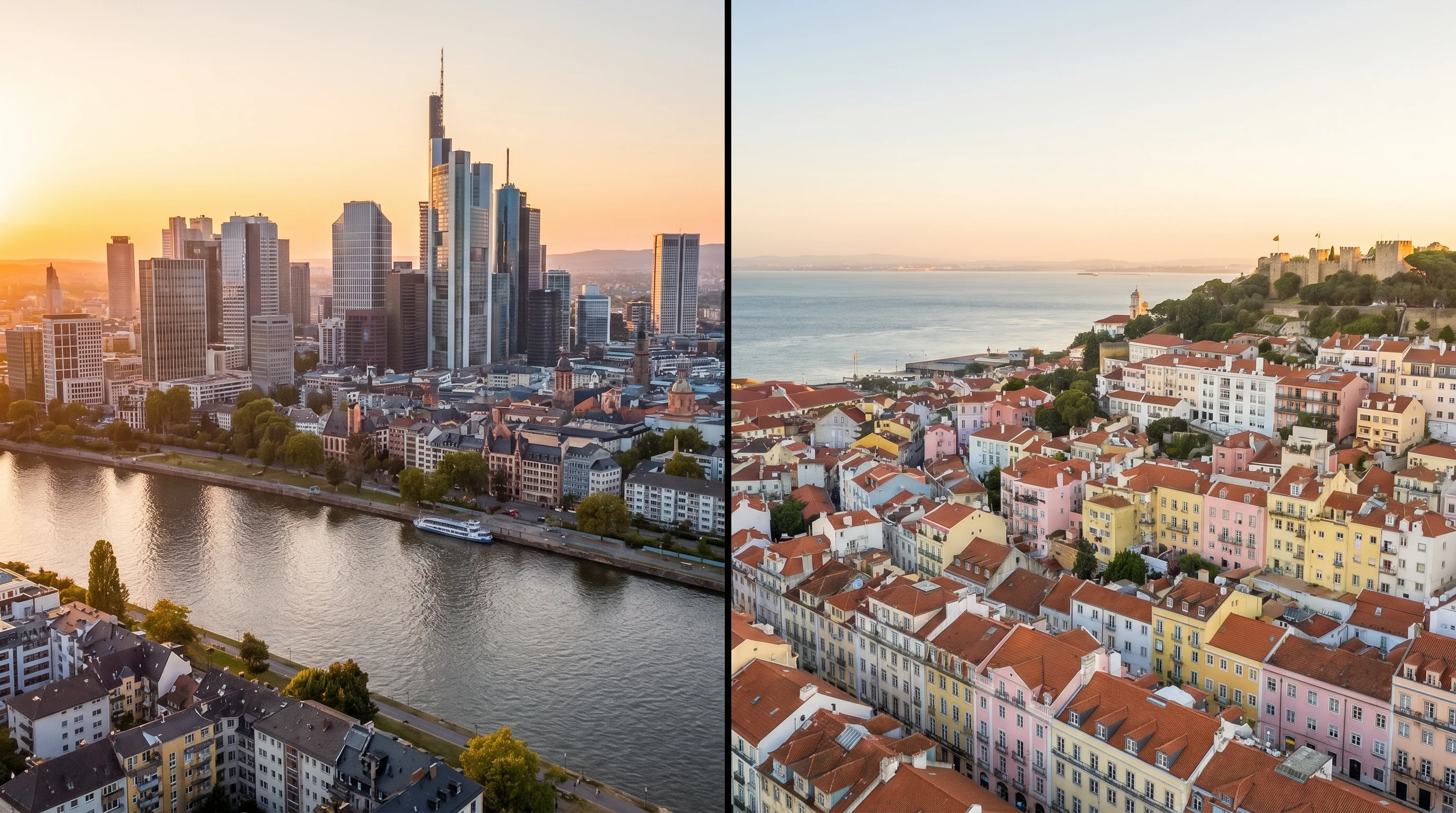
Germany and Spain are among the most popular European destinations for freelancers. They also couldn’t be more different in how they treat you once you arrive.
Germany offers a well-oiled bureaucratic machine. It’s slow to start, expensive to maintain, and deeply logical once you understand it. Spain offers warmth – both literally and culturally – with a system that’s more affordable but occasionally baffling.
If you’re weighing up these two countries for your freelance base, here’s how they actually compare in 2026.
Tax: Similar Totals, Different Structures
This surprises most people. Despite Germany’s reputation as a high-tax country, the effective rates for freelancers in both countries end up in a similar range – roughly 40–48% in Germany versus 42–47% in Spain, once you factor in social contributions.
Germany
German income tax is progressive, ranging from 14% to 45%. On top of that, you’ll pay the solidarity surcharge (Solidaritätszuschlag) at 5.5% of your income tax – though this only kicks in above certain thresholds. If you’re registered as a Gewerbe (trade) rather than a Freiberufler (liberal profession), you’ll also face trade tax (Gewerbesteuer), which varies by municipality.
At EUR 80,000 in freelance income, you’re looking at roughly EUR 22,000–25,000 in income tax, plus health insurance and pension contributions on top.
Spain
Spain’s autónomo tax system charges income tax (IRPF) on a progressive scale from 19% to 47%. Social security contributions are now calculated on actual earnings under the cuota por ingresos reales system introduced in 2023, with monthly payments ranging from around EUR 205 for the lowest earners to over EUR 600 at higher income levels.
The Beckham Law – officially the régimen especial para trabajadores desplazados – can reduce your effective tax rate to a flat 24% on income up to EUR 600,000. Originally designed for employed workers, the Startup Act (Ley 28/2022) from 2023 extended eligibility to digital nomad visa holders employed by foreign companies. Self-employed DNV holders may also qualify, but this remains a legal grey area – professional tax advice is essential. This is a genuine advantage Spain holds over Germany, where no equivalent preferential regime exists.
For a deeper dive into Spain’s system, see our complete guide to self-employment as an autónomo in Spain.
Visas: Germany’s Missing DNV
This is where the two countries diverge most sharply.
Spain’s Digital Nomad Visa
Spain launched its digital nomad visa (DNV) in 2023, and it’s become one of the most popular in Europe. It allows non-EU remote workers to live and work in Spain for up to five years, with access to the Beckham Law’s favourable tax treatment. The income threshold is roughly EUR 2,849/month (200% of Spain’s minimum wage).
We’ve covered Spain’s DNV extensively in our Spain Digital Nomad Visa 2026 guide. For expert help with the application, Richelle de Wit specialises in visa services for remote workers in Spain.
Germany: No DNV, But Real Options
Germany has no digital nomad visa and shows no signs of creating one. The German government’s position is pragmatic: if you want to work here, you get a proper work visa.
For freelancers, the main route is the Freiberufler visa – a residence permit for liberal professions including writers, designers, consultants, software developers, and other knowledge workers. It requires demonstrating that you have clients (ideally some German ones), adequate health insurance, and sufficient income.
There’s also the Chancenkarte (Opportunity Card), a points-based system launched in June 2024 for jobseekers, and the EU Blue Card for employed workers. But for freelancers specifically, the Freiberufler visa remains the standard path.
Our Germany freelance visa guide breaks down the full application process.
Health Insurance: Germany’s Biggest Shock
If there’s one line item that tips the financial balance, it’s health insurance.
Germany
Health insurance in Germany is mandatory and expensive. The public system (Gesetzliche Krankenversicherung or GKV) costs roughly EUR 879/month for freelancers, because you pay both the employer and employee contributions. There’s no employer to split the cost with.
Private insurance (Private Krankenversicherung or PKV) can be cheaper when you’re young and healthy – sometimes EUR 300–500/month – but premiums rise with age and won’t cover pre-existing conditions as generously. Switching back to public insurance after age 55 is nearly impossible.
Spain
Spain’s Seguridad Social contributions for autónomos cover healthcare automatically, at a cost of roughly EUR 230–500/month depending on your declared earnings bracket. The public healthcare system (SNS) is generally good, especially in major cities, though wait times for specialists can be long.
Many freelancers supplement with private insurance, which runs EUR 50–150/month – still far less than Germany’s mandatory premiums.
The difference is stark: a freelancer earning EUR 60,000 could pay over EUR 10,500 per year in German health insurance, versus EUR 3,600–6,000 in Spain for equivalent or better coverage.
Bureaucracy: Different Flavours of Frustration
Both countries will test your patience, just in different ways.
Germany
German bureaucracy is legendary – and the reputation is earned. The Finanzamt (tax office), Ausländerbehörde (immigration office), and Bürgeramt (citizens’ office) each require separate registrations, appointments, and documents. Everything is in German. Appointments can take weeks to secure.
The saving grace is that once you’re registered and set up, the system runs smoothly. Rules are clear, deadlines are firm, and you generally know where you stand. Tax filing is annual, and software like ELSTER (the official portal) or commercial tools like SevDesk handle the process well.
Spain
Spanish bureaucracy is less rigid but more unpredictable. The same question can get different answers from different offices – sometimes from different people in the same office. The NIE/TIE application process is notoriously inconsistent, and the tax agency (AEAT) has been rolling out significant changes like Verifactu invoicing requirements that add compliance burden.
The gestoria – a Spanish tax advisor/administrator – is practically mandatory. Budget EUR 60–150/month for one, and consider it money well spent. If you prefer a fully digital approach, Xolo offers a streamlined gestoria service designed specifically for international freelancers in Spain.
Cost of Living: Beyond the Headlines
Germany is more expensive overall, but the gap is narrowing – especially in Spain’s major cities.
| Category | Germany (avg.) | Spain (avg.) |
|---|---|---|
| Rent (1-bed, city centre) | EUR 800–1,400 | EUR 700–1,200 |
| Groceries (monthly) | EUR 300–400 | EUR 250–350 |
| Coworking (monthly) | EUR 200–350 | EUR 150–250 |
| Dining out (meal) | EUR 12–20 | EUR 10–15 |
| Public transport (monthly) | EUR 63 (Deutschlandticket) | EUR 40–60 |
Germany’s Deutschlandticket – a EUR 63/month pass for all regional public transport nationwide – is one of the best deals in Europe for remote workers who like to move around.
Spain wins on dining, groceries, and generally on rent outside Madrid and Barcelona. But Berlin, Leipzig, and other eastern German cities can be surprisingly affordable by northern European standards.
Lifestyle: The Deciding Factor
For many freelancers, the lifestyle question ultimately decides the answer.
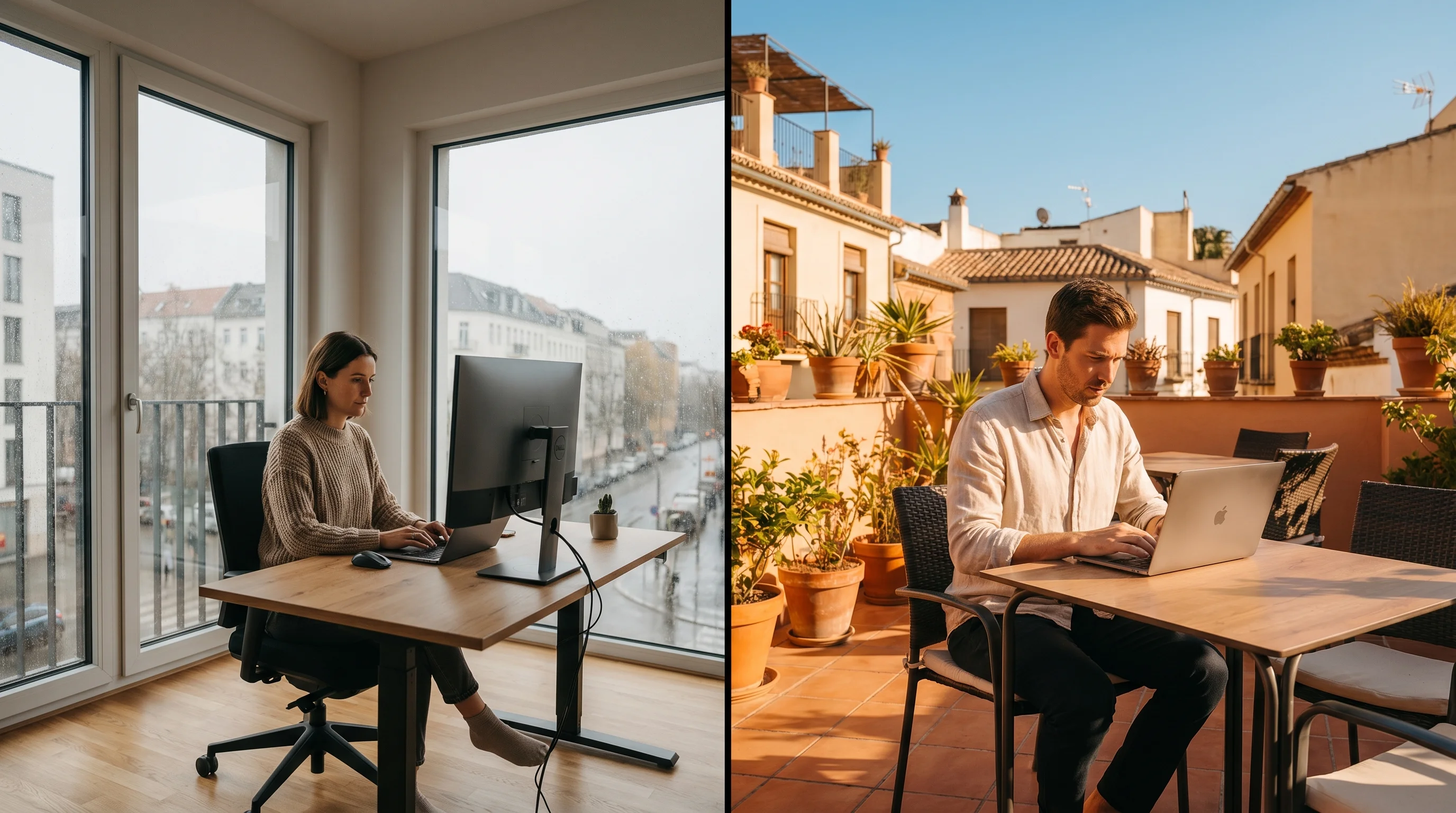
Germany offers world-class infrastructure, efficient public transport, excellent internet speeds, and a strong freelancer community – especially in Berlin, Munich, and Hamburg. Winters are grey and long. The culture values punctuality, directness, and planning ahead. If you thrive on structure and appreciate a city that mostly leaves you alone, Germany delivers.
Spain offers 300 days of sunshine in much of the country, a social culture built around long meals and late nights, and a slower pace that many find liberating after years of northern European or American hustle culture. Our remote work in Spain guide covers the lifestyle in depth.
The remote work communities in both countries are large and active. Berlin and Barcelona are probably the two biggest freelancer hubs in continental Europe.
Who Should Choose What?
Germany makes more sense if you:
- Are in a liberal profession (tech, consulting, creative) and want a straightforward visa path
- Prefer clear rules and predictable bureaucracy
- Value infrastructure and efficiency over weather
- Want access to the German and DACH market
- Don’t mind paying premium rates for health insurance in exchange for comprehensive coverage
Spain makes more sense if you:
- Qualify for the digital nomad visa and want the Beckham Law tax advantage
- Prioritise lower social security costs and overall cost of living
- Want better weather and a more social culture
- Are comfortable with a less predictable administrative environment
- Plan to work primarily with international (non-local) clients
The Bottom Line
Germany and Spain are both excellent bases for freelancers in Europe, and neither is objectively “better” – they’re different tools for different priorities. Germany charges more upfront but delivers predictability. Spain costs less but demands more adaptability.
The smartest approach? Spend a month or two in each before committing. Both countries allow short stays on tourist visas (up to 90 days for non-EU nationals in the Schengen area), and there’s no substitute for experiencing the daily reality of each place before signing a lease or filing paperwork.
FAQ
Can I be a freelancer in Germany without speaking German? Technically yes, but practically it’s very difficult. Most government offices, the tax system, and many official documents are in German only. In Berlin and other international cities, you can get by day-to-day in English, but you’ll need German for administrative tasks – or a good Steuerberater (tax advisor) who speaks English.
Is the Beckham Law in Spain available to all freelancers? No. The Beckham Law is available to workers who haven’t been Spanish tax residents in the previous five years. It was extended to digital nomad visa holders in 2023, but traditional autónomos who move to Spain independently may not qualify. Check eligibility carefully with a Spanish tax advisor.
Which country is better for EU citizens? EU citizens don’t need visas for either country, which removes the biggest differentiator. In that case, the decision comes down to tax, cost of living, and lifestyle preferences. Spain’s lower social security costs and the Beckham Law (if eligible) give it a financial edge for many EU freelancers.
Can I split my time between Germany and Spain? You can, but tax residency rules apply. Spending more than 183 days in either country generally makes you tax resident there. The 183-day rule is more nuanced than most people think, and splitting time between two EU countries creates social security coordination questions. Get professional advice before attempting this.
Which country has better internet for remote work? Germany has faster average speeds and more reliable fibre coverage, though it famously lagged behind for years and has been catching up. Spain has good coverage in cities and tourist areas but can be patchy in rural regions. Both are perfectly adequate for remote work in any major city.