Remote work over 50: Europe’s silver nomad shift is real, and it doesn’t look the way you think
The fastest-growing segment of remote workers in Europe in 2026 is over 50, not under 35, and their reasons for choosing cross-border remote work look almost nothing like the original digital-nomad template. MBO Partners’ 2025 State of Independence report shows Boomers at 6% of US digital nomads (with Gen X at 19%) and notes that 11% of US digital nomads are now 55 or over; harmonised European data is patchy but coliving operators and visa consultancies are independently reporting the same demographic shift. The remote-work industry built around laptop-on-Bali-beach marketing is calibrated for a customer who is no longer the centre of the market.
Remote Work Europe follows policy developments like this one as they unfold and reports back when the practical reality changes for remote workers and freelancers.
A demographic shift is happening in European remote-work that the surface-level coverage has not yet caught up to.
When people picture a “digital nomad” – the cafe table in Lisbon, the laptop on a Bali beach, the Instagram-friendly thirty-something with a curated location feed – they are picturing a cohort that increasingly represents a minority of the actual remote-working population in Europe. The fastest-growing segment in 2026 is not in their twenties or thirties. They’re in their forties, fifties and sixties. And the reasons they’re choosing to work remotely across European borders look very different from the reasons the original nomad-archetype set the stock photo and social media template around.
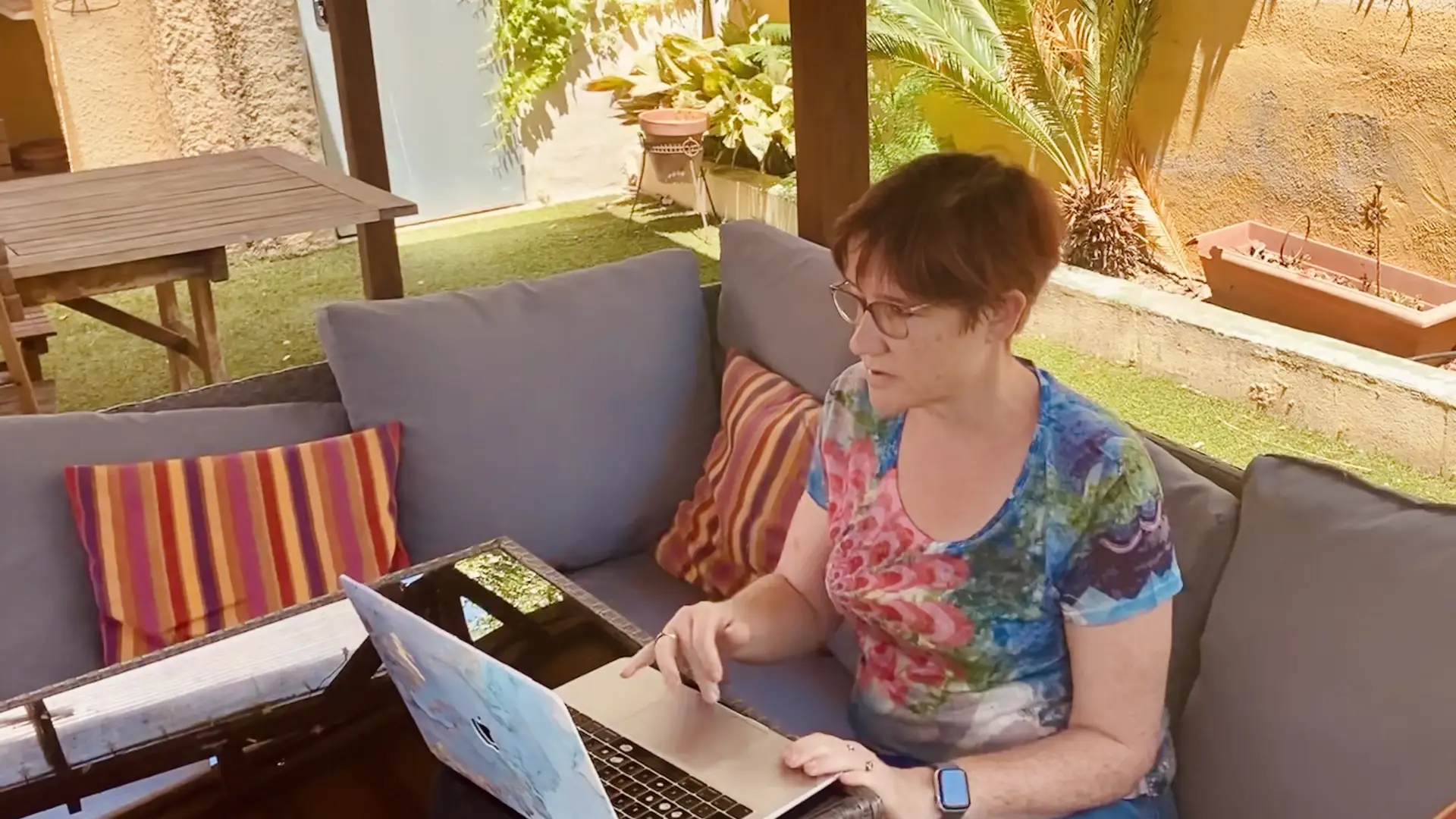
I have an interest to declare: I am in this demographic. I have been working remotely since 1999 – before “digital nomad” was a phrase (not that ethernet cables are made for a very nomadic lifestyle) – and the way my own remote-work life looks now is materially different from the way it looked in my thirties. So is the way it looks for many people in my network. The conversations we have about base locations, about visa structures, about whether to stay put or move, are about different things now than they were twenty years ago.
The data on this is patchy and warrants honesty up front. The cleanest figures we have are from MBO Partners’ 2025 State of Independence report - US-only - which puts Boomers at 6% of US digital nomads (down from 11% in 2024) and Gen X at 19% (down from 25%). MBO frames this as Boomers ageing out of the workforce rather than a turn away from the lifestyle, and notes that 11% of US digital nomads are still 55+. There is no harmonised European-wide dataset that isolates over-50 nomads - Eurostat tracks remote work by age but doesn’t break out location-independent workers separately.
What we can see clearly is the venue and infrastructure side: coliving operators are starting to report visible demand from this group, and some (but not enough) are explicitly designing for it.
Why the silver nomad shift is happening now
There is no single cause. Several long-running trends converged.
The work-from-anywhere norm. The 2020-2022 enforced shift to remote work meant that a generation of professionals who had spent thirty years working from an office discovered they could work from somewhere else. The most vocal post-COVID return-to-office cohort was younger workers wanting back the social fabric and career visibility of being seen in the room.
Older workers, who had already accumulated the network and reputation that careers depend on, were less compelled by that pull to say the least. They had also experienced more keenly the trade-offs that office life takes from a stage of life when those trade-offs no longer feel proportionate. The simple equation – does the office give me more than it costs me – always came out differently for a fifty-five-year-old than for a twenty-eight-year-old. What the lockdown experience did was to make the proof tangible, that the work itself – in the vast majority of cases – did not require anyone to go and sit in a cubicle.
Empty-nest economics. A meaningful number of over-50 remote workers are people whose children have left home, whose mortgages are paid down or paid off, and whose monthly cost base in their original country is no longer constrained by the family-house overhead. Selling or renting out the family home and using the proceeds (or rental income) to fund a slow-travelling, multi-base life is a calculation that twenty-somethings cannot make, and forty-somethings often cannot yet make. It opens up in your fifties. So, for some, the question of viability of remaining in the workforce at all opens up as well.
Climate. People in northern Europe – Scandinavia, the UK, the Netherlands, northern Germany – are reaching the stage of life where they have permission to take winter seriously, financially and family-wise, in a way they could not earlier. The Mediterranean coast, the Spanish costas, the Greek islands, the Portuguese Algarve are absorbing this demographic by the tens of thousands per year. The infrastructure that has built up around it – the language schools, the legal services, the relocation consultancies, the local FB groups – is now genuinely well-developed.
Health-system arbitrage. Several European countries offer a better quality of life for money in the over-50 demographic than higher-income countries. Mediterranean diet, walkable communities, lower stress culture, and (for some countries) better healthcare access combine into a real argument that gets stronger as people age into wanting it.
Reputation portability. The professional capital that older workers have accumulated is location-independent in a way that earlier-career capital is not. If your business is built on twenty years of client relationships and a referral pipeline, the relationships do not care where you live. The pipeline does not care either. This is the part of the over-50 nomad story that the under-30 nomad story did not include.
What is different about over-50 nomading and intentional remote workations
The popular image of digital nomading – co-living in shared houses, twelve countries in twelve months, working from coffee shops on the move – is not what most over-50 nomads are doing.
The pattern that has emerged for this demographic is closer to what some operators are calling “slow nomading” or “two-base living.” A primary residence somewhere with quality healthcare and stable infrastructure; a secondary residence (rented seasonally, in some cases owned) somewhere with better climate or lifestyle fit. Travel between the two, plus occasional longer trips to family, plus the occasional work-trip or speaking gig. The annual rhythm is closer to slow-travel-with-purpose than to the rapid-rotation pattern of some younger nomads.
Accommodation needs change and grow up as well. Over-50 nomads tend to want their own kitchen, reliable wifi, a dedicated workspace, and a bedroom that is not in a party house. Coliving operators who try to drop this demographic into a 25-person shared villa with a shared bathroom find quickly that they have built for the wrong customer. The Selina-style backpacker-coliving model has not aged well for this cohort; the more domestic, residential, longer-stay model offers much more.
The community needs are different as well. At risk of great generalisation, most of the over-50 nomads I meet tend to want fewer, deeper friendships than the rotating-faces social model of younger nomad communities. They are looking for a base from which they can build local connections, not a touring revolving door of new faces every week. Some have specific community needs around their stage of life – kid-grown-parent-aging concerns, language access for medical appointments, social groups around interests that do not map cleanly onto the Burning Man-adjacent vibe of much of the original nomad community.
While at the same time, you can take it from me, they don’t want to be surrounded by retired expats either. Many remote workers in their 50s and 60s are at the peak of their career, ready to thrive in a relocation to a buzzing tech hub or vibrant modern city, where they can make professional and personal relationships to support their next phase of life. The last thing they would want is to be surrounded only by people of the same demographic in age or any other sense. those who have chosen to build a remote life away from their place of birth continue to thrive on cultural diversity at all life stages.
Mature nomads and remote workers may still earn from established businesses or stable employment; they need legal structures that work for that. The cheap-and-cheerful visa-hopping strategies that under-30s sometimes use do not fit. The countries that have specifically targeted this demographic – Portugal historically with NHR, Spain with the DNV, Greece with its 50% tax reduction for incoming professionals – are reaping the dividend now.
And finally, much of this generation has its eye on a future of one day stopping work altogether, and will need to ensure that tax and financial planning takes retirement into account too.
Where they are going
Several European destinations have spotted this demographic shift and started designing for it. A few are worth naming.
Croatia – Live and Work in Central Istria. Croatia’s Tourist Board of Central Istria has been running the Live and Work in Central Istria programme since 2021, in partnership with Saltwater Nomads and DNA Croatia. I travelled to a pop-up co-living in December 2022 with this programme, and experienced much of what this beautiful lesser-known corner of Croatia had to offer with a diverse and friendly group. The format is small-cohort, place-based, slow-tourism work-with-wine-and-podcast - the ViNomad workation week was 30 September to 6 October 2024 at Banki Green Village, and the 2025 successor “Double Shot Digital Nomad Week” ran on 22 November 2025 with four selected nomads from the Netherlands, Germany, the US and the UK. It’s not age-targeted, but is designed for “remote workers who are established in their careers” in DNA Croatia’s own framing, and the slower pace fits an over-50 sensibility. Croatia’s DNV itself has a 2026 income threshold of €3,622.50/month (2.5× average net monthly salary, recalculated each January), no age variation, and runs for up to 18 months non-renewable in-country.
Portugal beyond Lisbon. As Lisbon has become saturated and expensive, the secondary Portuguese towns – Porto, but also Coimbra, Évora, the smaller Algarve towns – have absorbed an over-50 demographic specifically. The cultural fit for English-speaking northern Europeans is well-established, and the D7 (passive income / pension) visa remains accessible at €920/month income. Professional remote nomads will want to choose their community base carefully, bearing in mind the challenges of living in a retirement village demographic. And for those pensioners the tax welcome, though, is no longer what it was: NHR ended on 1 January 2024 and was replaced by IFICI, which excludes foreign pensions from its 20% favourable rate. Pensioners relocating from 2024 onwards now pay Portuguese rates on pension income.
Spain’s Mediterranean coast. The Costa Blanca, Costa del Sol, and increasingly the lesser-known Costa de la Luz are absorbing over-50 remote workers and retirees in large numbers with extensive local infrastructure; indeed there are towns on the Costa Blanca where Spanish feels like a second language – definitely not the feeling every immigrant wants, o vibe check carefully before you settle. The Spanish DNV, the autónomo system, the residence permits for non-EU citizens with passive income (NLV) – these all serve this demographic, even if they were not built specifically for it. Many of these communities are long established, and include people who took advantage of the Golden Visa property investment before this was deprecated
The Adriatic – Slovenia and Montenegro. The smaller Adriatic countries are seeing similar shifts, with lower cost-bases than Croatia or Italy, and decent enough infrastructure for remote workers. Slovenia in particular has been a strong fit for this demographic – the healthcare system rates among the EU’s better ones, the cost base sits below Italy or Austria, and the country is small enough that the Alps and the Adriatic coast are both within a 90-minute drive of Ljubljana.
The Balearics and Greek islands. Less the high-season tourist islands and more the year-round inhabited ones – Mallorca’s inland villages, Crete, Naxos, the Cycladic islands outside Mykonos and Santorini. The remote-working community in these places is small but growing, and skews older than the headline-nomad cohort.
Northern France and Belgium. Less obvious but real – the slower coastal regions of northern France, the smaller Belgian cities. Climate is not the draw here; quality of life, healthcare access, EU residency, and proximity to family in the UK and northern Europe are. Anyone old enough to have watched the dramatisation of “A Year in Provence” in the 90s may choose to fulfil their pastoral vision in the French countryside.
What the established remote-work industry has missed
The industry built around digital nomading and remote working – the visa consultancies, the coliving brands, the relocation services, the country-marketing campaigns – is largely calibrated to a younger customer. Some operators are recognising the shift and adjusting; but others have not yet done so. The opportunities that exist for service providers who genuinely understand the over-50 demographic are significant and largely unfilled.
What this demographic actually needs is different from what is being marketed to it:
Healthcare-system orientation. Where over-50 nomads spend serious money is on understanding how to access decent healthcare in their chosen base. Service providers who help with this – not just selling private health insurance, but actually helping people navigate the public systems they pay into – have a strong proposition. Many private health insurances have nothing to offer those already packing a few chronic conditions in their laptop bag, and they need robust and flexible solutions which integrate with reliable state provision, for long term planning.
Tax and legal advice that takes lifetime planning seriously. Pension portability, the interaction of UK / German / French / Dutch pension rights with new residency, the inheritance-planning consequences of becoming tax-resident in a new country, and also planning for children becoming adults and needing higher education access. These are important questions for mature remote workers, and they are not the questions that nomad-visa marketing answers.
Community infrastructure that respects the stage of life. Less rotating-faces hostel-vibe, more book-club-and-language-exchange. Venues and events that reflect an internationally lived existence, and support the development of meaningful friendships and connections.
Reliable wifi and a desk. This sounds obvious, but it’s consistently underweighted by coliving operators who think of the wifi as a “feature” rather than as the core utility. Over-50 nomads will not put up with marginal wifi the way someone in their twenties will, and their insurance may not cover the chiropractic results of hunching at a kitchen table over their laptop for hours.
What I think about it
I write this from within this demographic, having watched the remote work and digital nomad movement grow and shift around me, and having made some of the choices that put me in it - while I do not and have never defined myself as a digital nomad personally.
The thing I find most under-acknowledged about the over-50 remote-work shift is what it actually is, and what most coverage assumes it must be.
The over-50 remote workers I know are operators in their professional prime, with three or four decades of business experience, capital they have accumulated, and ambition that has not retired. The reason they are working remotely is that the working life they have built has finally given them permission to choose where to do it. The choice is forward-facing, not retreating, and they live lives of deep intention – many of them having figured out their choices long before any industry or infrastructure existed to support them with that.
That is the part the surface coverage misses. This is a story about people who have earned the right to design the life their work supports, and they’re doing it, whatever the rest of the world thinks.
If you are a country, a coliving operator, a relocation consultancy, or any other player in the remote-work infrastructure layer, the implication is the same: the customer you are building for has gotten older, more professional, and more discerning. The ones who serve that customer well will win the next decade.
The ones still selling the laptop-on-Bali-beach vision will keep marketing to a shrinking minority.
Frequently asked questions
Is the term “silver nomad” the right one to use?
It’s the media-coined label and it functions as a tag, but it doesn’t quite describe the people it’s pointing at. Most over-50 remote workers I know are not nomadic in the traditional sense; they’re operators with established professional lives who have chosen to live and work across European borders. The EU policy literature uses “silver economy” as its term of art, which is closer to the right register. Either term works as long as the reader understands the demographic, not the lifestyle stereotype.
What is the fastest-growing age group in European remote work?
People in their forties, fifties and sixties, not the twenties-and-thirties cohort that the original digital-nomad template was built around. MBO Partners’ 2025 US-only data shows 11% of US digital nomads are now 55+, with Gen X at 19% of the total. Harmonised European data is incomplete, but coliving operators and visa consultancies report the same shift independently.
Which European countries are the most popular bases for over-50 remote workers?
The current cluster is Portugal (Algarve, Lisbon, Porto), Spain (Valencia region, Andalucía, Costa Blanca), Italy (Tuscany, Umbria, the southern coast), Croatia (Istria), Greece (specific islands and Athens), and the slower regions of northern France and Belgium for proximity-to-family reasons. The common thread is healthcare access, EU residency, climate, and quality-of-life proximity to existing family ties.
Does the Portugal NHR / IFICI change affect over-50 remote workers in particular?
Yes, and disproportionately. The favourable 10% pension tax under the old NHR regime is gone for new arrivals from 2024 onwards; foreign pensions paid to a Portuguese tax resident are now taxed at standard progressive rates. For retirees and pension-holders considering a Portugal move under the D7 visa, this is the single biggest 2026 change. See our Portugal tax reality 2026 for the full picture.
Are coliving operators designing for over-50 customers?
Some are, most aren’t. The shift is visible to operators who pay attention to their bookings, but the marketing and event programming at most colivings is still calibrated for younger guests. Operators who design seriously for this demographic – slower rhythm, decent wifi, book-clubs-not-hostel-vibe, healthcare-orientation services – have an opening that is currently under-served across most of Europe.
What do over-50 remote workers actually need that the industry isn’t providing?
Healthcare-system navigation (not just private insurance), tax and legal advice that takes lifetime planning seriously, pension-portability help, community infrastructure that respects the stage of life rather than treating it as a younger guest’s environment, and the basic infrastructure (reliable wifi, ergonomic furniture, soundproof phone booths) that makes work-from-anywhere actually sustainable for a body that is no longer twenty-five.