TL;DR
Valencia’s coworking scene in 2026 is mid-mature: industry and neighbourhood differentiation exists, but identity-based and life-stage niches (women-only, parent-friendly with childcare, LGBTQ+, neurodivergent, age-specific) are still largely absent. That gap is the practical difference between coworking-as-visitor-amenity (solved) and coworking-as-resident-strategy (not yet).
- For a visitor needing two hours of Wi-Fi and a desk, an interchangeable coworking is a feature, not a bug.
- For a resident whose remote-work strategy depends on the third place, generic and bland coworking offers are the problem.
- Valencia has industry-soft niches (maker, tech, creative) and neighbourhood character, but the identity and life-stage layer is the next stage of maturity, not the current one.
- The gap is a quality-of-life factor for the resident base, and a marker on the maturity curve for the city.
Two modes of coworking
When I’m visiting a city for a week, the coworking I want is, frankly, generic. A reliable Wi-Fi connection, a usable chair, really good coffee, working aircon in summer, and a soundproof phone booth for the calls or recordings I can’t postpone. I do not need community, I do not need an identity, I do not need the staff to remember my name. I need to slot in for two hours or a week, get my deep work done, and leave.
In that mode, fungibility is a feature. The fact that a coworking in Riga, a coworking in Athens, and a coworking in Glasgow all look broadly the same, smell broadly the same, and run on broadly the same membership model is the point. It means I can walk in without orientation, and the means the friction is near zero. It means I can be productive on day one of a trip without onboarding, and I know how to work the Nespresso coffee machine without specific guidance.
That is the visitor experience of coworking, and on those terms the market has solved the problem. Almost anywhere on earth, you can find a place that will do the job, and it’s pretty amazing to reflect on that when you consider that this category barely existed a decade or two back.
But that is not the only way people use coworkings.
When coworking is the strategy
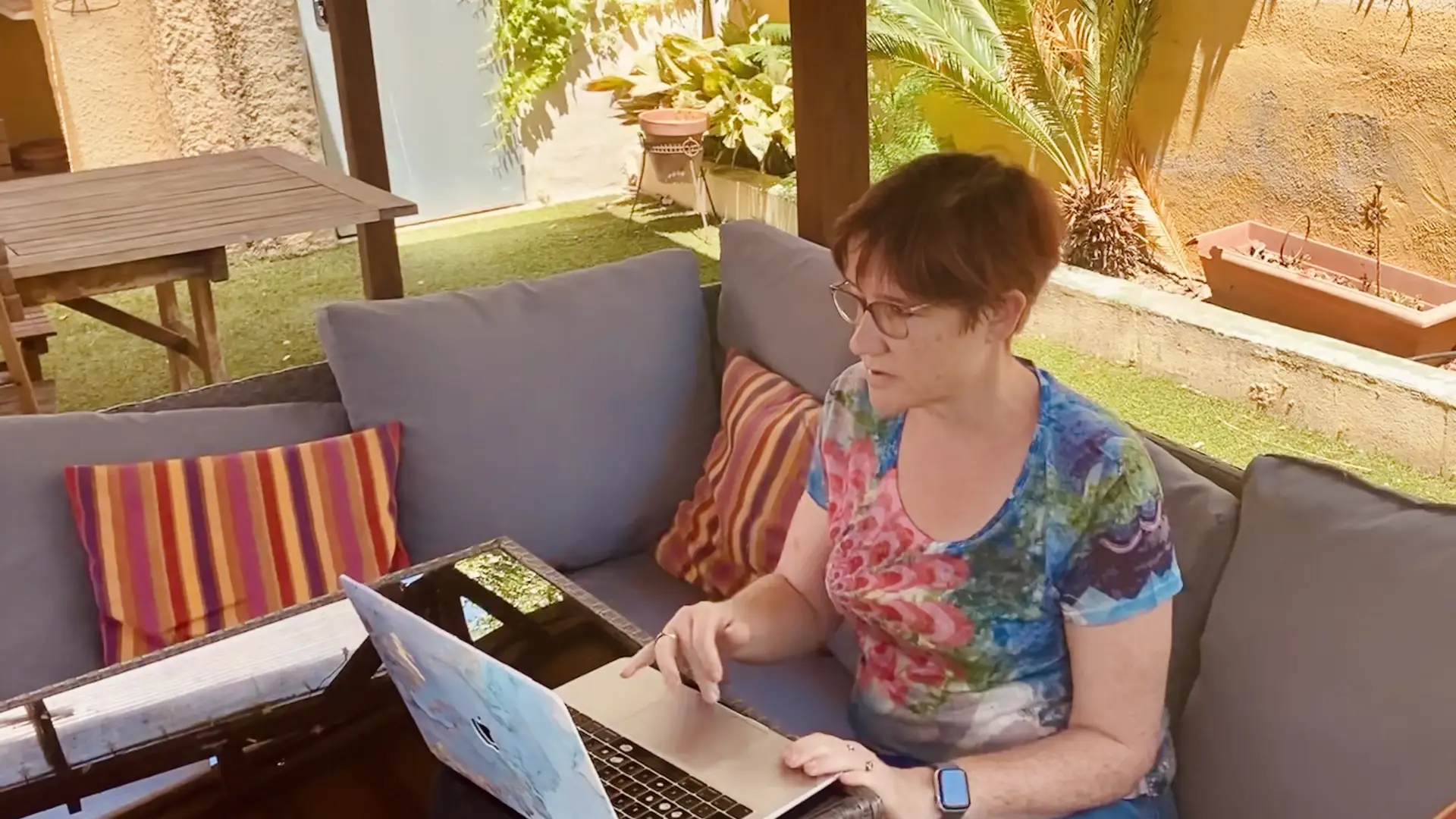
There is another mode, and it is the one I think about more, because it applies to many of the people I write for. It is the mode of the remote worker who has decided, deliberately, not to work from home. Or who cannot do so for whatever reason.
The reasons vary: A flat too small for a real desk, children at home during school holidays. Maybe there’s a partner or flatmate on back-to-back calls in the next room. A house that, in a Valencian summer, becomes unworkable unless you run aircon you would rather not run all day.
Others are avoiding loneliness, after the third winter of solo home-working, or are self-aware enough to recognise a clinical need to separate the rooms where they work from the rooms where they rest and live.
In that mode, you are not slotting in for two hours, you are using a coworking as a regular part of your weekly working life. Three days a week, or every morning, or every afternoon, maybe full-time. The space is not a substitute for an airport lounge, instead it’s a substitute for the corner of an office you used to have, or the workplace you have decided to assemble for yourself instead of taking the one your employer would have given you.
And in that mode, generic is a problem.
What you need from a coworking when it is part of your strategy is the opposite of fungibility. You need it to be specific to you. The other people there should be at least adjacent to your kind of work, or your kind of life, so the casual chat at the coffee machine does something useful. The atmosphere should match your concentration style. The opening hours should match your routine. The location should be accessible from where you actually live. The presence of interesting workshops, permitted pets, and shared snacks, should vibe with you and your style. The childcare, if you need it, should exist. The chairs should suit your back for eight hours, not two.
This is not luxury. It is the basic requirement for coworking-as-strategy to work at all, because remote work is about choice. If you choose to go out to work rather than work from home, then it’s really important to be able to choose somewhere that’s congruent and comfortable, and lets you be your best, most productive and focused self
What Valencia’s coworking scene currently offers
Valencia has a coworking market that is bigger and more textured than it was five years ago. There are multi-site local operators like Wayco with locations across the city centre and out by the port. There are international franchises like Spaces with branches in the central business areas and Benimaclet. There are independent neighbourhood-embedded spaces like INNgenio in Benimaclet, and Garage Coworking in El Carmen. There are creative and maker-specific operators including Coworkshop Spain and The Space, both in Russafa. Out my way, there is Coworking La Eliana for the inland suburban set.
Differentiation by neighbourhood, atmosphere, and industry is genuinely emerging. Russafa for the creative and social set. El Carmen for startup energy. Benimaclet for the steady-membership independent feel. Maker-specific at The Space. Pet-friendly at Garage Coworking. The visitor-mode question, is there somewhere I can go and work today, is answered repeatedly across the metropolitan area.
But here is what I cannot point to.
- A women-only or female-focused coworking with that identity as the brand, comparable to Hera Hub elsewhere.
- A coworking with integrated childcare. The Spanish example I know of is CoFamily Coworking in Granada, not Valencia.
- An LGBTQ+-focused coworking with that identity as a core part of the offer.
- A neurodivergent-friendly coworking marketed as such, with sensory-aware design and a stimulation gradient between rooms.
- An age-specific coworking, for younger workers, for over-50s, or for retirees still keeping a hand in.
- A good range of truly flexible options where you could join for a week or a month, or buy a book of vouchers to use for a set number of sessions over a year, or something like that. I would never get a regular co-working membership in Valencia when I have a perfectly good office at home, however, something truly flexible might encourage me to mix things up a bit more, and options for one week at a time out here in the suburbs would be very useful when other family members have guests or we have building work or something at home.
These are the niches that signal a fully mature coworking market. They exist in London, which had something on the order of 1,200 coworking spaces in Greater London alone at the start of 2026. My friend takes her dog to work with her in the mornings in her suburban third space, but takes the dog home before going back there for a yoga class. These specialised spots exist in Berlin too, with its tech-niche density. They are starting to exist, in some form, in Lisbon’s expanding lifestyle hub. So far, they are absent in Valencia.
I did see an advertisement this week for a women-only coworking in Valencia, which would change the picture if it is real and survives its first year of operation. The fact that it is the first such advertisement I have seen, after years of living in the area, tells you where the city sits on the maturity curve. One identity-niche coworking is not the same thing as a mature ecosystem of them, but it’s the first signal.
Why this matters for choosing where to settle
When you are deciding where to base a remote-working life in Europe, the coworking scene is not usually the headline factor. Visas, tax regimes, weather, language, schools, cost of living, and healthcare all come first, and rightly so.
But once those are sorted, where do you actually spend your working day?
If you intend to work from home seven days a week and never leave, the coworking scene doesn’t matter to you. If you intend to use the coworking ecosystem as part of how you actually work, because you have ADHD and need the body-doubling, because you have a toddler at home, because you have enough self-knowledge to have stopped pretending an unbroken eight-hour solo day is sustainable, because you simply want to talk to grown-ups at lunchtime, then the scene matters a great deal.
A mature coworking scene gives you a genuine choice. You can find a place where the people are at least adjacent to your kind of work, the rhythm fits your week, the chairs suit your back, and the membership cost is proportionate to what you get from it. That choice is part of what makes a city worth settling in for the long term.
Valencia is heading in this direction, but it is not yet there. The neighbourhood and industry-soft differentiation is real and useful, and also reflects the different vibes of different areas of the city, whether you prefer downtown or beachside or whatever. The identity and life-stage niches are the next stage, and a city that wants to attract and keep serious remote-worker residents will get them in due course.
The practical message for now is this. If you are visiting Valencia for a week, the coworking question is solved. Walk into any of half a dozen places near where you are staying, and you will be fine. If you are moving to Valencia and you intend to spend three days a week, or five, in a coworking, do the homework before you choose your neighbourhood. The differences between the spaces are real, the differentiation is starting to emerge, and the right fit is increasingly findable. It just is not yet abundant.
Frequently asked questions
Is coworking in Valencia worth it for short-stay visitors?
Yes, the visitor experience is well solved. Half a dozen reliable spaces operate around the city and the historic centre, all offering Wi-Fi, desks, phone booths, and pay-by-the-day options. Walking in without orientation works fine. The Valencia coworking scene is generic at the visitor end and that is a feature, not a bug.
What is missing from Valencia’s coworking ecosystem in 2026?
Identity-based and life-stage niches: women-only spaces, parent-friendly spaces with childcare, LGBTQ+-anchored spaces, neurodivergent-friendly spaces, and age-specific (over-50s or under-30s) spaces. Industry-soft niches (maker, tech, creative) and neighbourhood character exist, but the identity layer that more mature European coworking cities now offer is still emerging here.
How does Valencia compare to other European cities for coworking maturity?
Less differentiated than London, Berlin, Lisbon or Amsterdam, where identity-niche and parent-friendly coworking with childcare are more established. More mature than many other Spanish cities of similar size. Valencia sits in the middle of the maturity curve: well past the early-adopter stage where coworking barely existed, not yet at the ecosystem-of-niches stage.
Are there parent-friendly coworking spaces with childcare in Valencia?
Not as a developed market. Some spaces accommodate occasional parent visits informally, but the dedicated parent-with-childcare model that exists in places like CoFamily Coworking in Granada has not yet established itself in Valencia. This is one of the gaps most often cited by remote-working parents living in the area.
Should the coworking scene influence my decision to move to Valencia?
Only if you intend to use coworking as a regular part of your weekly working life, in which case it should be a tier-two factor (after visas, tax, weather, schools, language and healthcare). If you plan to work from home seven days a week, the scene does not need to influence your choice. If you intend three-to-five days a week in a coworking, do the homework on neighbourhood-by-neighbourhood differentiation before you choose where to live.
Maya Middlemiss writes about remote work in Europe from her base near Valencia, and has been working remotely since 1999.