What DuckDuckGo does
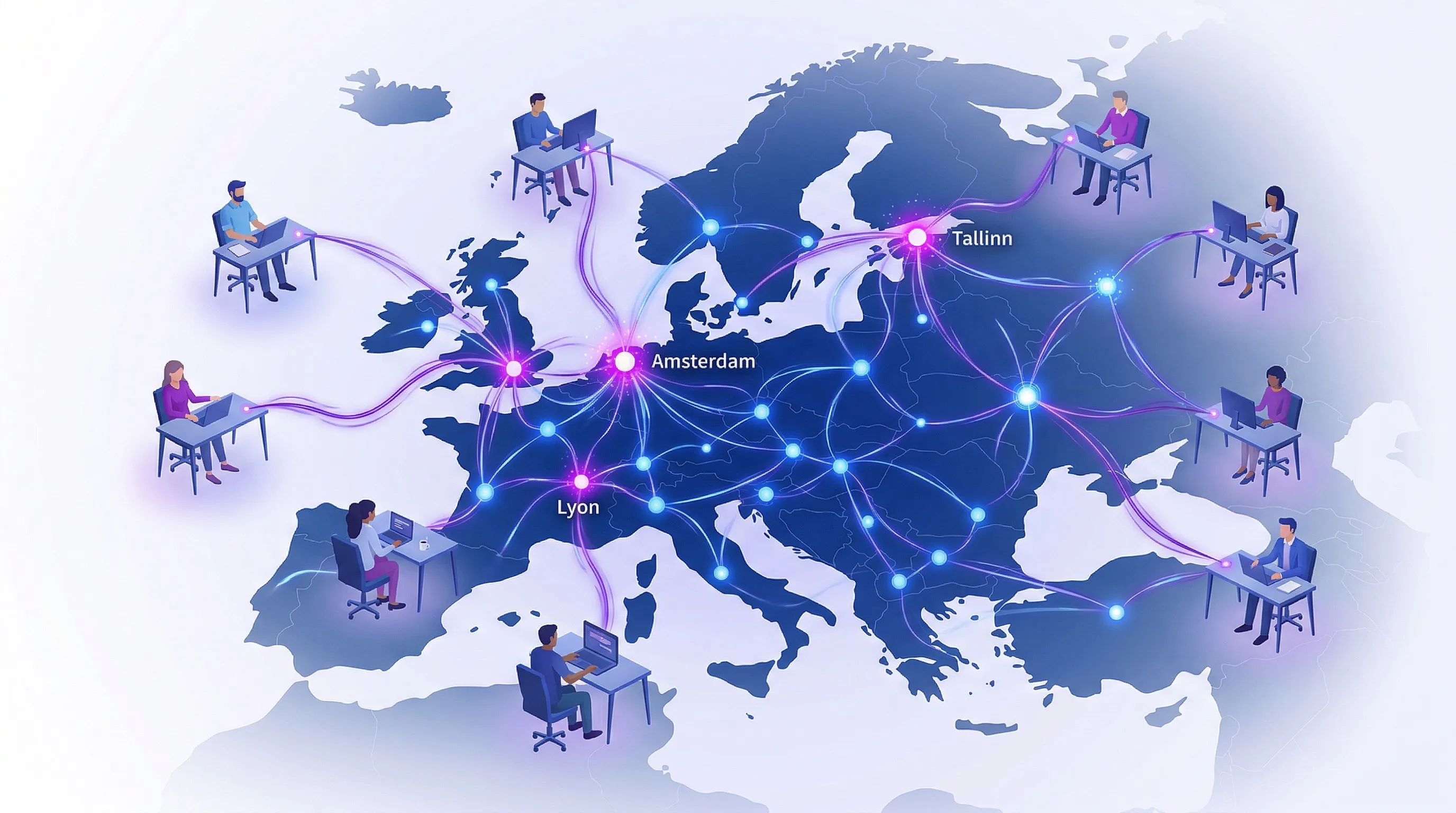
Remote Work Europe sees the daily pattern of European remote job postings through our Connected job board – the trends this piece describes show up there too.
DuckDuckGo is the privacy-first search engine and browser that doesn’t track you. While much of the internet was building advertising-surveillance machines, DuckDuckGo built a product around the idea that you might want to look something up without being followed around afterwards.
Founded in 2008 by Gabriel Weinberg, it started as a single search engine and has grown into a full privacy suite: search, a mobile and desktop browser with built-in tracker blocking, and email protection. The browser ships with a “fire button” that wipes your session in one tap. The company is profitable, funded primarily through privacy-respecting advertising based on the search you’re making rather than on who you are, and it has stayed independent rather than taking a controlling investment.
Remote culture: what it’s actually like
DuckDuckGo has been fully distributed since it was founded in 2008 – close to two decades of remote-first practice, which puts it among the longest-running distributed companies in tech. It has a registered office in Paoli, Pennsylvania, but operationally there is no central headquarters; the team of 335-plus people works remotely from more than 15 countries.
Two things stand out. First, there are no core hours – you work when you’re most productive and take time off when you need it. Second, the pay model is deliberately equitable: everyone at the same professional level within the same global region earns the same, regardless of race, gender, age, or individual negotiation. That removes a whole category of bias from the process, though it also means pay is banded by region rather than pushed up by hard bargaining. The company reports an average team retention above 95% since 2012, and brings people together through in-person meetups during the year.
The honest assessment: DuckDuckGo’s headcount is modest for a product used by so many people, which means roles open relatively rarely and competition is intense. The hiring process is genuinely long and demanding (more on that below). And the privacy-first ethos is a real value system, not a marketing line – if you’re only loosely interested in privacy, the culture will feel like a stricter fit than you expected. This suits people who are principled, self-directed, and comfortable working across wide timezone gaps with written communication as the default.
Hiring in Europe: the details
Countries: DuckDuckGo hires globally, with team members spread across more than 15 countries including a meaningful European presence. Most roles are advertised as remote with no fixed location requirement, though individual postings occasionally note a preferred region.
Employment model: A mix of employment and contractor arrangements depending on the country. Pay is set by professional level and global region rather than by local cost-of-living micro-adjustments.
Timezone expectations: No core hours for most roles, but some positions ask for a degree of overlap with the rest of the team. The listing will specify if so.
Salary approach: Location-independent within a global region – everyone at the same level in the same region earns the same, and the pay bands are applied consistently rather than negotiated case by case.
Language requirements: English is the working language.
Who they’re looking for
Because headcount is modest, roles don’t open often. When they do, they’re typically:
- Software engineering
- Mobile engineering (iOS, Android)
- Browser engineering
- Product design
- Privacy and security research
- Marketing and content
- Customer support
Prior experience in privacy, security, or rights-respecting technology is a strong signal. If you don’t have it, the way you write your application itself is your chance to demonstrate the values.
What current and former employees say
The recurring praise is for genuine autonomy, the flat and equitable pay structure, and a mission people actually believe in. The lack of core hours and the strong retention figures suggest the flexibility is real rather than theoretical.
The most common criticism is the length and intensity of the hiring process. DuckDuckGo’s own hiring page describes a process of around six stages that includes two paid projects (up to three for more senior roles) and usually runs from several weeks to a couple of months. Some candidates find that thoroughness reassuring; others find it exhausting, especially if they’re job-hunting under time pressure. The flip side of a small, high-retention team is that internal movement and rapid progression can be limited – there simply aren’t that many seats.
How to apply
- Careers page: duckduckgo.com/hiring (read how they hire before you start)
- LinkedIn: DuckDuckGo on LinkedIn
Specific tips: Switch your default search engine to DuckDuckGo for a month, install the browser, and try email protection – speaking from genuine daily use in an interview is completely different from researching the product the night before. Read the “how we hire” page carefully so the multi-stage, paid-project process holds no surprises, and treat each paid project as the real work sample it is: communicate proactively, ask sharp questions in writing, and deliver something you’d be proud to ship. Gabriel Weinberg co-wrote Super Thinking, a book on applied mental models, and referencing that thinking thoughtfully in an application lands well because it maps onto how the company reasons.
See our full guide to Remote-First Companies That Actually Hire in Europe.