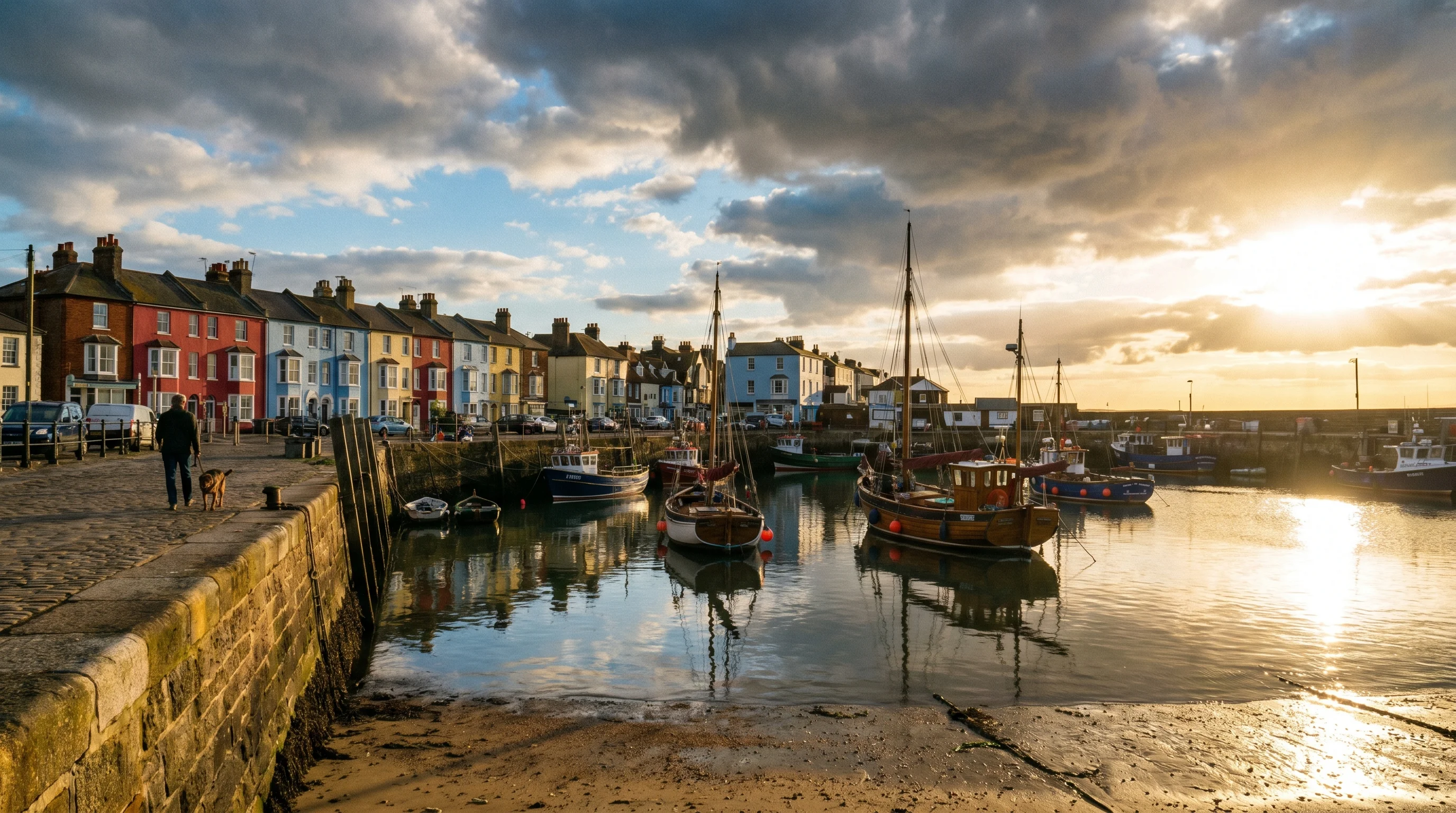
UK coastal towns for remote workers: the Zoom town effect in 2026
TL;DR: UK coastal towns like Margate, Deal, Hastings, and Whitby offer remote workers significantly cheaper rents than London with improving broadband thanks to Project Gigabit. High-speed rail links to London (75–100 minutes) make occasional commuting viable. The trade-offs: seasonal tourism pressure, limited coworking options outside larger towns, and rising prices in the most popular spots as the “Zoom town” effect takes hold.
Something significant has been happening along Britain’s coastline. While London rents continue their relentless upward march and Manchester’s Northern Quarter gets ever more crowded, a more gentle migration has been reshaping towns that – not so long ago – were better known for penny arcades and fish and chip shops than fibre broadband.
Remote workers have been moving to the coast. And in 2026, that trickle has become a steady, measurable flow.
The phenomenon has a name: the “Zoom town” effect. Coined during the pandemic, it describes places that gained population specifically because remote work made them viable. In the US, that meant mountain towns in Colorado and lakeside communities in the Midwest. In the UK, it means Victorian terraces with sea views, converted fishing lofts, and the kind of rent that would get you a studio flat in Zone 3 – if you were lucky.
But what you need to appreciate is that moving to the coast isn’t just about cheaper living and better views. It brings real trade-offs, real tensions, and some practical questions that any remote worker should think through carefully before signing a tenancy agreement.
Why the coast, why now?
The numbers tell a clear story. According to Rightmove and ONS migration data, coastal and rural local authorities across England and Wales have seen net domestic inflows every year since 2021. Thanet (home to Margate and Broadstairs), Scarborough, and Hastings have all recorded sustained population growth driven largely by working-age adults – not retirees.
The driver is straightforward: if your work doesn’t require you to be in a specific building on a specific day, your choice of where to live expands enormously. And when you run the numbers on coastal towns versus major cities, the arithmetic is compelling.
It’s worth noting that the picture isn’t uniformly upward. Property prices in several popular seaside towns actually fell during 2025 — Aberystwyth saw a 6.9% decline, Hastings dropped 4.5%, and Bournemouth fell 3.8%, according to Property DriveBuy analysis. Some analysts attribute this to a renewed pull back towards city living as return-to-office mandates have expanded. But for buyers, this cooling creates opportunity — and several factors have converged to make 2026 a particularly interesting moment for coastal relocation:
- Project Gigabit rollout – The UK government’s broadband infrastructure programme has brought full-fibre connectivity to hundreds of coastal communities that were previously stuck on sluggish ADSL. More on this below.
- Hybrid work normalisation – Most UK employers with remote-capable roles now operate some form of hybrid policy. The “two days a week in the office” model means you can live further from HQ, provided the journey is manageable when needed.
- Cost of living pressure – With average UK rents up significantly since 2020, the savings from a coastal move are more meaningful than ever.
A note of caution: the hybrid model that makes coastal living viable depends on employers continuing to offer flexibility. In early 2026, several major employers — including Stellantis, Novo Nordisk, and NBCUniversal — have tightened office attendance requirements, and this trend may accelerate. The UK government’s forthcoming flexible working legislation (expected 2027) should strengthen employees’ position, but the landscape is shifting. If your employer currently allows remote work, don’t assume that will remain permanent without checking.
Where to look: town-by-town guide
Not all coastal towns are created equal. Some have embraced the remote work influx with coworking spaces and improved infrastructure. Others remain beautifully untouched – which is part of their appeal, but also means fewer practical amenities. Here’s a pragmatic look at the most promising options.
South and Southeast Coast
Margate, Kent The poster child for coastal regeneration. Margate’s transformation from faded seaside resort to creative hub has been well documented, and by 2026 the town has a mature ecosystem for remote workers. The Turner Contemporary gallery set the tone; independent cafes, studios, and coworking spaces followed. Dreamland is no longer ironic – it’s an actual cultural venue. Strong high-speed rail links to London St Pancras (around 90 minutes) make it viable for occasional commuting. The downside? Margate’s popularity has pushed prices up. It’s still far cheaper than London, but it’s no longer the bargain it was in 2018.
Whitstable, Kent Just along the coast from Margate, Whitstable is more genteel and more expensive. Famous for its oysters, independent shops, and literary festival, it attracts a slightly older, more established remote worker demographic. Excellent broadband coverage. The catch is that Whitstable already had a commuter population before the pandemic, so it feels less like a “Zoom town” and more like an extension of the London commuter belt – with prettier scenery.
Deal, Kent Quieter and more affordable than its Kent neighbours, Deal has a strong community feel and a high street full of independent businesses. The seafront is unspoilt and the town is compact enough to walk everywhere. High-speed rail reaches London in about 75 minutes. Deal feels like what Margate was five years ago – on the cusp, but not yet overwhelmed.
Hastings, East Sussex Hastings has always had a bohemian edge, and the remote work migration has amplified it. The Old Town is atmospheric and full of character, with a growing creative community. Rents remain lower than the Kent coast towns, and there’s a genuine sense of energy about the place. Rail links to London are slower (around 90–100 minutes, not high-speed), which keeps prices in check but means commuting is more of a commitment.
Southwest Coast
St Ives, Cornwall Visually stunning, culturally rich, and blessed with some of the best light in England. St Ives has drawn artists for over a century; now it draws remote workers too. The Tate St Ives and Barbara Hepworth Museum give the town a cultural weight that belies its size. However – and this is significant – St Ives has severe housing pressures. Second homes and holiday lets dominate the market, and locals have been vocal about being priced out. Transport links are also challenging: the branch line to St Erth is charming but slow, and reaching London takes the better part of five hours by train.
Tenby, Pembrokeshire Wales’s answer to a Cornish fishing village, Tenby is compact, colourful, and surrounded by the Pembrokeshire Coast National Park. It’s considerably more affordable than the English southwest coast, and Pembrokeshire has invested in digital infrastructure. The trade-off is remoteness – Tenby is a long way from any major city, and train connections involve multiple changes. You’d want to be genuinely committed to coastal life, not hedging your bets with regular trips to London.
East Coast
Whitby, North Yorkshire Dramatic, atmospheric, and steeped in history (literary and maritime). Whitby has a strong identity that predates any Zoom town phenomenon. The abbey ruins, the 199 steps, the harbour – it’s a place with genuine character. The town has seen an influx of remote workers from Leeds, York, and beyond, attracted by significantly lower living costs and the wild beauty of the Yorkshire coast. Broadband has improved considerably under Project Gigabit. Winter weather is not for the faint-hearted, but the locals will tell you that’s the point – it keeps the town real.
Scarborough, North Yorkshire Larger and more diverse than Whitby, Scarborough offers more in terms of amenities, healthcare facilities, and transport links. It’s a proper town rather than a village, with a hospital, multiple schools, and decent rail connections to York (50 minutes) and Leeds (under 90 minutes). The seafront has its grand Victorian architecture, and the town is investing in its creative economy. Property prices remain well below national averages.
West Coast (Wales)
Aberystwyth, Ceredigion A university town on the Welsh coast, Aberystwyth has an intellectual energy and a youthful population that makes it feel different from many coastal towns. The National Library of Wales is here, along with the university, which means good cafes, cultural events, and a more cosmopolitan feel than the town’s size might suggest. Broadband coverage is strong in the town centre. The challenge is transport – Aberystwyth is genuinely remote, with narrow roads and a long train journey to reach the M4 corridor. But for those who want to be properly away from it all, that’s a feature, not a bug.
The numbers: cost comparison
Here’s where the coastal proposition becomes tangible. These figures are based on Q1 2026 averages from Rightmove, Zoopla, and ONS data.
Monthly rent (1-bed flat, average)
| Location | Monthly rent | vs London |
|---|---|---|
| London (Zone 2) | £1,850–2,200 | — |
| Manchester city centre | £1,100–1,350 | –40–45% |
| Margate | £750–950 | –55–60% |
| Hastings | £700–900 | –55–60% |
| Deal | £800–1,000 | –52–57% |
| Whitby | £550–700 | –65–70% |
| Scarborough | £500–650 | –68–72% |
| Aberystwyth | £500–650 | –68–72% |
| Tenby | £550–700 | –65–70% |
| St Ives | £850–1,100 | –50–55% |
Property prices (2-bed house, average asking price)
| Location | Average asking price |
|---|---|
| London (outer boroughs) | £450,000–550,000 |
| Whitstable | £350,000–420,000 |
| Margate | £230,000–290,000 |
| Deal | £280,000–340,000 |
| Hastings | £220,000–280,000 |
| St Ives | £350,000–450,000 |
| Whitby | £200,000–260,000 |
| Scarborough | £150,000–200,000 |
| Aberystwyth | £170,000–220,000 |
| Tenby | £200,000–260,000 |
The savings are substantial, particularly in the northern and Welsh towns. A remote worker earning a London salary in Scarborough or Aberystwyth is living an entirely different financial life. For a broader picture of how these coastal towns compare to major UK cities on cost, see our UK cities cost of living comparison.
Broadband: the deal-breaker that’s getting fixed
Let’s be honest – none of this works without reliable internet. And historically, UK coastal towns have had some of the worst broadband in the country. Seaside communities were often at the end of long copper telephone lines, far from exchanges, with download speeds that made video calls an exercise in frustration.
Project Gigabit is changing that. The UK government’s £5 billion programme to bring gigabit-capable broadband to hard-to-reach areas has prioritised many coastal communities, though the programme’s target of 99% UK coverage won’t be reached until 2032. By early 2026, full-fibre coverage has reached many of the towns listed above — particularly on the Kent and Sussex coast — with Openreach and alternative providers like CityFibre and Toob rolling out infrastructure at pace. Coverage remains patchier in the southwest and Wales.
Current broadband reality by town:
| Town | Typical download speed | Full fibre available? |
|---|---|---|
| Margate | 100–900 Mbps | Yes, widely |
| Whitstable | 100–900 Mbps | Yes, widely |
| Deal | 80–300 Mbps | Partial, expanding |
| Hastings | 100–900 Mbps | Yes, widely |
| St Ives | 30–100 Mbps | Partial |
| Whitby | 50–300 Mbps | Partial, expanding |
| Scarborough | 80–900 Mbps | Yes, in most areas |
| Aberystwyth | 50–300 Mbps | Town centre, yes |
| Tenby | 30–100 Mbps | Limited |
The pattern is clear: Kent and Sussex coastal towns now have broadband that rivals major cities. The further west and north you go, the more variable it becomes. If you’re considering St Ives or Tenby, check the specific postcode on Openreach’s network checker before committing – coverage can vary street by street.
A practical note: many remote workers in these towns keep a mobile hotspot as backup. 5G coverage is expanding along major coastal corridors, and even 4G provides a workable fallback for most tasks.
Coworking and community
One of the genuine risks of coastal remote working is isolation. Cities have coworking spaces on every corner, spontaneous meetups, and the general bustle of urban life. Small towns can feel very quiet in February.
The good news is that several of these towns have developed genuine coworking communities:
- Margate – Multiple options including The Margate Hub and various creative studios offering hot-desking. The town has a well-established freelancer and creative community.
- Hastings – The Observer Building and other converted spaces offer coworking with sea views. Regular meetups and networking events.
- Scarborough – Woodend Creative Workspace and others. The town’s Falsgrave area has become a small creative quarter.
- Aberystwyth – The university presence creates a more dynamic coworking culture than you’d expect.
In smaller towns like Deal, Whitby, and Tenby, formal coworking is limited. But cafes with good wifi and an understanding of remote workers have filled the gap. Some pubs have even begun offering daytime “work from the pub” packages.
The real community-building often happens informally – walking groups, surf clubs, volunteer organisations. If you’re moving to the coast, you’ll need to be intentional about building your social life. It won’t happen by osmosis the way it might in a busy city neighbourhood.
The elephant on the promenade: gentrification
We can’t write honestly about this topic without addressing it. The influx of remote workers – typically earning city-level salaries – into towns with lower average incomes creates real tension.
In Whitby, there have been vocal campaigns against the conversion of residential properties into holiday lets and short-term rentals. St Ives voted in 2016 to ban new-build second homes, and pressure has only intensified since. In Margate and Hastings, long-term residents have watched rents climb as the “creative class” moved in.
The concerns are legitimate. When someone working remotely for a London consultancy moves to Scarborough and happily pays above the local going rate for housing, that pushes prices up for everyone – including the teaching assistant, the care worker, and the shop owner who were there first.
Some nuance matters here, though. Remote workers who relocate permanently – who register with a local GP, shop in local businesses, join community organisations – are different from second-home owners who visit for weekends in summer. Most of these towns need working-age residents. They need people who’ll use the schools, support local businesses year-round, and pay council tax. And if they’re spending income into the local economy, earned from London or overseas, that is an added benefit.
The tension is real, and it won’t resolve easily. If you’re considering a coastal move, be aware of the dynamics. Contribute to the community. Support local businesses. Don’t be the person who moves to a fishing town and then complains about the smell of fish.
Practical considerations
Transport links
This varies enormously. The Kent coast towns benefit from High Speed 1, making London genuinely accessible for hybrid workers. Hastings has reasonable (if slower) rail links. The northern and Welsh coast towns are more isolated – fine if you rarely need to travel, challenging if your employer expects you in the office once a week.
Approximate journey times to nearest major city:
| Town | Nearest major city | Train time |
|---|---|---|
| Margate | London | ~90 min (HS1) |
| Deal | London | ~75 min (HS1) |
| Whitstable | London | ~80 min (HS1) |
| Hastings | London | ~100 min |
| St Ives | Plymouth / Exeter | ~2.5–3 hrs |
| Whitby | York | ~90 min (bus/car) |
| Scarborough | York | ~50 min |
| Aberystwyth | Birmingham | ~3.5 hrs |
| Tenby | Cardiff / Swansea | ~2–3 hrs |
Healthcare access
Smaller towns often have limited NHS provision. GP surgeries may have long waiting lists for new patients, and specialist services usually mean travelling to the nearest city. If you have ongoing healthcare needs, research this thoroughly before moving. Dental care is particularly scarce in coastal areas – finding an NHS dentist in some of these towns requires patience and luck.
Seasonal reality
Coastal towns are glorious in summer. That’s the easy part. The question is whether you’ll love them in November, when the wind is coming off the North Sea at 40 mph, the daylight disappears by 4pm, and half the restaurants have closed for the season.
This seasonal rhythm affects everything – social life, local amenities, even your mental health. Some people thrive on the drama of winter storms and the quiet of the off-season. Others find it crushingly bleak. Be honest with yourself about which camp you fall into.
Northern towns like Whitby and Scarborough get properly cold and dark in winter. The Welsh coast is wet and windy for much of the year. Even the relatively mild Kent coast can feel exposed and grey from November to March. The southwest is milder but still has plenty of horizontal rain.
A trial run is worth every penny. Rent an Airbnb for a month in January or February before committing. If you still love the place when the heating bills arrive and the promenade is deserted, you’ve found your spot.
The bottom line
UK coastal towns offer remote workers something genuinely compelling: a better quality of life, more affordable housing, and the kind of daily environment that no city can match. If you’re not ready to commit to a purchase, coliving spaces for remote workers offer a way to test a location with built-in community and workspace. The practical barriers – broadband, transport, amenities – are lower than they’ve ever been, particularly for the Kent and East Sussex coast.
But a coastal move isn’t a lifestyle upgrade you can download. It requires genuine engagement with a community, tolerance for seasonal quietness, and a clear-eyed view of the trade-offs. The towns that are thriving as Zoom towns in 2026 – Margate, Hastings, Scarborough, Deal – are the ones where newcomers and locals have found ways to coexist and build something together.
Do the research. Visit in winter. Check the broadband at your specific address. Talk to people who’ve already made the move. And if it works, you’ll wonder why you ever paid London rent to stare at a brick wall from your desk.
The sea view is right there. You just need a decent wifi connection to enjoy it.
Frequently asked questions
Is broadband reliable in UK coastal towns? It varies significantly by specific address. Many coastal towns now have fibre-to-the-premises coverage (Margate, Hastings, Deal), but others still rely on slower connections. Always check the exact broadband speed at your intended address using Ofcom’s checker before committing to a move.
Which UK coastal town is best for remote workers? Margate and Hastings lead the pack for community, amenities, and London connectivity. Deal offers a quieter, more upmarket alternative on the Kent coast. Scarborough and Whitby suit those who prefer the north. The best choice depends on your priorities – budget, transport links, community size, and tolerance for winter weather.
How much cheaper is coastal living compared to London? Significantly. Rent is typically 40–60% lower than equivalent London properties. A two-bedroom house that costs £2,000/month in South London might run £800–1,200 on the Kent coast. Daily expenses (food, transport, leisure) are also notably lower.
Can I commute to London from a coastal town? From the Kent and East Sussex coast, yes – Margate is 90 minutes to St Pancras, Hastings about the same to London Bridge. From the north coast, it’s a longer journey. Most remote workers choose coastal towns specifically to avoid regular commuting, but occasional office days are feasible from the south-east coast.
What’s the biggest downside of coastal living as a remote worker? Seasonal quietness. Many coastal towns are significantly less lively from October to March. If you thrive on nightlife, diverse dining options, and constant social stimulation, winter in a small coastal town can feel isolating. Visit in February before you commit.
Have you made the move to a UK coastal town? We’d love to hear your experience – get in touch or join the conversation in our community.