TL;DR
- As a UK citizen with permanent residence in Spain under the Withdrawal Agreement, I can live and work here for the rest of my life. I can spend only 90 days in any 180 anywhere else in the Schengen Area.
- The asymmetry that catches every UK citizen in Europe eventually: national residence in one EU country is not the same thing as EU mobility. Spanish residency is a Spanish right.
- The same structural reality applies to every non-EU national living in Europe on a national residency permit or digital nomad visa. The residence covers the country, not the continent.
- Key dates: the UK formally left the EU on 31 January 2020; the transition period ended on 31 December 2020; from 1 January 2021 UK citizens became third-country nationals for EU and Schengen purposes; Bulgaria and Romania completed Schengen integration on 1 January 2025.
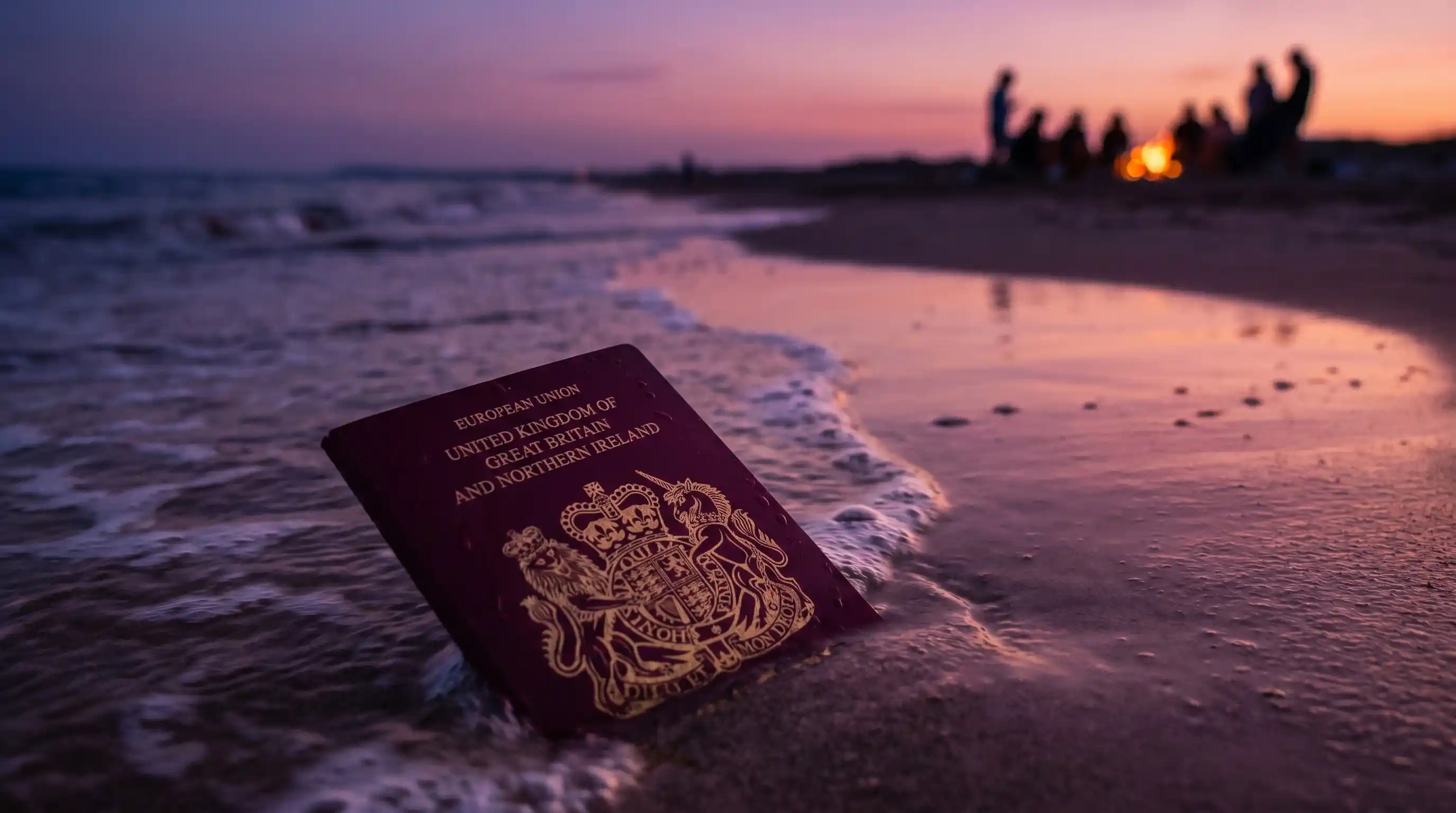
June is the start of summer in Spain and it’s always been one of my favourite times of year, before all the tourists arrive. The sea is still clean and refreshing. It’s the time of one of my favourite fiestas as well, San Juan and we jump in the waves at midnight on 23 June to make our wishes for the year ahead.
Ten years ago, San Juan 2016. I don’t know what happened. Maybe I didn’t wish hard enough or make enough of a splash as the waves rolled in. Because while we were partying on the beach in Spain, for my family and many other British immigrants, our hearts and minds were substantially elsewhere as the UK’s Brexit referendum polls were closing.
I remember getting home from the beach, sandy and tired, and catching the first results on the BBC News… I can’t remember which area count returned first, but it was a vote for remain, and we gratefully went to bed, happy that the UK had done the right thing. Only to wake some hours later into a reality that was forever altered.
What actually changed, and when
While the walk of shame of the school run next day will forever be carved in my mind, along with the tearful calls from friends and family in both countries, the real consequences took a lot longer to play out. For a long time we waited in limbo to learn about what the consequences would be, for everything from residency to education to trade to tariffs and more. The Brexit timeline that matters for the rights of British residents in Spain had four key dates in the end:
Remote Work Europe follows policy developments like this one as they unfold and reports back when the practical reality changes for remote workers and freelancers.
23 June 2016. The referendum. 51.89% leave, 48.11% remain. Consultative, not legally binding, but the political consequence was real and immediate.
29 March 2017. The UK government triggered Article 50 of the Treaty on European Union, formally notifying the European Council of its intention to withdraw. The two-year clock was started, then later extended.
31 January 2020, 23:00 GMT. The UK formally left the European Union. Exit Day. The UK ceased to be a member state and became, in EU legal terminology, a third country. Crucially, this did not immediately change anything for us here on the ground. The Withdrawal Agreement, which entered into force on 1 February 2020, opened an eleven-month transition period, during which EU law continued to apply to and in the UK, and British residents in Spain had time – in theory – to get their paperwork in order.
31 December 2020, 23:00 GMT. The transition period ended. From 1 January 2021, UK citizens became third-country nationals for EU and Schengen purposes. The Schengen Borders Code, with its 90 days in any 180-day period rule, began to apply to us, in exactly the same way it applies to a visitor arriving from the United States or Australia.
The Withdrawal Agreement, negotiated between 2017 and 2019 and operationalised through that transition period, did one specific thing for the roughly one million UK nationals living in EU member states: it protected our right to remain in the host country where we were already lawfully resident before 31 December 2020. Same right to live here, work here, access healthcare, and build a pension. The personal investment of years or decades was not retroactively erased.
It did not, and this is the part most people miss, protect the right to move anywhere else in the EU.
What Spain did
Spain chose what is known as a declaratory approach to documenting UK citizens covered by the Withdrawal Agreement. Fourteen EU member states made the same choice, including Germany, Portugal, Italy, and Cyprus. Thirteen others, including France, Belgium, and the Netherlands, went the other way and required a formal new application by a deadline – the constitutive approach.
The declaratory choice meant that UK citizens who held EU residency in Spain before 31 December 2020 kept that residency, by operation of the Withdrawal Agreement itself, regardless of whether they ever applied for new paperwork. The right to remain did not depend on holding the new document.
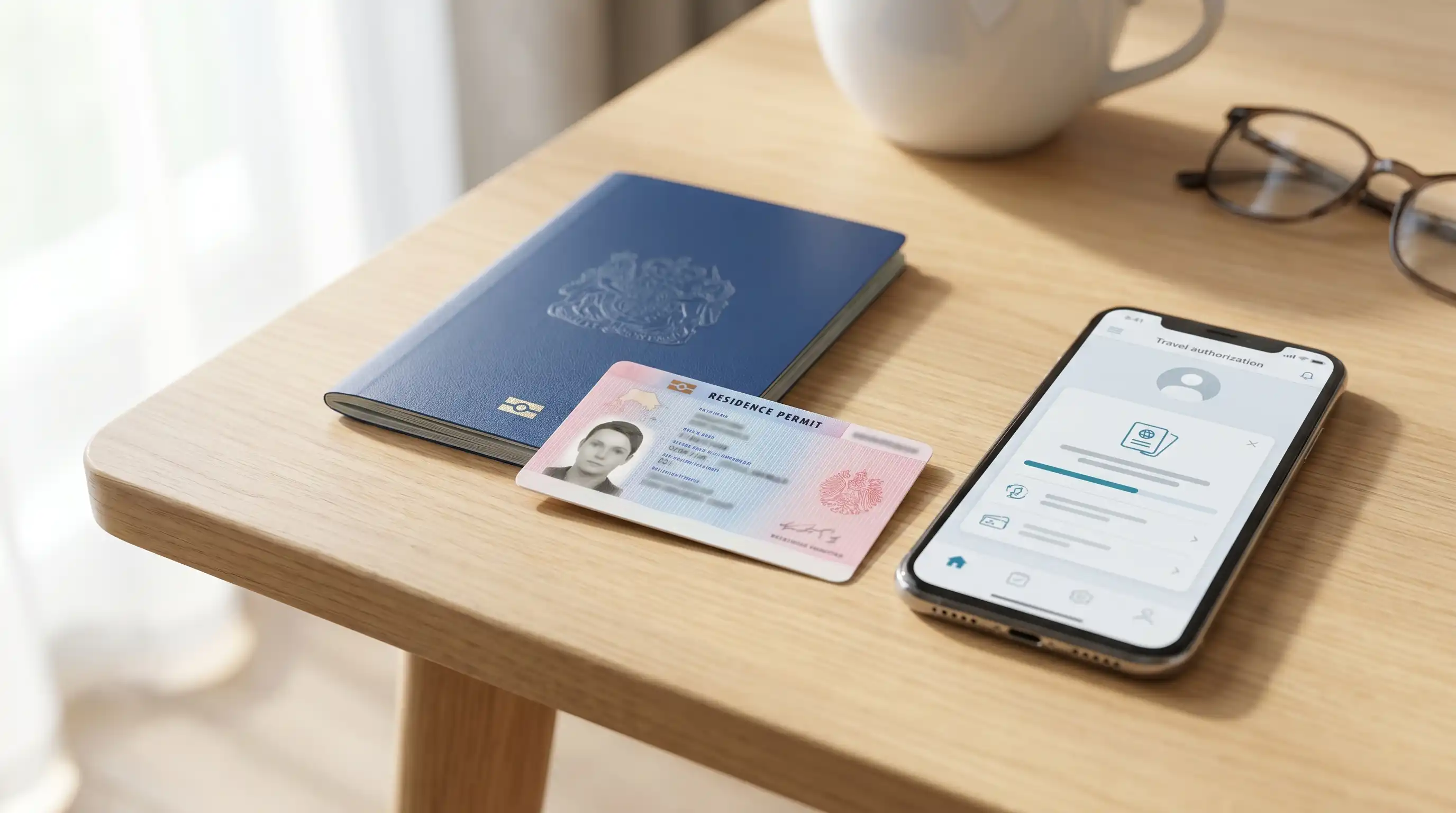
But Spain still issued new biometric residence cards, formally titled the Tarjeta de Identidad de Extranjero asociada al Acuerdo de Retirada de ciudadanos británicos y sus familiares. Known colloquially as the Brexit TIE, it references Article 50 of the Treaty on European Union, which governed the UK’s withdrawal.
The framework was formalised in an Instruction published on 4 July 2020 by the Spanish Ministry of Inclusion, Social Security and Migration together with the Ministry of Home Affairs, during the transition period. From 6 July 2020, UK citizens in Spain could begin applying for the new card.
The Withdrawal Agreement TIE looks similar to the standard Spanish residence card issued to other non-EU nationals. It is a different document, with a different legal foundation, and, as you’ll see further down, materially different protections at European border posts.
Why this matters in practice
Those of us with a Withdrawal Agreement TIE in Spain have, in Spain, almost the same rights we had as EU citizens. We can work in any role, including as autónom@s. We contribute to and draw from Spanish social security. We access the public health system on the same basis as Spanish nationals. We can apply for permanent residency after five years of legal residence, and for Spanish citizenship after ten – though specific circumstances and bilateral arrangements may shorten that for some nationalities.
What we cannot do is move that residency to France, or Germany, or Portugal. The Withdrawal Agreement explicitly does not confer the right to relocate within the EU. To live in another EU country we would have to start over, applying through that country’s standard immigration framework as third-country nationals. Our Spanish residency is, in this specific sense, a Spanish residency. Full stop.
For travel as opposed to relocation, we are subject to the 90 days in 180 rule across the rest of the Schengen Area. The same rule that applies to a tourist arriving from outside Europe.
The Spanish residence card does not, in practice, grant any additional mobility rights outside Spain. The 90/180 rule applies to us, even with our Brexit TIE, in exactly the same way it applies to a UK citizen visiting from London for the week. The UK passport already grants visa-free entry across the Schengen Area under the EU visa-waiver list, and the TIE adds nothing to that calculation. The card itself is not a travel document. If I drive to France, the document I need in theory is my passport, not my TIE. (In practice the motorway crosses straight over the border and nobody stops me, but the theory is the theory, and I’d better remember to pack my real primary travel document.)
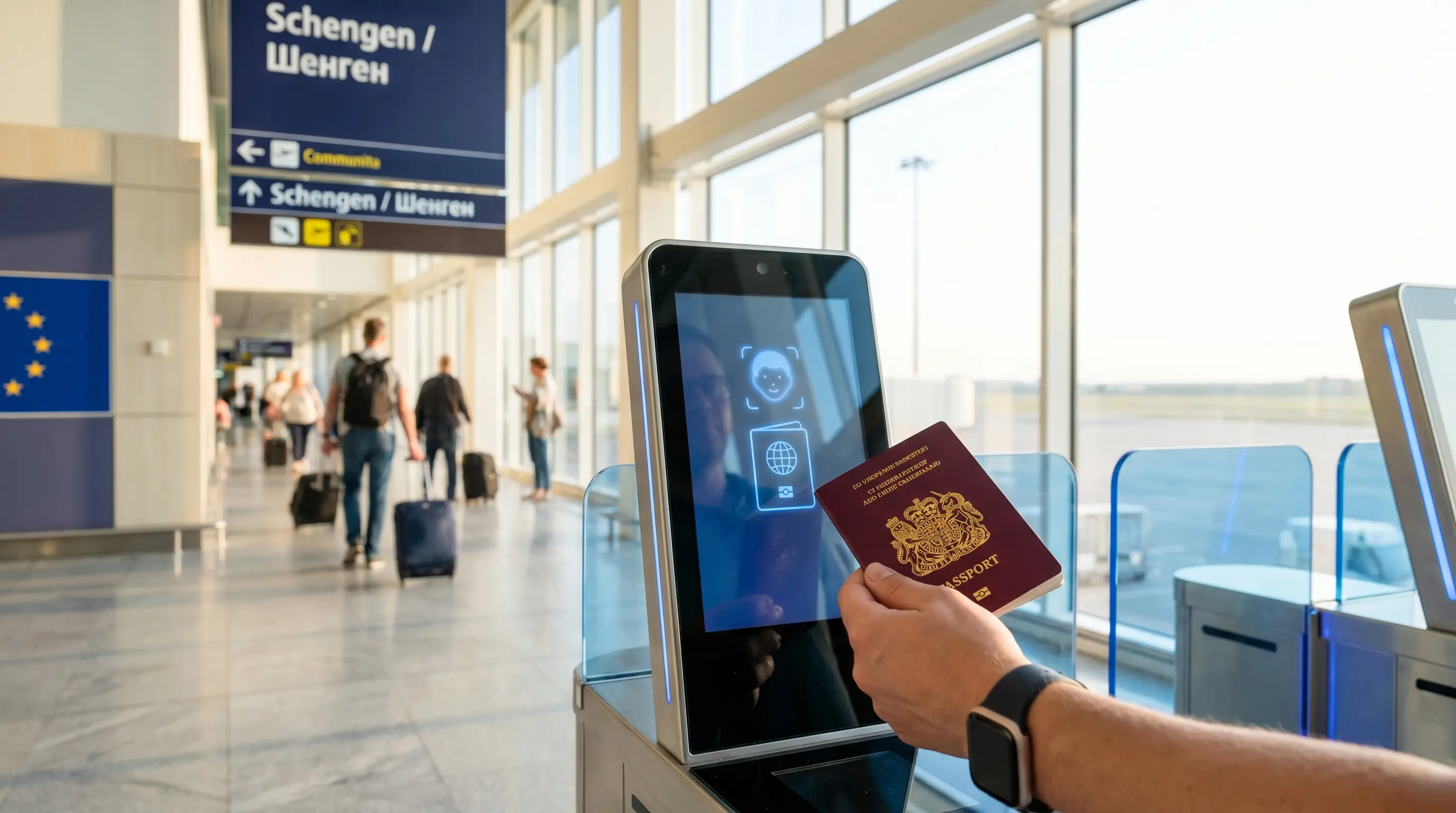
Where the TIE does matter outside Spain is at the border infrastructure that has emerged since Brexit. Holders are exempt from biometric registration under the Entry/Exit System, which has been going live in a steady rollout this year. However, more than one TIE holder has been repeatedly fingerprinted at the border, so it’s not working smoothly.
There is another use-case I have found valuable. When I re-enter the Schengen Area through somewhere other than Spain, it is genuinely useful to be able to show the TIE. If I take a transatlantic flight that transits through Amsterdam, the card lets me through the Schengen border at Schiphol with no fuss, because my purpose for entering the EU is not tourism, it is returning home. The TIE confers no residency rights in the Netherlands, but at the border it explains why I am there at all, and that is enough.
These are friction-reduction features, not mobility-expansion features. The mobility itself is what the UK passport gives me, and what the 90/180 rule limits.
This is the asymmetry. National residence rights, extensive and durable. EU mobility rights, none. Schengen mobility rights, the same 90 days a visiting American gets.
It would be the same asymmetry for an EU citizen resident in Spain – except it isn’t. An Irish or German national living in Spain still has full EU freedom of movement and can up and move to Lisbon or Berlin or Vienna tomorrow, without applying for anything. The line dividing the two of us, sitting at the same coworking café, is the colour of our passports. (I mean that rhetorically. My current passport is still EU burgundy, but when I next come to renew it, it will not be.)
How the rolling 90/180 actually works
The 90/180 rule is not a calendar-year quota. It is a rolling 180-day window calculated backwards from each day of stay.
In practice this means: on any given day you are in the Schengen Area, the authorities can look at the preceding 180 days and count the number of days you spent in any Schengen country during that window. If that total exceeds 90, you are in breach.
The window moves with you. Each new day shifts the calculation forward by one day. The day you arrive counts as a full day in the Area. The day you leave counts as a full day in the Area. A weekend in Amsterdam from Friday afternoon to Sunday evening is three days.
The clock is single, not per country. Days in Germany and days in Italy and days in Portugal all draw from the same 90.
This rolling structure punishes irregular travel and rewards careful planning. There are Schengen calculators online. Anyone in this situation eventually has one bookmarked.
What changed in 2024 and 2025: Bulgaria and Romania
Before 2024, Bulgaria and Romania were EU member states but not part of the Schengen Area. For UK citizens with Spanish residency, this meant time spent in Sofia or Bucharest did not count against the 90/180 Schengen total. Bulgaria, awkwardly and usefully, was sometimes used as a Schengen reset country.
This is no longer true.
31 March 2024. Bulgaria and Romania joined Schengen for air and sea travel only. Land border controls remained in place.
1 January 2025. Bulgaria and Romania completed full Schengen integration, including land borders.
From 1 January 2025, time spent in Bulgaria or Romania counts toward your Schengen 90/180 total in exactly the same way as time spent in any other Schengen country. The reset trick is dead. Any guide, calculator, or AI overview suggesting Bulgaria is still useful as a non-Schengen border-run destination is out of date, and will get you in trouble at a border.
It’s also worth bearing in mind the planned EU accession of other candidate countries will push the border back further. Once Albania, Montenegro, and other countries join the zone fully, you’re going to have to go a lot further east if you’re shuffling Schengen days.
The new border systems: EES and ETIAS
Two further changes worth knowing about.
The Entry/Exit System (EES) is the EU’s automated border control system, which replaces passport stamping with biometric registration. It began phased deployment in October 2025 and reached full operation (more or less) in April 2026.
The European Travel Information and Authorisation System (ETIAS), a pre-travel authorisation broadly similar in shape to the US ESTA, is currently expected to launch in the final quarter of 2026.
UK citizens with the Brexit TIE are exempt from both systems. UK citizens who only ever held the older EU registration certificate – the green A4 paper or green credit-card-sized document many of us were issued in the early 2010s – or who never updated their documentation are not exempt, and will be tracked through EES like any other visiting non-EU citizen. The Spanish government has been explicit on this point. Anyone in the Withdrawal Agreement cohort who hasn’t yet swapped to the biometric Brexit TIE should consider doing so before their next non-Spain Schengen trip, and the embassies have been strongly advising this for years.
The wider point
Almost everything I have just described applies, with country-specific variations, to every non-EU national living in a European country on a national residency permit or digital nomad visa.
A US software engineer in Portugal on a D7 has full residence rights in Portugal, and 90 days in 180 anywhere else in Schengen. An Australian writer in Spain on the new digital nomad visa has the same shape. A Canadian designer in the Netherlands on a self-employed permit has the same shape, with Dutch-specific quirks. The Brexit experience is, in this sense, the highest-volume case study of a structural reality that has always applied to third-country nationals in Europe.
UK citizens in our situation are simply the largest single cohort of people who used to have EU mobility and now don’t, and so we are the ones documenting the difference in real time. Some of what reads as Brexit-specific frustration is, structurally, the same furniture every American or Canadian or Australian remote worker in Europe has been sitting on the whole time. The difference is that they walked into the room knowing the chairs were arranged that way. We walked in expecting the room from before.
For anyone considering a move to a European country on a third-country passport – including those weighing up Spain’s DNV, Portugal’s D7 or D8, Italy’s nomad visa, Croatia’s DNV, or any other national residency route – this is the part that does not always come through clearly in the marketing.
The residence status is real. The right to live and work in that one country is genuine and durable. But it does not come with residence in Europe. The 27 EU member states do not become a single canvas just because you are legally settled in one of them.
So for those of us from the UK who’ve been here more than a decade, we’re left in this weird emotional situation that we moved to Europe as Europeans, and now, apparently, we’re not. Even if the fight to remain was one of the most defining moments in our personal identity formation as transnational citizens.
As the 10th anniversary of the referendum approaches, clearly we and many others have been here quite long enough to apply for Spanish citizenship if we choose to. At the moment, there doesn’t feel any urgency to embark on yet another Sisyphean Spanish admin project, and our changed status doesn’t impact us day to day.
Existing somewhere by permission, when it used to be a right, does make a difference though. Ironically, one reason we might one day choose to apply for Spanish citizenship would be if we wanted to leave Spain and settle somewhere else in the EU – and we would probably only do that if the political climate became hostile towards immigrants here, which is certainly a possibility. With equal irony, I have Spanish friends who applied for UK citizenship last year, when they lost confidence in the power of their settled status there. Political sentiment is never stable, and there are uncomfortable winds of nationalism blowing across the whole region now that we all have to be aware of.
At the same time, winds of change in the UK suggest a genuine “regrexit”, among many who voted out back in 2016 and have seen their splendid isolation lead to economic decline, while the beleaguered present government discreetly pushes for closer European ties.
So maybe when we jump over the waves later this month, our wishes will finally come closer to being granted.