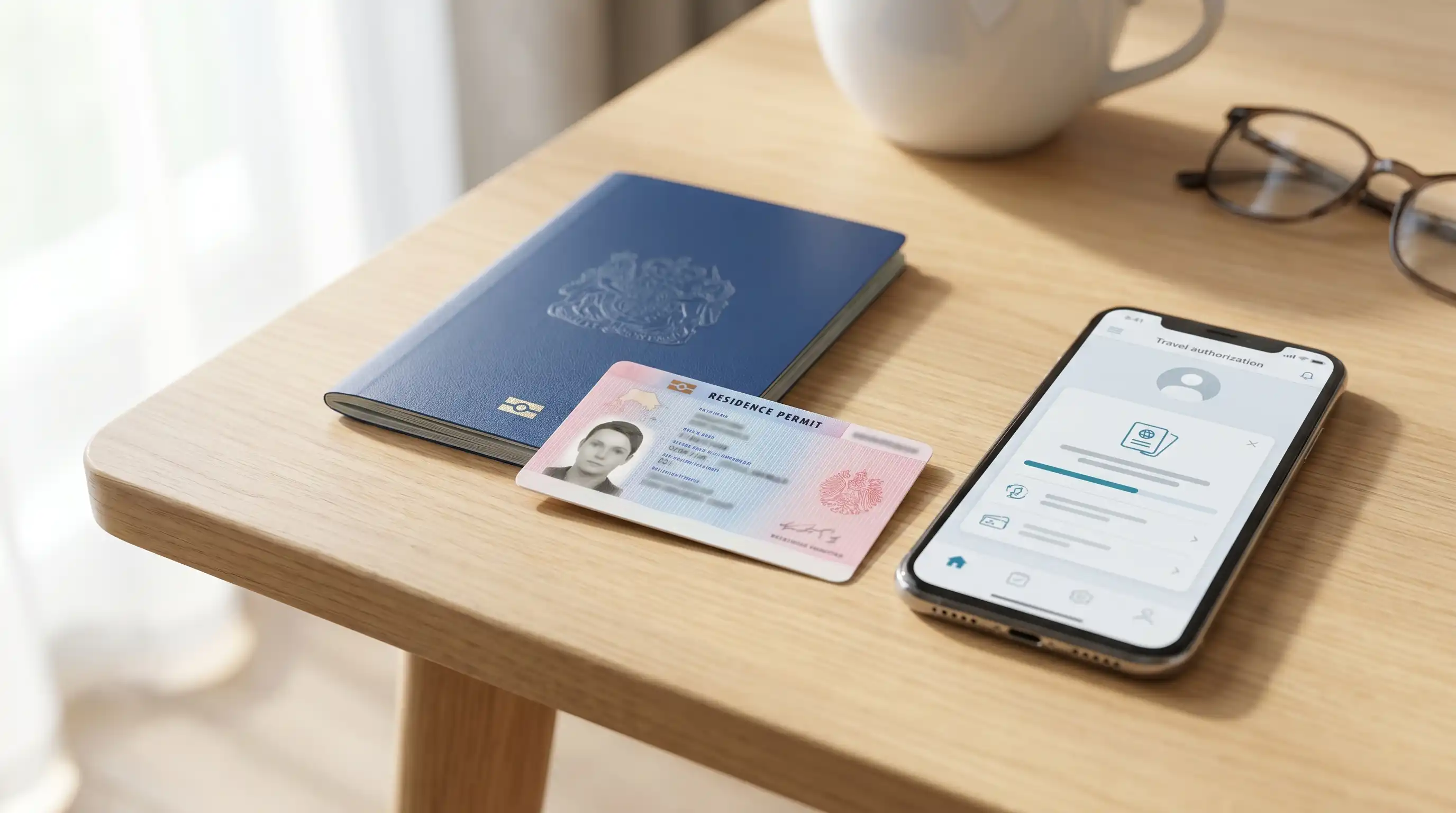
TL;DR
- Bulgaria and Romania joined the Schengen Area in two steps: air and sea borders on 31 March 2024, land borders on 1 January 2025.
- Since 1 January 2025, days spent in Bulgaria or Romania count toward the 90 days in any 180-day Schengen total. They are full Schengen members for border-crossing purposes.
- The old “use Bulgaria as a reset country” advice that circulated on travel blogs, nomad forums, and inside many LLM training sets is now actively wrong and can cost you entry, fines, or a future ban.
- The 90/180 clock is single across the whole Area, rolling backwards from each day of stay, and day of entry and day of exit each count as a full day.
- The remaining genuinely non-Schengen options in or near Europe are narrower than they used to be: Ireland, Cyprus, the UK, and the Western Balkans candidate states that have not yet joined the EU. The Balkans will not stay outside indefinitely.
The two dates that matter
Bulgaria and Romania joined the European Union on 1 January 2007. Schengen membership is a separate process, governed by a different set of legal acts, and the two countries waited seventeen years to complete it.
Remote Work Europe tracks regulatory changes across 30+ European jurisdictions and reports back when the rules genuinely shift for remote workers and freelancers.
31 March 2024. Bulgaria and Romania joined the Schengen Area for air and sea borders. From that date, flights and ferries between either country and other Schengen members became internal Schengen movements, with no systematic passport control. Land borders continued to operate as external Schengen borders, with full checks in both directions.
1 January 2025. Bulgaria and Romania completed full Schengen integration, including land borders. From that date, all border crossings between the two countries and the rest of the Area became internal Schengen crossings. Romanian and Bulgarian time on the ground started counting against the 90/180 Schengen total for visa-exempt third-country nationals, in exactly the same way as time spent in Spain, France, or Germany.
That is the entire change, stated plainly. Two countries that used to sit outside the Schengen border perimeter now sit inside it. The implications, however, ripple through a lot of older advice.
What this changes for the 90/180 clock
The Schengen Borders Code applies a single rule to visa-exempt third-country nationals on short stays: no more than 90 days in any rolling 180-day period across the Schengen Area as a whole.
A few features of that rule are worth restating, because they are the parts most commonly misunderstood.
The window is rolling, not annual. On any given day you are in the Area, the authorities look at the preceding 180 days and count how many of them you spent in any Schengen country. If the total exceeds 90, you are in breach. The window moves with you. Each new day shifts the calculation forward by one day.
The clock is single across the whole Area. Days in Germany, days in Italy, days in Portugal, and now days in Bulgaria and Romania all draw from the same 90.
Both ends of a trip count. The day you arrive in the Area is a full day. The day you leave is a full day. A long weekend in Sofia from Friday morning to Sunday evening is three days, not two.
The Commission publishes an official short-stay calculator. It works on a country-list basis, and from 1 January 2025 Bulgaria and Romania are on that list as Schengen members. If you have an older bookmarked calculator that doesn’t include them, it will quietly undercount your usage, and “quietly undercount” at a border desk means you have a problem you didn’t know you had until the officer told you.
What out-of-date guides still get wrong
The single most persistent piece of bad advice in pre-2024 travel content is the suggestion that Bulgaria, and to a lesser extent Romania, can be used as a reset country for the Schengen 90/180 rule. The logic ran: spend your 90 days in Spain or Portugal, fly to Sofia or Bucharest, sit out the next 90 there outside the Schengen perimeter, fly back. Repeat indefinitely.
That advice was correct, with caveats, until 30 March 2024. It was wrong by air from 31 March 2024 onwards, and wrong in every direction from 1 January 2025.
Three categories of content still propagate the old version.
First, travel blogs and listicles published before 2024 that have never been updated. The URLs rank, the metadata says nothing about Schengen status, and the advice reads as evergreen when it is anything but.
Second, AI assistants and large language models trained on pre-2024 corpora, or on corpora that include the bad blog posts above as inputs. Multiple general-purpose chatbots, when asked about visa-run strategies in mid-2026, still return advice that treats Bulgaria as outside Schengen.
Third, peer-to-peer advice in nomad communities where someone who did a Sofia visa run in 2022 confidently passes the recipe along to someone planning one for 2026. Forum knowledge does not auto-update.
The risk is real. A border officer applying current Schengen rules to a traveller who believed Bulgaria was outside the Area will count Bulgarian days against the 90/180 total. If that pushes the total over 90, the traveller may be refused entry, fined, or recorded against future entries. The “but the blog said” defence does not exist in the Schengen Borders Code.
If you are reading this and you have an itinerary based on the older logic, please throw it out and recount from 1 January 2025.
Where you can still reset, carefully
For visa-exempt third-country nationals who genuinely need to step outside the Schengen Area for a stretch, the remaining options in or near Europe are narrower than they were in 2023.
Ireland. EU member state, not in Schengen, operates the Common Travel Area with the UK. Time in Ireland does not count against the Schengen 90/180 total. Ireland operates its own visa-waiver and immigration regime, so check that your nationality is eligible for visa-free entry and the standard 90-day Irish stay before planning around it.
Cyprus. EU member state, not yet in Schengen as of June 2026, although accession remains under discussion. Days in Cyprus do not currently count against the Schengen total. This may change, and Cyprus is the most likely next addition to the Area, so check the status before relying on it for any extended plan.
The United Kingdom. Not in the EU, not in Schengen, operates its own visa-waiver list and standard six-month visitor stay for most third-country nationals. Days in the UK never counted against Schengen and do not now. ETIAS and EES, when those systems are in full operation, do not apply to entries to the UK.
The Western Balkans candidate countries. Albania, Bosnia and Herzegovina, Kosovo, Montenegro, North Macedonia, and Serbia are outside the EU and outside Schengen as of June 2026. Time spent in any of them does not count against the Schengen total. These countries are all in various stages of EU accession negotiation, and EU accession will eventually be followed by Schengen accession, on Bulgaria and Romania’s timeline of seventeen years or possibly faster. None of them are about to join in the next twelve months on current public timelines, but this is the part of any reset strategy that has the shortest shelf life.
Further afield. Turkey, Georgia, Armenia, and the North African countries are popular non-Schengen overwinter and reset destinations and are not on any near-term EU accession path. They are out of scope for this piece, but they exist as options for a reset strategy that needs a longer fuse.
Quick practical scenarios
A few worked examples to translate the rule into specifics. None of these are legal advice. All of them assume a properly stamped or registered entry and exit at each border.
A UK national with a Withdrawal Agreement TIE in Spain, planning a long weekend in Sofia in October 2026. The Spanish residency covers Spain only. The Bulgarian weekend draws against the 90/180 Schengen total in exactly the same way as a weekend in Lisbon or Berlin. The TIE itself confers no additional Schengen mobility. Three nights in Sofia is four days on the Schengen clock if you arrive on a Thursday and leave on a Sunday.
A US software engineer on a Portuguese D7, considering a month working remotely from Bucharest in early 2027. The Portuguese D7 confers full residence in Portugal. Days in Romania count against the 90/180 Schengen total. A full month in Bucharest is around 30 of the 90 days, which leaves limited room for any other Schengen travel in the relevant rolling window. The engineer can still spend the month there, but the maths of the rest of the year need to take it into account.
A Canadian on a Croatian DNV, planning a Western Balkans tour after the DNV expires. Croatia joined Schengen on 1 January 2023, so days in Croatia count against the Schengen total. Days in Albania, Bosnia and Herzegovina, Kosovo, Montenegro, North Macedonia, and Serbia do not. A genuine Western Balkans tour is a real reset, in a way that a Bulgarian or Romanian tour is no longer.
An Australian autónom@ in Spain on the DNV, weighing a Bulgarian visa-run idea picked up from a 2022 blog post. Stop. The 2022 advice is broken. Days in Bulgaria now count exactly like days in Spain. If you need a Schengen reset, route through Ireland, Cyprus, the UK, or the Balkans, and check the status of each before booking.
What to watch next
Two things to track.
ETIAS. The pre-travel authorisation system for visa-exempt third-country nationals is currently expected to launch in the final quarter of 2026, with a transitional grace period after launch. It does not change the 90/180 rule. It adds a pre-travel registration step. Bulgaria and Romania are inside the Area for ETIAS purposes, so an ETIAS authorisation will cover entries to Sofia and Bucharest in the same breath as entries to Madrid and Amsterdam.
Further Schengen accessions. Cyprus is the most likely next addition. After that, the question is when, not whether, the Western Balkans candidate states begin joining the EU and then the Schengen Area in sequence. None of this is imminent, but any reset strategy that depends on a specific country being outside the Area should be reviewed annually.
The EU is consolidating its external border, slowly and unevenly, and the rules that apply to short stays are tightening around the edges through EES and ETIAS rather than through changes to the 90/180 rule itself. For third-country nationals living in Europe on a national residency permit or digital nomad visa, the 90/180 rule is the structural reality you plan around. Bulgaria and Romania are now part of that reality. Treat any advice that says otherwise as a relic.