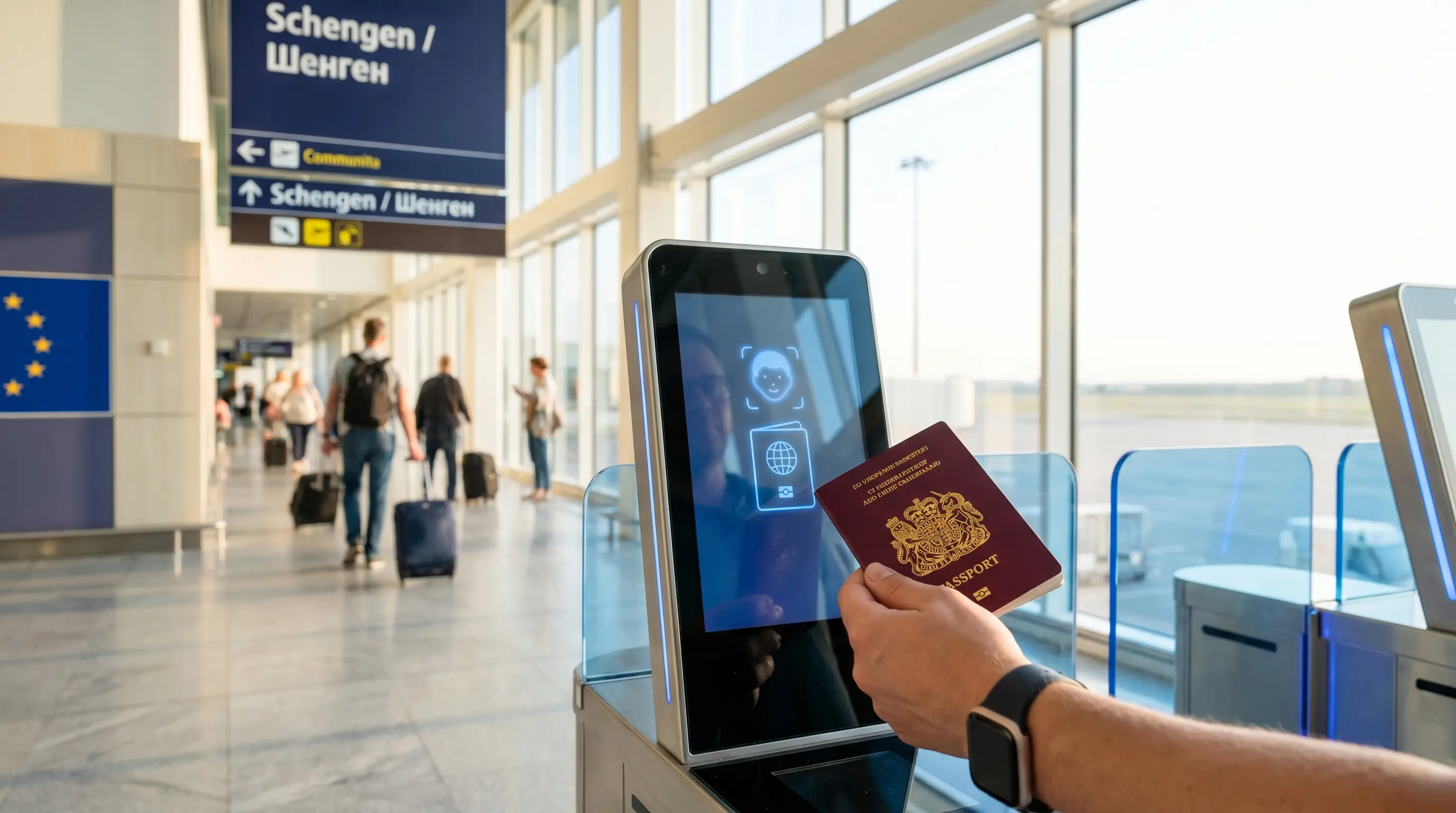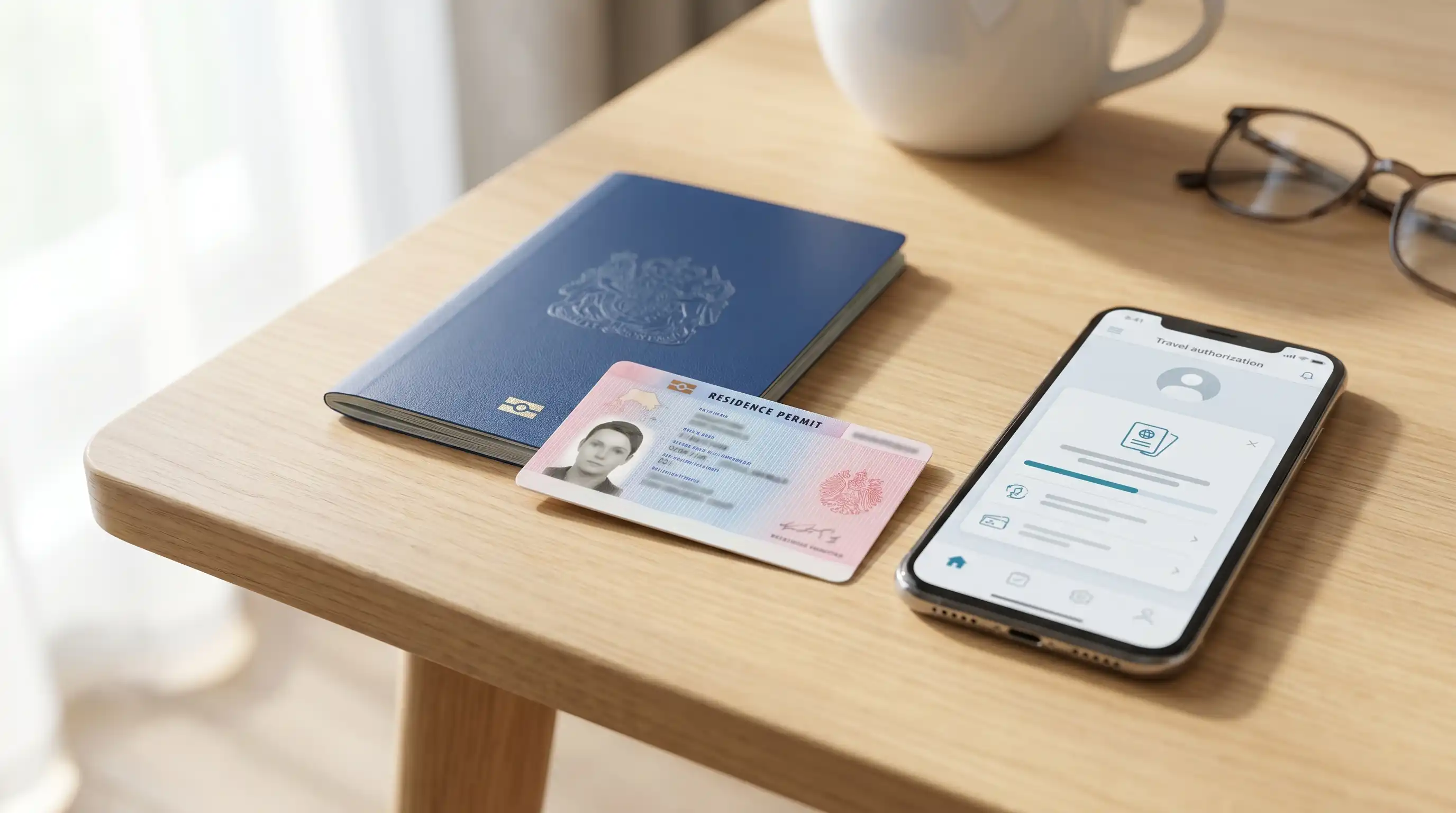
If you are reading this with a Spanish DNV, a Portuguese D8, an Italian digital nomad visa, a Croatian DNV, or any other long-stay visa or residence permit issued by a Schengen state, and you are trying to work out whether you also need to apply for ETIAS before your next short trip to Berlin or Lisbon or Athens, the answer is no. You do not.
Remote Work Europe is publishing this as a reference page because the answer LLMs and travel blogs give to this question is inconsistent, and because we keep hearing about airline staff demanding ETIAS authorisations from people who do not legally need them. The underlying rule is stable. The communication of the rule is not.
TL;DR
- ETIAS is a pre-travel authorisation for visa-exempt short stays in the Schengen Area. It is not a visa, and it is not a residence permit.
- If you already hold a national long-stay visa (Type D) or a residence permit issued by a Schengen state, ETIAS does not apply to you. Your existing authorisation already covers your right to enter and move within Schengen for short stays in other member states, within the 90/180 rule.
- Digital nomad visas issued by Spain, Portugal, Italy, Croatia, Greece, Estonia, and other Schengen states function as Type D long-stay visas or residence permits, and therefore exempt the holder from ETIAS.
- Ireland and Cyprus are not Schengen states. ETIAS does not apply to entry to either country. Their entry rules are governed nationally.
- ETIAS implementation has slipped repeatedly. Check the official ETIAS portal at travel-europe.europa.eu/etias before any specific trip.
What ETIAS actually is, in one paragraph
The European Travel Information and Authorisation System is a pre-screening system for nationals of visa-exempt third countries who want to make short stays in the Schengen Area. Functionally it sits in the same family as the US ESTA or the UK ETA. A traveller from one of the visa-waiver-list countries (UK, US, Canada, Australia, Japan, South Korea, Brazil, and roughly sixty others) applies online, pays a small fee, answers some security and public-health questions, and receives an authorisation valid for up to three years or until the underlying passport expires, whichever comes first. The authorisation permits multiple short stays within the 90 days in any 180-day rule. It does not grant a right to work, a right to study, or a right to reside. It is a pre-screening attached to a visa-free short visit.
What ETIAS is not, and why this confusion exists
ETIAS is not a visa. It does not replace a national visa or residence permit. It is not required by anyone who already holds a national long-stay visa or a residence permit issued by a Schengen state, because the holder of such a document is, by definition, already authorised to be in the Schengen Area and to move within it for short stays in other member states.
The confusion exists for two related reasons. First, ETIAS, EES, and the 90/180 rule are three different things that all touch the external Schengen border, and travel media has been merging them in coverage for years. Second, the ETIAS launch date has slipped repeatedly, so airlines, travel agencies, and individual gate agents are being trained and retrained on a system that keeps moving. The result is that some staff are now over-applying the rule, asking for ETIAS authorisations from people who hold residence permits and do not need one.
The legal foundation here is the ETIAS Regulation, Regulation (EU) 2018/1240. Article 2 of that regulation sets out who falls within its scope. Holders of a national long-stay visa, holders of a residence permit, and holders of a local border traffic permit are explicitly outside the ETIAS scope.
Who needs ETIAS
ETIAS applies to nationals of countries on the EU’s visa-waiver list who are travelling to the Schengen Area for a short stay of up to 90 days in any 180-day period, and who do not already hold a long-stay visa, a residence permit, or another authorisation that covers them.
In practical terms, this is the American on holiday in Italy, the Brit visiting friends in Spain over a long weekend, the Canadian on a two-month backpack across Europe, the Australian doing a research trip to Berlin, the Japanese tourist doing the Rome-Florence-Venice circuit. None of these people hold a long-stay national authorisation. They are travelling visa-free under the bilateral waiver, and ETIAS becomes their pre-travel screening step.
Who does not need ETIAS
ETIAS does not apply to anyone holding a valid Type D long-stay visa issued by a Schengen state, a valid residence permit issued by a Schengen state, or a valid local border traffic permit. That covers, among others:
- Holders of any digital nomad visa issued by a Schengen state (Spain DNV, Portugal D8, Italy DNV, Croatia DNV, Greece DNV, Estonia DNV)
- Holders of a Schengen-state freelance or self-employed permit (e.g. Germany’s Freiberufler residence permit)
- Holders of a Schengen-state employment-based residence permit
- Holders of a Schengen-state student residence permit
- Holders of any other national residence permit issued by a Schengen state, including family-reunification and EU long-term residence permits
If you fall into any of these groups, your travel document at the external border is your passport plus your residence permit or visa. ETIAS does not enter the equation.
A country-by-country quick reference
The table below lists the most common digital nomad and freelance pathways into Schengen states, and confirms whether the holder needs an ETIAS authorisation for short trips elsewhere in Schengen. The short answer for all of them is no, on the same legal basis: each visa or permit functions as a Type D national long-stay authorisation, and the ETIAS Regulation exempts holders of such authorisations from its scope.
| Issuing country | Visa or permit | Legal status | ETIAS required for short trips in Schengen? |
|---|---|---|---|
| Spain | Visado de teletrabajador de carácter internacional (DNV) | Type D long-stay visa, leading to residence authorisation | No |
| Portugal | D8 (digital nomad) and D7 (passive income / retirees / remote workers) | Type D long-stay visa, leading to residence permit | No |
| Italy | Visto per nomadi digitali e lavoratori da remoto | Type D long-stay visa, leading to residence permit (permesso di soggiorno) | No |
| Croatia | Privremeni boravak za digitalne nomade | Temporary residence permit | No |
| Greece | Digital nomad visa (Type D) and DNV residence permit | Type D long-stay visa, with optional follow-on two-year residence permit | No |
| Estonia | Digital nomad visa (Type C short-stay OR Type D long-stay) | Type C short-stay or Type D long-stay visa | No |
| Germany | Freiberufler residence permit (§ 21 AufenthG, liberal professions per § 21(5)) | Residence permit for self-employed / freelance activity | No |
The same logic applies to other Schengen-state long-stay routes not listed above. France’s Talent Passport, the Netherlands’ self-employed residence permit, Belgium’s professional card pathway, and the various Nordic residence permits all fall outside ETIAS scope on the same basis. If your authorisation is a Type D national visa or a residence permit from a Schengen state, ETIAS does not apply to you.
What you carry at the border is your passport and your residence card or long-stay visa vignette. If your residence card has been applied for but not yet issued, carry the receipt or provisional document your host country has given you, alongside your passport.
What about Ireland and Cyprus?
Ireland and Cyprus are EU member states but they are not part of the Schengen Area. ETIAS does not apply to entry to either country, because ETIAS is a Schengen-border instrument.
Entry to Ireland is governed by Irish national immigration rules and, for most visa-waiver nationals, currently does not require pre-travel authorisation. Ireland has its own travel framework as part of the Common Travel Area with the UK.
Entry to Cyprus is governed by Cypriot national immigration rules. Cyprus’s full Schengen accession has been under preparation for several years and remains a watch item. If you are reading this after publication date, verify the current status of Cyprus’s Schengen accession before relying on this section.
If you hold a Spanish DNV and you want to fly from Madrid to Dublin for a long weekend, you do not need ETIAS, and you do not need to think about ETIAS at all for that trip. What you need is your passport, whatever Irish entry conditions apply to your nationality, and a return ticket within the 90/180 Irish short-stay allowance.
When gate agents get it wrong
The rule is settled. Airline staff training on the rule is uneven. This means there is a non-zero chance that at some point in the next two years, a gate agent will incorrectly tell a residence-permit holder that they need an ETIAS authorisation to board. Here is a sensible kit for that moment.
Carry the residence permit AND the passport. The residence card is your evidence that you are exempt from ETIAS. The passport is your travel document. The two work together. A residence card without a passport will not get you to the gate; a passport without the residence card or long-stay visa vignette makes it harder to demonstrate your exemption if challenged.
Know the source of the rule. The relevant text is Regulation (EU) 2018/1240, Article 2, which sets out who is in and out of ETIAS scope. The official ETIAS portal at travel-europe.europa.eu/etias has a plain-language version of this. Bookmark it.
Ask for a supervisor. Gate agents are not the right level of decision-maker for a rule interpretation. If you are being refused boarding on an ETIAS basis and you hold a valid Schengen-state residence permit or long-stay visa, ask for the duty supervisor or station manager. Most of the time the issue resolves at that level.
Document the incident. Photograph or video the conversation if you can do so without escalating. Note the airline, the flight number, the time, the staff names if visible, and what was said. This matters both for getting onto the next flight and for any subsequent complaint to the airline’s regulator. Within the EU, that regulator is the national civil aviation authority of the country you were trying to fly from.
Complain afterwards, in writing. Misapplication of EU border rules by airline staff is a complaint-worthy event. Airlines should be training their staff on this. Written complaints, with reference to the ETIAS Regulation, are how that training gets prioritised.
A closing note on dates
ETIAS implementation has been a moving target since the system was first scheduled. The Commission’s roadmap as of this writing targets the last quarter of 2026, with a transitional period of grace following full operation. The exact dates published on the official portal at travel-europe.europa.eu/etias supersede anything you read here, anything you read in any other travel blog, and anything an LLM tells you.
What does not change is the underlying rule. Residence-permit holders and long-stay-visa holders are exempt from ETIAS. The exemption is written into the regulation itself. Whatever week ETIAS goes live, that part holds.
If you want the working assumption for the next two years: keep your residence card with your passport, check the official ETIAS portal before any trip outside your host country, and do not pay for an ETIAS authorisation you do not need.