When people picture remote work in Spain, they see sunshine, terrace cafes, and Mediterranean beaches. Asturias is none of those things – and that’s exactly why it deserves your attention.
Remote Work Europe sits across multiple European jurisdictions, which makes comparison pieces like this one possible without flattening the differences.
Tucked into Spain’s northern Atlantic coast, Asturias is part of “Green Spain” – a strip of lush, mountainous territory that has more in common with Ireland or Wales than with Andalusia. It rains here. The mountains are dramatic. The coastline is rugged and wild. The food is extraordinary. And the cost of living is among the lowest in Western Europe.
Asturias is for remote workers who want a completely different experience of Spain – one where you’re almost certainly the only digital nomad in the room, where the landscape takes your breath away, and where your money goes remarkably far. The trade-offs are significant: English is rarely spoken, the international community is minimal, summer temperatures are modest, and the grey skies can test your mood. But for the right person, Asturias offers something that sunny, saturated nomad destinations simply cannot.
Why Asturias for remote work
The cost of living is the headline. Oviedo and Gijón – Asturias’s two main cities – offer rents that feel almost surreal compared to Spain’s south and east coasts. You can rent a spacious apartment in the centre of Oviedo for what you’d pay for a studio in Valencia. Eating out is cheap, and the quality is exceptional.
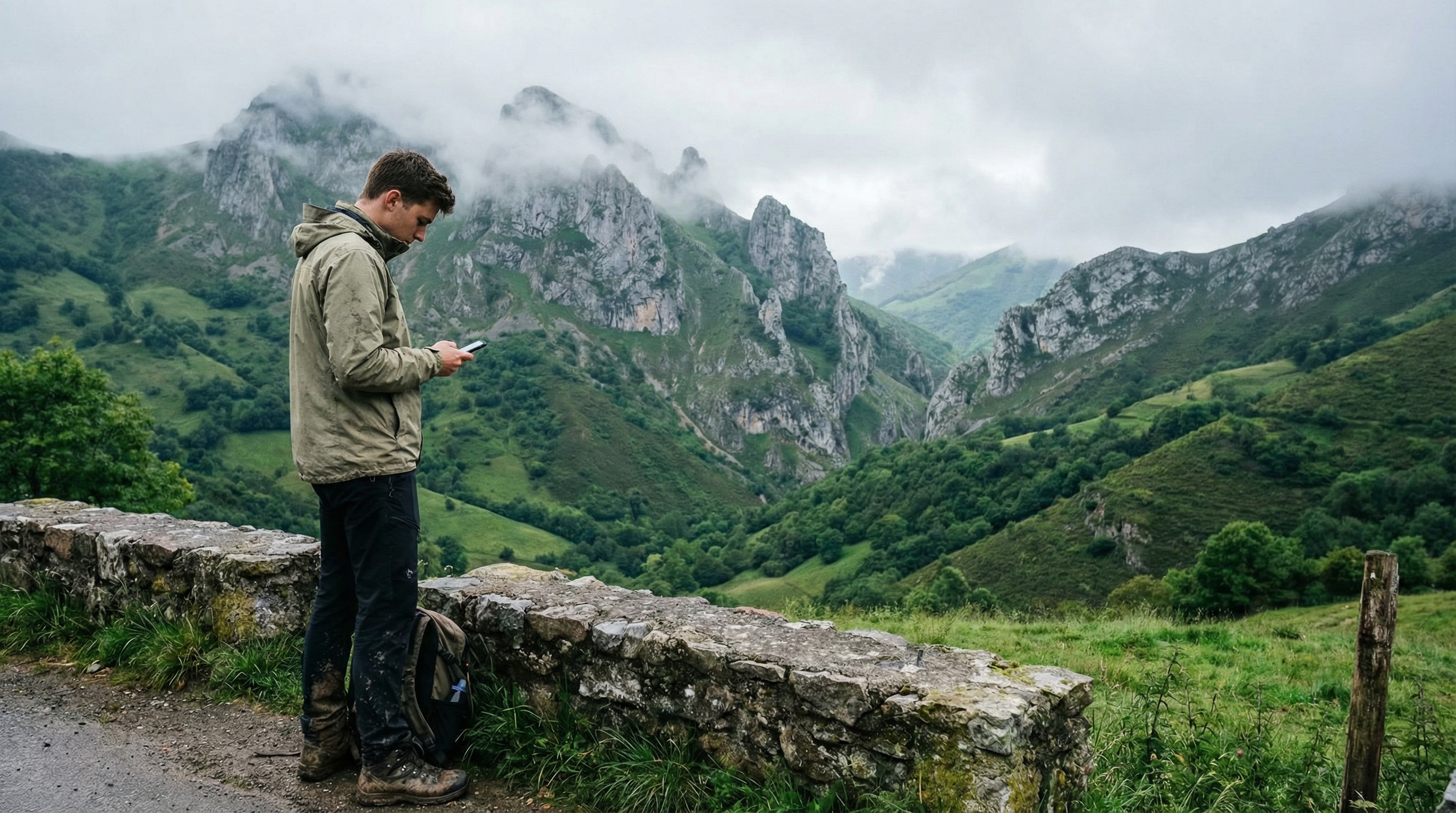
The natural environment is world-class. The Picos de Europa mountains are right there – some of Spain’s most spectacular peaks, with hiking, climbing, and caving. The Asturian coastline is dotted with tiny beaches, fishing villages, and dramatic cliffs. In autumn, the forests turn gold in ways that feel more New England than Iberia.
Asturias has a fierce cultural identity. It was the one part of Spain never fully conquered by the Moors, and this history informs a distinct sense of pride and independence. The cider culture (sidra, poured dramatically from height) is a social institution. The local cuisine – fabada, cachopo, Cabrales cheese – is hearty, flavourful, and a point of genuine regional pride.
Oviedo is the capital – elegant, walkable, with a beautiful old town and excellent infrastructure for its size (around 220,000 people). Gijón is the larger, more industrial city on the coast (around 270,000), with a working-class energy, beaches, and a growing cultural scene. Both are genuine places to live, not tourist constructs.
Cost of living
This is where Asturias stands out dramatically from almost any other Western European option.
| Item | Typical monthly cost |
|---|---|
| 1-bed apartment (Oviedo centre) | EUR 400–600 |
| 1-bed apartment (Gijón centre) | EUR 420–650 |
| 1-bed apartment (outside centre) | EUR 300–450 |
| Coworking desk | EUR 80–150/month |
| Coffee | EUR 1.10–1.50 |
| Meal out (mid-range) | EUR 10–14 |
| Monthly transport pass | EUR 30 |
| Estimated monthly budget (single) | EUR 1,000–1,400 |
These figures aren’t compromises – the quality of life, particularly the food, is outstanding. A menú del día (lunch menu) at a good restaurant in Oviedo costs EUR 10–13 and is typically three courses with wine. If you want to try Asturias before committing to a long lease, Flatio lists deposit-free furnished rentals for stays of one to six months – a low-risk way to settle in.
If your earnings are in pounds or dollars, the exchange rate advantage here is enormous. Wise ensures you’re not losing that advantage to bank fees.
Connectivity and coworking
Fibre broadband is available in both Oviedo and Gijón, with typical speeds of 300–600 Mbps. Coverage extends to many of the larger towns, though very rural areas may rely on slower connections. Mobile 4G coverage is strong in populated areas.
The coworking scene is small but functional:
- Coworking Oviedo (Worketik) – professional space in the centre, flexible memberships.
- EOI Asturias – publicly supported innovation space with startup support and coworking.
- La Laboral (Gijón) – a vast cultural centre in a stunning Art Deco/Brutalist complex, housing creative workspaces and tech incubators.
Cafe working culture is less developed than in southern Spain – the traditional Asturian sidrerías and bars are social spaces, not laptop venues. Newer cafes in both city centres are more accommodating, but you’ll likely want a dedicated workspace or a well-set-up home office.
Community and networking
There is no established digital nomad or remote work scene in Asturias. This needs to be said clearly. If you need weekly nomad meetups, coworking socials, and a WhatsApp group full of other English-speaking remote workers, this is not the place for you.
What Asturias offers instead is genuine local community. Asturians are welcoming people, and if you learn Spanish (essential here – English is rarely spoken in daily life), you’ll be drawn into a social life centred around food, cider, nature, and conversation. The Asturian cultural calendar – festivals, romerías, food events – provides natural points of connection.
The University of Oviedo brings some international presence, and there are small expat communities in both cities. Language exchange events exist, though less frequently than in larger cities. A few remote workers have discovered Asturias and connected informally, but you’re essentially pioneering.
This isolation from the nomad circuit is either a dealbreaker or the entire point, depending on what you’re looking for. For those who want deep integration into local Spanish life, Asturias forces you to engage in ways that simply aren’t necessary in Barcelona or the Canaries.
Visa and legal considerations
Standard Spanish visa options apply:
-
The Digital Nomad Visa (DNV) – the primary route for non-EU remote workers. Our full guide covers eligibility and application.
-
Autonomo registration – for self-employed workers in Spain. See our autonomo guide, and consider Xolo for managing the paperwork.
-
The Non-Lucrative Visa – for passive income holders. Details in our NLV guide.
Asturias has a significant practical advantage here – bureaucratic appointments tend to be much easier to get than in Madrid, Barcelona, or even Valencia. The Oficina de Extranjeros in Oviedo is manageable, and the pace of administration is more human.
For expert visa guidance, Richelle de Wit helps remote workers across Spain, including those choosing less conventional locations.
Climate and lifestyle
Asturias has an oceanic climate – mild, wet, and green. This is fundamentally different from what most people associate with Spain.
Summers are pleasant (18–25°C), rarely hot, with long daylight hours and frequent sunshine interspersed with clouds and showers. Winters are mild compared to central and northern Europe (6–12°C) but grey, damp, and rainy. Spring and autumn can be glorious, with dramatic cloud formations over the mountains and the forests at their most beautiful.
If you suffer from seasonal affective disorder, be honest with yourself. Asturias gets significantly less sunshine than southern Spain. Some people thrive in green, moody landscapes; others need constant sun. Know which you are.
The outdoor lifestyle is exceptional for those who embrace it. Hiking in the Picos de Europa is world-class. The coast offers surfing, kayaking, and beach walks (even if the water is cold). Caving, mountain biking, and trail running are all on your doorstep.
Healthcare is accessible through the Spanish public system. The Hospital Universitario Central de Asturias (HUCA) in Oviedo is a major facility. Register at your centro de salud with your padrón.
Transport links: Asturias airport has limited international flights (mainly UK and some European destinations). For wider connections, Bilbao airport is 3 hours east, and Madrid is reachable by road (5 hours) or a forthcoming improved rail link. Within Asturias, FEVE regional trains and ALSA buses connect the main towns and coast.
Getting started
Planning a move to Asturias? Here’s your practical guide:
-
Secure your visa before arriving. Richelle can help you navigate the best path.
-
Choose between Oviedo and Gijón, or even a rural pueblo. Oviedo is more elegant and compact, inland, slightly cheaper, and arguably more pleasant for walking. Gijón is coastal, larger, more industrial but with great beaches and a grittier energy. Both are excellent – spend time in each before deciding.
-
Register on the padrón at the Ayuntamiento. Asturias bureaucracy tends to move at a more manageable pace than bigger cities.
-
Get your NIE/TIE – appointments in Oviedo are typically easier to secure.
-
Register for healthcare at your centro de salud.
-
Invest in good rain gear. This sounds trivial, but it matters. A quality waterproof jacket and decent boots transform rainy days from miserable to manageable. The Asturians have a saying: “no hay mal tiempo, solo ropa inadecuada” – there’s no bad weather, only bad clothing.
-
Learn Spanish before you arrive or commit to intensive classes immediately. This is non-negotiable in Asturias. Even basic Asturianu (bable) phrases will delight locals.
For remote work opportunities suited to European time zones, RWE Connected curates verified job leads – useful when you’re building your career from somewhere less connected to the typical nomad network.
Asturias is not the obvious choice for remote work in Spain, and it never will be. It’s too wet, too far from the usual circuits, too Spanish for those who want an English-speaking bubble. But for remote workers seeking extraordinary natural beauty, world-class food, rock-bottom costs, and the chance to live deeply in a proud, distinctive region of Spain – there is nowhere quite like it.