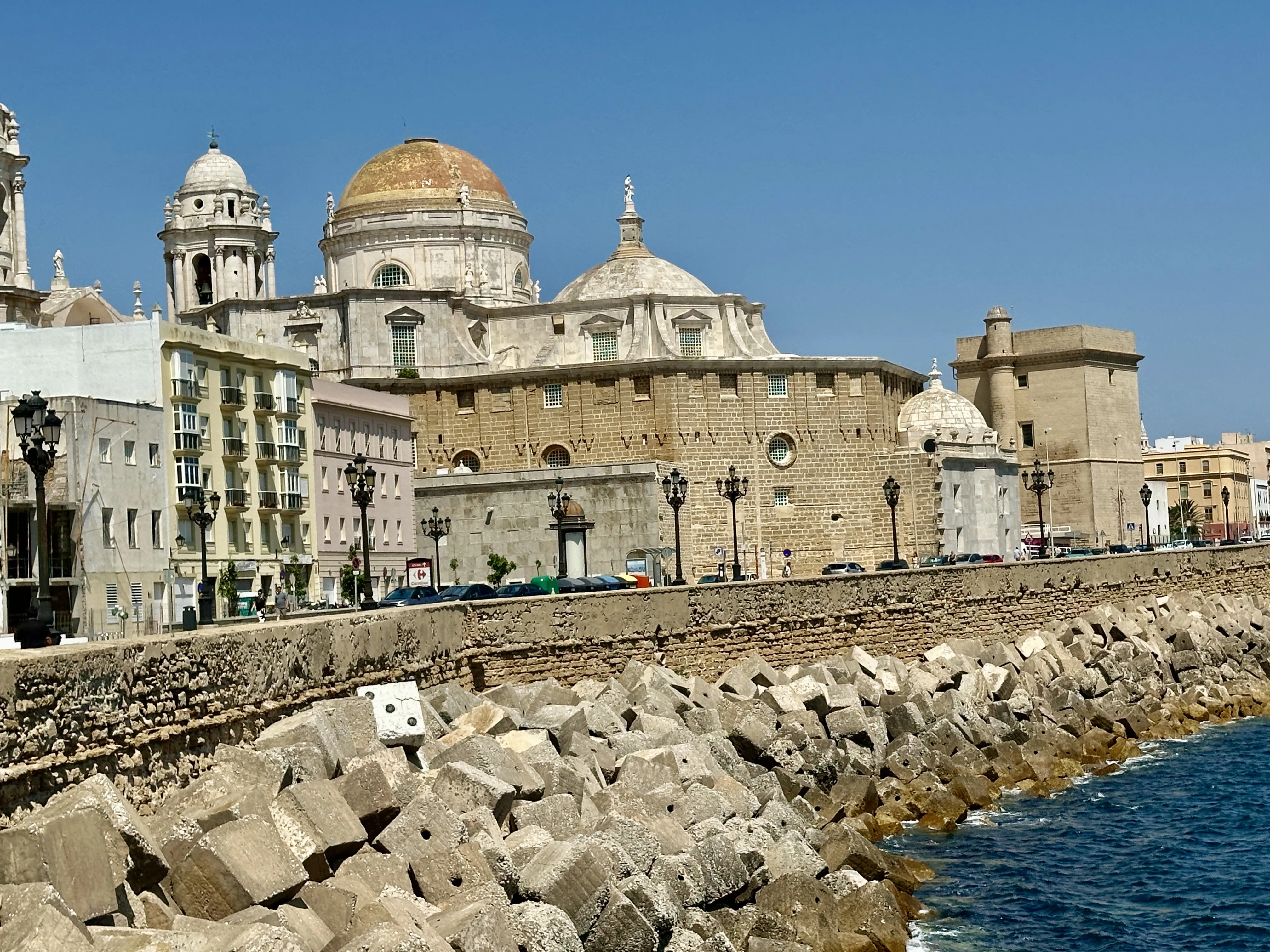
Cadiz is a place that gets under your skin. Sitting on a narrow peninsula jutting into the Atlantic, this ancient port city – widely considered the oldest in Western Europe – has a character entirely its own. Narrow streets, golden-domed churches, rooftop terraces overlooking the ocean, and a local culture that’s deeply Andalusian but distinctly Gaditano.
Remote Work Europe tracks regulatory changes across 30+ European jurisdictions and reports back when the rules genuinely shift for remote workers and freelancers.
For remote workers considering Cadiz, it’s worth understanding the city honestly. It’s beautiful, authentic, and deeply Andalusian – but it also faces real challenges. Local unemployment is high, the housing market is under pressure, and like many Spanish coastal cities, there is genuine tension around rising rents and the impact of incoming remote workers on established communities. We don’t write these guides to encourage a wave of arrivals – we write them so that if you’re already considering a move, you go in with realistic expectations and a commitment to being a good neighbour.
The downsides are real. The job market for locals is tough, which affects the overall economic energy. The coworking infrastructure is limited. English is not widely spoken. And Cadiz’s geographic position – at the end of a peninsula, away from major transport hubs – means getting to other cities requires a bit more effort. But if you value authenticity over convenience, this city is a revelation.
Why Cadiz for remote work
Cadiz’s appeal starts with the cost-to-beauty ratio. You’re living in one of Europe’s most photogenic cities, surrounded by Atlantic beaches, for significantly less than you’d pay in Malaga, Valencia, or Barcelona. The old town is genuinely enchanting – a labyrinth of narrow lanes opening onto unexpected plazas, with the ocean visible from countless rooftop miradors.
The beaches are outstanding. Playa de la Victoria is a wide, clean urban beach that rivals anything on the Mediterranean coast. Beyond the city, the Costa de la Luz stretches south towards Tarifa with some of Spain’s best (and least crowded) beaches. If you value sand dunes and surfing over crowds and beach bars, you might fall in love
Cadiz has a distinct cultural identity. Carnival here is legendary – the biggest in Spain and among the best in Europe. The city is deeply musical, fiercely proud, and has a wit and humour that’s famous across Andalusia. Living here means engaging with a culture, not just consuming a lifestyle.
The province of Cadiz also includes the sherry triangle (Jerez, El Puerto de Santa Maria, Sanlúcar de Barrameda) and white mountain villages like Arcos, Vejer, and Grazalema, – there’s enormous diversity within easy reach.
Cost of living
Cadiz is remarkably affordable for a city of its quality. The limited tourist infrastructure (compared to the Costa del Sol) keeps prices grounded.
| Item | Typical monthly cost |
|---|---|
| 1-bed apartment (centre/old town) | EUR 700–900 |
| 1-bed apartment (newer areas) | EUR 800–1,200 |
| Coworking desk | EUR 90–150/month |
| Coffee | EUR 1.20–1.60 |
| Meal out (mid-range) | EUR 10–14 |
| Monthly transport pass | EUR 30 |
| Estimated monthly budget (single) | EUR 1,400–1,800 |
The seafood is sensational and surprisingly affordable – fried fish (pescaíto frito) from a freiduría is a few euros and a way of life here. Wine from the sherry triangle is world-class and costs almost nothing locally.
If your income arrives in GBP, USD, or another currency, Wise keeps your conversions efficient so you can make the most of these low costs.
Connectivity and coworking
Fibre broadband is available in most of Cadiz, including much of the old town, with speeds of 300–600 Mbps typical. Some older buildings in the historic centre may have limitations, so check connectivity before signing a lease. Mobile coverage is reliable across the city.
The coworking scene is small but exists:
- Espacio La Nave – community-focused workspace in the centre, regular events, affordable rates.
- Coworking Cadiz – simple, functional space popular with local freelancers.
- Various cafes – Cadiz’s bar and cafe culture is central to daily life, and several newer establishments are laptop-tolerant, though this is not universal.
For more developed coworking options, Jerez de la Frontera (30 minutes by train) and Seville (1.5 hours) offer additional choices for occasional use.
Community and networking
Cadiz doesn’t have an established digital nomad community, and that’s part of its charm. There’s a small but growing group of international remote workers discovering the city, and a handful of expat Facebook groups where people share tips and organise informal meetups.
The real community here is local. Gaditanos are famously sociable and welcoming. If you learn Spanish – which you’ll need to, and you’ll be coping with a unique local accent too – you’ll find yourself invited into a social life that’s richer than any organised networking event. The bar culture is the social glue, and evenings spent hopping between tapas bars with neighbours and friends is how relationships form.
The university (Universidad de Cadiz) brings some international flavour, and language exchange events exist. But the honest truth is that you’re choosing Cadiz for deep immersion, not a turnkey expat experience.
Visa and legal considerations
The same Spanish visa pathways are available:
-
The Digital Nomad Visa (DNV) for non-EU remote workers – full guide here.
-
Autonomo registration for self-employed workers – explained in our autonomo guide, with Xolo available to manage the paperwork.
-
The Non-Lucrative Visa for passive income holders – details in our NLV guide.
One advantage of choosing a smaller city – bureaucratic appointments are generally easier to get in Cadiz than in Madrid, Barcelona, or even Seville. For expert help navigating the visa process, Richelle de Wit works with remote workers across Spain.
Climate and lifestyle
Cadiz has an Atlantic climate, which makes it notably different from Mediterranean Spain. Summers are warm but moderated by ocean breezes – you’ll rarely see the extreme heat that hits inland Andalusia. The levante wind can bring occasional very hot days, and the poniente wind keeps things fresh. Winters are mild (10–16°C) with some rain, particularly from November to February. Year-round, it feels less extreme than cities like Seville or Granada. However it’s worth noting that in recent years climate extremes have made the area vulnerable to forest fires, on hot and windy summer days.
The beach lifestyle is genuine and year-round – locals swim well into October and start again in April. Surfing and kitesurfing are popular, particularly along the Costa de la Luz. Tarifa, one of Europe’s premier wind and kitesurfing spots, is an hour south, and has a strong nomad scene.
Healthcare is available through the standard Spanish public system. Register at your centro de salud once you have your padrón. The Hospital Puerta del Mar serves the city. For more specialised care, Seville’s hospitals are accessible.
Transport links require planning. Cadiz’s train station connects to Seville (1.5 hours) and from there to the national AVE network. Jerez airport (30 minutes away) has some European flights, and Seville airport offers wider connections. Cadiz is not a hub – but it’s not isolated either. You’ll find a car useful to get around and explore all the local countryside has to offer.
Getting started
Ready to make the move? Here’s the practical sequence:
-
Get your visa sorted before you arrive. Richelle can help you determine the best pathway.
-
Register on the padrón at the Ayuntamiento de Cadiz. Bring your rental contract and passport.
-
Obtain your NIE/TIE – the foreigners’ office in Cadiz handles this, and appointments are typically more available than in bigger cities.
-
Register for healthcare at your centro de salud.
-
Explore the old town and beyond. The casco antiguo (old town) is atmospheric but compact – check apartment sizes carefully. The area around Plaza de Mina and Barrio del Pópulo are particularly characterful. For more space and lower rent, look at the modern city areas along Avenida de Andalucía, or consider nearby San Fernando or El Puerto de Santa Maria for a suburban feel with good Cadiz connections. For deposit-free furnished options on a mid-term basis, Flatio covers the Cadiz area and is well suited to stays of one to six months.
Looking for remote roles that match your new European lifestyle? RWE Connected curates verified job leads for remote workers – no scams, no outdated listings.
Cadiz rewards patience and curiosity. It’s not the easiest Spanish city to set up in, but it might be the most rewarding. For remote workers who want to live in Spain rather than just work from it, this ancient, sun-baked, ocean-wrapped city is worth serious consideration.