Sevilla is Andalusia’s capital and Spain’s fourth-largest city – and it remains surprisingly under the radar for remote workers compared to the usual coastal suspects. That’s changing, but slowly. While digital nomads flock to Barcelona, Valencia, and Malaga, Sevilla quietly offers many of the same advantages – excellent infrastructure, rich culture, strong food scene – at lower prices and with a more authentically Spanish atmosphere.
Remote Work Europe writes comparisons from inside the markets being compared rather than from desk research alone.
The city is intense in the best way. Flamenco here isn’t a tourist performance, it’s a living art form you encounter in neighbourhood bars. Semana Santa and the Feria de Abril are cultural events of staggering scale and depth. The architecture – from the Alcazar (complete with Game of Thrones tours) to the Metropol Parasol (“Las Setas”) – spans centuries and styles. Sevilla doesn’t need to market itself to you; it’s been here for thousands of years and it knows what it is.
The significant drawback is summer. Sevilla is one of Europe’s hottest cities, with July and August temperatures regularly exceeding 40°C. This is not marketing exaggeration, it’s genuinely brutal, and it shapes how you’ll live for two to three months of the year. If heat is your nemesis, factor this in seriously. Aircon is a non negotiable in your accommodation.
Why Sevilla for remote work
Sevilla combines big-city infrastructure with costs that are notably lower than Spain’s Mediterranean tech hubs. It’s the economic and political centre of Andalusia, with a growing startup scene, improving tech infrastructure, and a major university that feeds talent and cultural life into the city.
The transport connections are excellent. The AVE high-speed train reaches Madrid in 2.5 hours. The airport has good European connections, and within the city, the metro, tram, and extensive bus network make getting around easy and cheap.
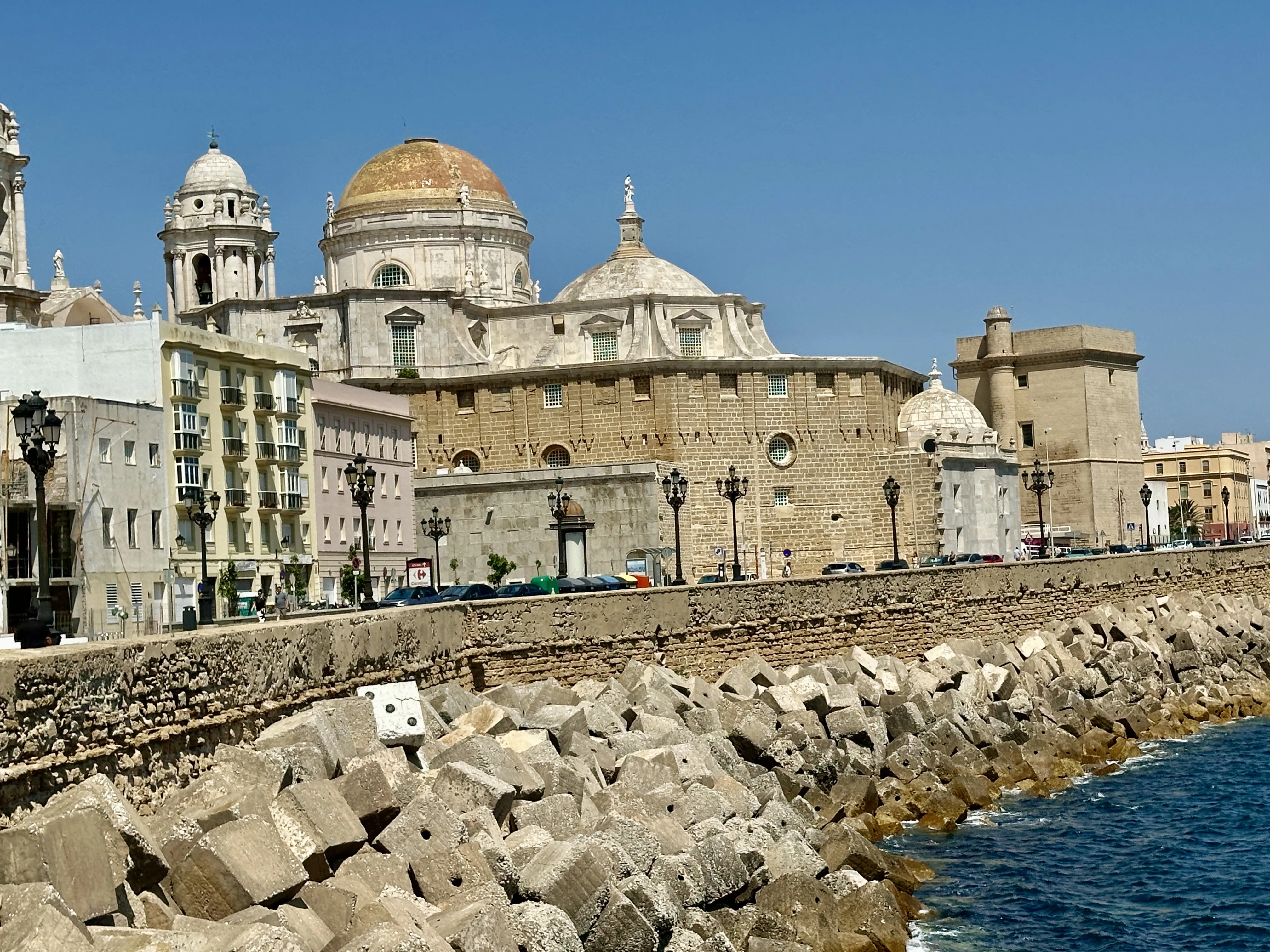
Sevilla is also a gateway to wider Andalusia. Cordoba is 45 minutes by train, Granada two hours, and Cadiz 1.5 hours. The Sierra Norte natural park is on the doorstep for hiking and cycling, so you get both city life and easy access to some of Spain’s most beautiful landscapes.
The city is large enough to have everything you need – international schools, diverse dining, cultural events – but compact enough that the centre is walkable. The Guadalquivir river, Triana’s ceramic workshops, and the Barrio Santa Cruz’s winding streets give the city a richness that rewards daily exploration.
Cost of living
Sevilla is cheaper than you might expect for a city of 700,000+ people. It’s more expensive than Granada or Cadiz, but noticeably cheaper than Valencia or Malaga.
| Item | Typical monthly cost |
|---|---|
| 1-bed apartment (centre) | EUR 650–900 |
| 1-bed apartment (outside centre) | EUR 450–650 |
| Coworking desk | EUR 120–200/month |
| Coffee | EUR 1.30–1.80 |
| Meal out (mid-range) | EUR 11–16 |
| Monthly transport pass | EUR 35 |
| Estimated monthly budget (single) | EUR 1,300–1,800 |
Rental prices are rising but haven’t reached the levels of the coastal hotspots. The old town (Casco Antiguo) commands a premium, but move slightly outward and you’ll find excellent value. For furnished mid-term rentals without the usual deposit headache, Flatio lists deposit-free apartments across the city – useful when you’re testing a neighbourhood before committing long-term.
For multi-currency management – essential if you earn outside the eurozone – Wise keeps your conversion costs low.
Connectivity and coworking
Fibre broadband is standard in most of Sevilla, with 300 Mbps+ speeds available throughout the centre and suburbs. 5G coverage is expanding. Connectivity is not a concern here.
The coworking scene has grown substantially:
- Espacio RES – well-established, community-driven space with events and networking.
- Sevilla Coworking – central location, professional facilities, flexible plans.
- WorkINCompany – modern space in the Nervión district, good for focused work.
- La Bicicletería – creative space with a community feel, popular with freelancers and designers.
Sevilla also has a strong cafe culture, and the newer specialty coffee shops around Alameda de Hércules and the centre are generally laptop-friendly.
Community and networking
Sevilla has a growing international community, though it’s less nomad-specific and more diverse – a mix of long-term expats, language assistants, university researchers, and remote workers.
Facebook groups like Expats in Seville and various Erasmus communities are active. Language exchange meetups (intercambios) are popular and a reliable way to meet both locals and internationals. The Startup Grind Sevilla chapter and occasional tech meetups provide professional networking.
The flamenco, music, and arts scenes offer unusual social entry points. Join a dance class, attend a peña (private flamenco club), or get involved in the cultural calendar – these are the experiences that connect you to Sevilla on a deeper level.
Spanish is the primary language of daily life. English is more widely understood than in smaller Andalusian cities, but you’ll need Spanish for admin, healthcare, and meaningful social connections. The Andalusian accent is distinctive and fast – listening comprehension can be challenging at first, but your ear will adjust.
Visa and legal considerations
All standard Spanish visa routes apply:
-
The Digital Nomad Visa (DNV) – the most relevant for non-EU remote workers. Our comprehensive DNV guide covers everything.
-
Autonomo registration – required for freelancers working in Spain. Our autonomo guide explains the obligations, and Xolo streamlines the admin.
-
The Non-Lucrative Visa – for passive income holders. See our NLV guide.
Sevilla is a major city, so the Oficina de Extranjeros can be busy – book appointments well in advance. For specialist immigration advice, Richelle de Wit guides remote workers through the Spanish visa landscape.
Climate and lifestyle
This is the big one. Sevilla is hot. July and August average highs are 36–40°C, and individual days can exceed 45°C. The city adapts – late dinners, siesta culture, air conditioning everywhere – but you need to accept that summer means indoor living during daylight hours.
The flip side is that the rest of the year is glorious. Winters are mild (8–16°C) with some rain. Spring – especially March through May – is Sevilla at its absolute best: warm, green, and alive with orange blossom. Autumn is warm and pleasant well into November.
Healthcare follows the standard Spanish system. Register at your centro de salud. The Hospital Virgen del Rocío and Hospital Macarena are the main public facilities, and private healthcare is readily available.
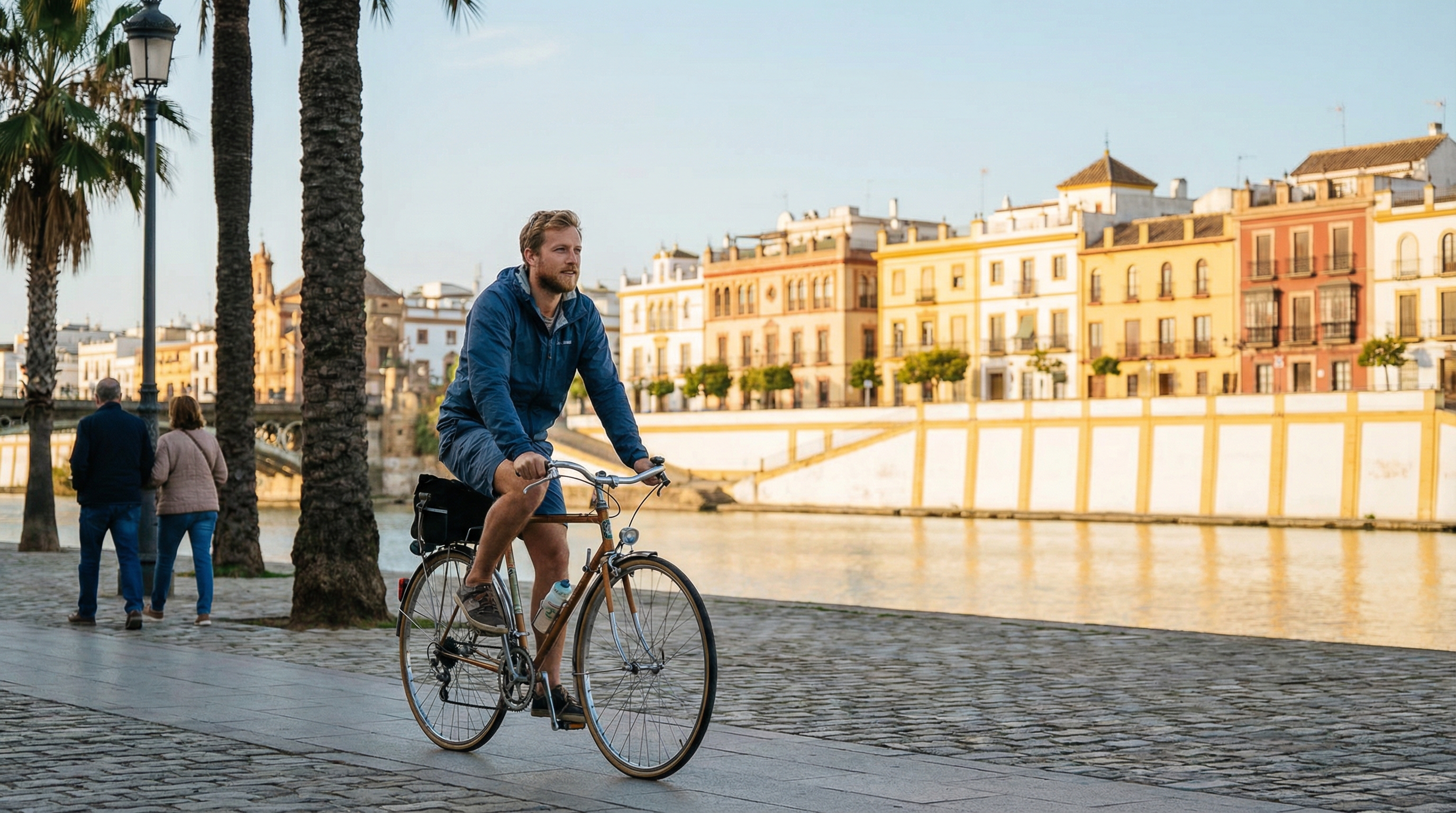
Cycling is increasingly viable – Sevilla invested in bike infrastructure, and the Sevici bike-share system is well-used. The city is flat, which helps enormously.
Getting started
Here’s your action plan for setting up in Sevilla:
-
Get your visa in order before arrival. Richelle can advise on timing and requirements.
-
Register on the padrón at your district’s Junta Municipal office. Bring your rental contract and identification.
-
Obtain your NIE/TIE – book the cita previa as early as possible, as Sevilla’s appointments fill up.
-
Register for healthcare at your assigned centro de salud.
-
Choose your barrio wisely. Triana across the river has a village feel and strong local identity. Alameda de Hércules is Sevilla’s hipster heart – lively and creative. Macarena is affordable and residential. Nervión is modern and practical. Santa Cruz is beautiful but touristy and expensive. Los Remedios offers a quieter, family-friendly option with good transport links.
Need remote work opportunities suited to European life? RWE Connected delivers curated, verified job leads – hand-picked to save you time on the search.
Sevilla isn’t just a place to work from – it’s a place that changes how you think about work and life. The heat is real, the bureaucracy is real, and the Andalusian accent will humble your Spanish. But the depth of culture, the warmth of the people, and the quality of daily life make it one of Spain’s most compelling places to build a remote working life.